Search Header Logo
Unicellular Organsims

Unicellular Organsims

Assessment

Presentation

Science

7th Grade

Practice Problem

Hard

NGSS
MS-ESS1-1, MS-LS1-2, MS-LS1-1

+6

Standards-aligned

Created by

Benjamin Bailey

FREE Resource

8 Slides • 15 Questions

1

Unicellular Microorganisms

Compare the similarities and differences of the two types of unicellular microorganisms.

media

2

3

Multiple Choice

Question image

What does the prefix uni- mean?

1

Many

2

One

3

Some

4

Unicellular organisms depend on ONE cell for all its needs.

  • Obtain Energy

  • Reproduce (Cell Division)

  • Ability to Move

  • Respond to Their Environment

  • Respire (Breathe)

  • Eliminate Waste

media

5

Multiple Choice

Question image

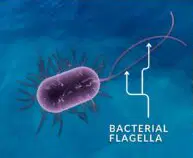
What part of the bacteria cell is used for movement?

1

Cell Wall

2

Cytoplasm

3

Flagellum

6

Multiple Choice

Through what cell part would a unicellular organism take in oxygen and get rid of waste?

1

Vacuole

2

Cell Membrane

3

Cytoplasm

7

Two Types of Unicellular Organisms

Prokaryotes and Eukaryotes

8

Prokaryotes

  • Pro (means before) and Kary (means nucleus)

  • No Nucleus

  • Extremely Small

  • Examples include Bacteria and Archaea

media

9

Archaea

Bacteria make up most of the prokaryotes. Archaea are typically found in extreme environments such as hot springs or near volcanoes. The difference between bacteria and archaea is their type of cell wall: archaea have a thicker cell wall that is very strong.

media

10

Eukaryotes

  • Eu (means true) and kary (means nucleus)

  • Has a nucleus

  • Some have chloroplasts

  • 10 to 100 times larger

  • Examples: Amoeba. Euglena, Paramecium (Protists)

media

11

Multiple Choice

Question image

Most unicellular organisms eat other organisms for food. But some can make their own food through photosynthesis. What cell organelle must they have for this process.

1

Nucleus

2

Mitochondria

3

Chloroplasts

12

Similarities in Cell Parts & Functions

  • Cell Membrane

  • Cytoplasm

  • DNA

  • Ribosomes

media

13

Multiple Choice

Question image

What unicellular organism is shown? Use google to help

1

Amoeba

2

Bacteria

3

Fungi

4

Euglena

14

Multiple Choice

Question image

What unicellular organism is shown? Use google to help

1

Amoeba

2

Bacteria

3

Fungi

4

Euglena

15

Multiple Choice

Question image

What unicellular organism is shown? Use google to help

1

Amoeba

2

Bacteria

3

Fungi

4

Euglena

16

Multiple Choice

If an organism is unicellular but has a nucleus, then it belongs to this category of Eukaryotes.

1

plant

2

animal

3

protist

4

bacteria

17

Multiple Choice

A pseudopod literally means...
1
small hair
2
long tail
3
no nucleus
4
false foot

18

Multiple Choice

Question image

This unicellular organism uses pseudopods to capture and absorb its food! Use google to help

1

Amoeba

2

Paramecium

3

Euglena

4

Volvox

19

Multiple Choice

Protist require moist in their environment to survive
1
True
2
False

20

Multiple Choice

Question image
What is Cilia?
1
A tail like structure that help protist move
2
Hair like fibers that help protist move
3
A place where spores are kept
4
A fake foot that help protist move

21

Multiple Choice

Question image
What is Flagella?
1
A tail like structure that help protist move
2
Hair like fibers that help protist move
3
A place where spores are kept
4
A fake foot that help protist move

22

Multiple Choice

Which type of cell has a nuclear membrane.  

1
Prokaryote
2
Eukaryote

23

Multiple Choice

What type of cell(s) do Protist have? 
1
Eukaryotic 
2
Prokaryotic

Unicellular Microorganisms

Compare the similarities and differences of the two types of unicellular microorganisms.

media

Show answer

Auto Play

Slide 1 / 23

SLIDE