

I.pdf

Presentation
•
Other
•
KG - Professional Development
•
Hard

king Charles Hibbett
Used 1+ times
FREE Resource
8 Slides • 0 Questions
1

law
Charles v hibbett
2

Law School
Law school is an academic challenge; most students agree the first year (“1L”
year) is the most difficult. In part, this is because law school is taught using
methods entirely different than the lecture method used in most college
classrooms.
3
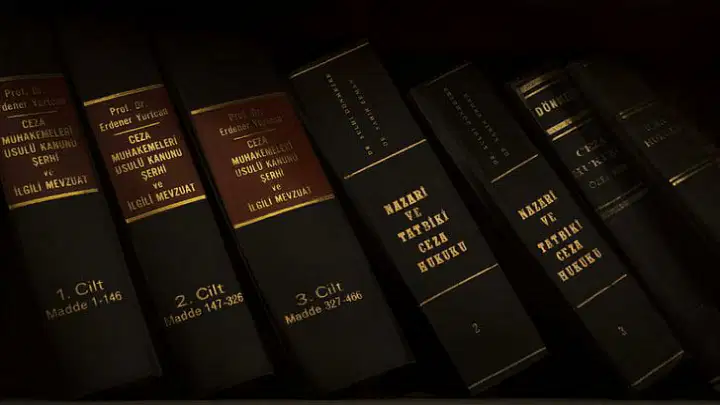
In 1934, the Austrian philosopher Hans Kelsen continued the positivist tradition in his
bookIn 1934, the Austrian philosopher Hans Kelsen continued the positivist tradition in
his book The Pure Theory of Law.[48] Kelsen believed that although the law is separate
from morality, it is endowed with "normativity", meaning we ought to obey it. While
statutes are positive "is" statements (e.g. the fine for reversing on a highway is €500);
the law tells us what we "should" do. Thus, each legal
system can be hypothesized to have a basic norm (Grundnorm) instructing us to obey.
Kelsen's prominent opponent, Carl Schmitt, rejected both positivism and the idea of the
rule of law because he did not accept the importance of abstract normative principles
over concrete political positions and decisions.[49] Therefore, Schmitt advocated a
jurisprudence of the exception (state of
The Pure Theory of Law.[48] Kelsen believed that although the law is separate from
morality, it is endowed with "normativity", meaning we ought to obey it. While statutes
are positive "is" statements (e.g. the fine for reversing on a highway is €500); the law
tells us what we "should" do. Thus, each legal
system can be hypothesized to have a basic norm (Grundnorm) instructing us to obey.
Kelsen's prominent opponent, Carl Schmitt, rejected both positivism and the idea of the
rule of law because he did not accept the importance of abstract normative principles
over concrete political positions and decisions.[49] Therefore, Schmitt advocated a
jurisprudence of the exception (state of
4

emergency), which denied that legal norms could encompass all of the political
experience.[50]
Later in the 20th century, H. L. A. Hart attacked Austin for his simplifications and Kelsen for
his fiction in The Concept of Law.[51] Hart argued law is a system of rules, divided into
primary (rules of conduct) and secondary ones (rules addressed to officials to administer
primary rules). Secondary rules are further divided into rules of adjudication (to resolve
legal disputes), rules of change (allowing laws to be varied), and rules of recognition
(allowing laws to be identified as valid). Two of Hart's students continued the debate: In his
book Law's Empire, Ronald Dworkin attacked Hart and the positivists for their refusal to
treat law as a moral issue. Dworkin argues that law is an "interpretive concept"[36] that
requires judges to find the best fitting and most just solution to a legal dispute, given their
Anglo-American constitutional traditions. Joseph Raz, on the other hand, defended the
positivist outlook and criticized Hart's "soft social thesis" approach in The Authority of
Law.[37] Raz argues that law is authority, identifiable purely through social sources and
without reference to moral reasoning. In his view, any categorization of rules beyond their
role as
5

There have been several attempts to produce "a universally acceptable
definition of law". In 1972, Baron Hampstead suggested that no such definition
could be produced.[29] McCoubrey and White said that the question "what is
law?" has no simple answer.[30]
6

In countries where specialization is prevalent, many lawyers specialize in
representing one side in one particular area of the law; thus, it is common in
the United States to hear of plaintiffs' personal injury attorneys.[111][112]
Texas offers attorneys the opportunity to receive a board certification
through the state's Texas Board of Legal Specialization. To be board
certified, attorney applicants undergo a rigorous examination in one of 24
areas of practice offered by the Texas Board of Legal Specialization. Only
those attorneys who are "board certified" are permitted to use the word
"specialize" in any publicly accessible materials such as a website or
television commercial. See Texas Rule 7.02(a)(6).[113]
7

How Much Does a Lawyer Make?
How Much Does a Lawyer Make? ... Lawyers made a median salary of
$127,990 in 2021. The best-paid 25% made $194,580 that year, while the
lowest-paid 25% made
8


law
Charles v hibbett
Show answer
Auto Play
Slide 1 / 8
SLIDE
Similar Resources on Wayground

10 questions
Growth vs Fixed Minset
Presentation
•
7th - 8th Grade
6 questions
Bodies of water
Presentation
•
KG - 2nd Grade
6 questions
Minorities Recap Quiz
Presentation
•
KG
6 questions
Ecosystems - Competiton
Presentation
•
6th Grade
6 questions
Cladograms
Presentation
•
9th Grade
7 questions
famosos
Presentation
•
8th Grade
6 questions
Picture Composition
Presentation
•
4th Grade
6 questions
Konseptong Pangwika (Rehistro/Barayti ng Wika, Lingguwistiko
Presentation
•
11th Grade
Popular Resources on Wayground
10 questions
Safety Day 2026 – Student Review

Quiz
•
9th Grade
21 questions
Continents and Oceans
Quiz
•
6th Grade
20 questions
Parts of Speech
Quiz
•
5th Grade
16 questions
Subject & Predicate
Quiz
•
5th Grade
25 questions
Multiplication Facts
Quiz
•
5th Grade
12 questions
Map Skills
Quiz
•
3rd Grade
22 questions
Continents and Oceans
Quiz
•
5th Grade
15 questions
Rounding Decimals
Quiz
•
5th Grade
Discover more resources for Other
10 questions
Safety Day 2026 – Student Review
Quiz
•
9th Grade
21 questions
Continents and Oceans
Quiz
•
6th Grade
20 questions
Parts of Speech
Quiz
•
5th Grade
16 questions
Subject & Predicate
Quiz
•
5th Grade
25 questions
Multiplication Facts
Quiz
•
5th Grade
22 questions
Continents and Oceans
Quiz
•
5th Grade
12 questions
Map Skills
Quiz
•
3rd Grade
15 questions
Rounding Decimals
Quiz
•
5th Grade