

Data Types

Presentation
•
Computers
•
12th Grade
•
Practice Problem
•
Medium

Ciara Palange
Used 1+ times
FREE Resource
9 Slides • 13 Questions
1
PSEUDOCODE
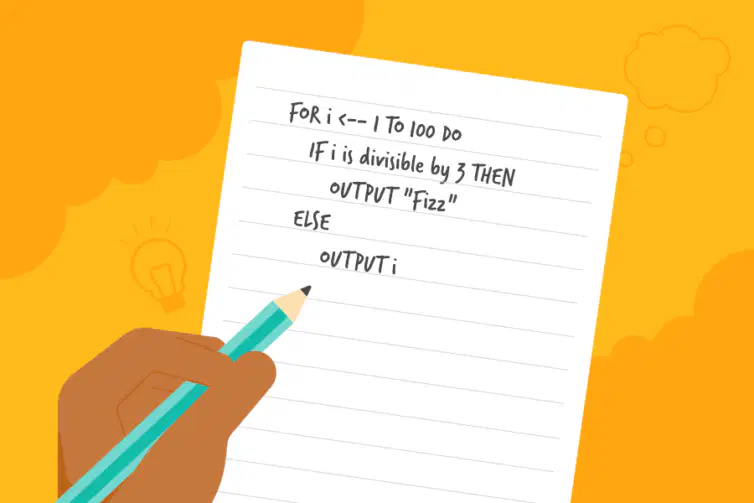
2
FLOWCHARTS
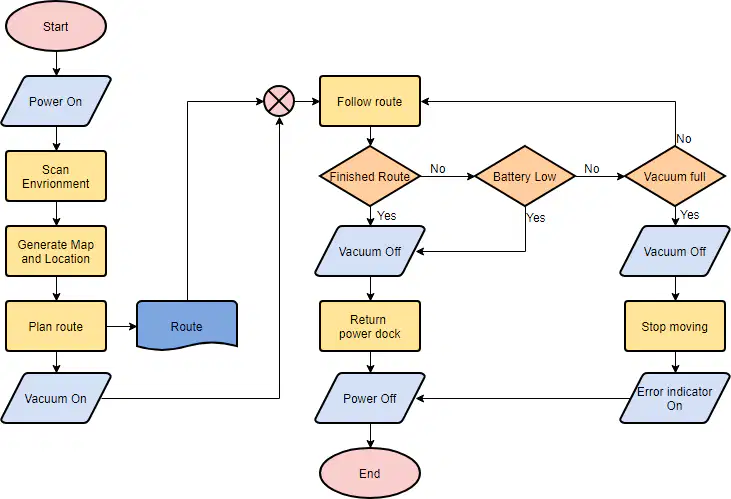
3
Draw
Draw the shape that represents start and end of a flowchart
4
Draw
Draw the shape that represents decision point.
5
Draw
Draw the shape that represents preparation or initialization.
6
Draw
Draw the shape that represents process.
7
Draw
Draw the shape that represents input/output.
8
Draw
Draw the shape that represents on-page connector.
9
Draw
Draw the shape that represents off-page connector.
10
Draw
Draw the flow lines.
11
DATA TYPES
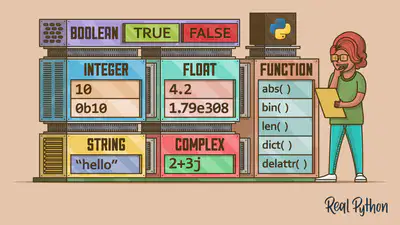
AT THE END OF THE LESSON, STUDENTS SHOULD BE ABLE TO:
1. identify variables; and
2. know its corresponding data type.
12
Technical Terms:
Data Type - description of a specific data that can be stored in a variable, the amount memory the item occupies, and the operations it can be performed.
Logical Operation - an operation that acts on binary numbers to produce a result according to the laws of Boolean Logic
Rational Operation - is nothing more than a fraction in which the numerator and/or the denominator are polynomials
13
Pretest on Data Types
14
Multiple Choice
It is a data type that holds number with decimal point.
Boolean
Integer
String
Float
Char
15
Multiple Choice
It is a data type that holds date values, time values, or the combination of both.
Void
Char
Date
String
Boolean
16
Multiple Choice
It is a data type that holds only whole number, but loads fast compare to other data types.
Integer
Float
Date
String
Char
17
Multiple Choice
It is a data type that holds set or multiple of characters, like words and sentences.
Char
String
Void
Boolean
Float
18
Multiple Choice
It is a data type that can only contain two values, True or False, Yes or No, or On and Off
String
Date
Float
Char
Boolean
19
Groupings (Disney Princesses)
Numeric Data Types: (Integer (int), Floating-Point (float), Complex (complex)
In this category, you can explore the concept of numbers in programming, including integers, floating-point numbers, and complex numbers. Explain their characteristics and use cases.
20
Groupings (Educated Rainbows)
Character Data Types: Character (char), String (str)
Discuss how characters and strings are represented in programming and the essential operations and functions for manipulating them.
21
Groupings (The Explorers)
Boolean Data Type: Boolean (bool)
Explain the boolean data type, which represents true or false values. Discuss its use in conditional statements and logical operations. Include Boolean Laws.
22
Groupings (Prince's Hypermarket)
Numeric Literals and Constants: Binary, octal, decimal, and hexadecimal number representations, Constants and variables
Cover how numbers are written in various bases (binary, octal, hexadecimal), and introduce the concept of constants and variables in programming.
PSEUDOCODE
Show answer
Auto Play
Slide 1 / 22
SLIDE
Similar Resources on Wayground

18 questions
Surat Lamaran Pekerjaan
Presentation
•
12th Grade
18 questions
[ITAL] Network Protocol
Presentation
•
12th Grade
17 questions
PERANGKAT KERAS KOMPUTER
Presentation
•
12th Grade
20 questions
Office 365: Key Practices for Safe and Secure Use By Mr. B
Presentation
•
12th Grade
15 questions
[ITAL] Disaster Recovery Management
Presentation
•
12th Grade
19 questions
Pengenalan Basis Data
Presentation
•
12th Grade
16 questions
KOMPONEN JARINGAN KOMPUTER
Presentation
•
12th Grade - University
20 questions
CN 5
Presentation
•
University
Popular Resources on Wayground
6 questions
Secondary Safety Quiz
Presentation
•
9th - 12th Grade
10 questions
MyPath Diagnostic Overview
Presentation
•
6th - 8th Grade
20 questions
Lab Safety Quiz

Quiz
•
6th Grade
21 questions
Continents and Oceans
Quiz
•
6th Grade
20 questions
Adding and Subtracting Decimals
Quiz
•
5th Grade
20 questions
Parts of Speech
Quiz
•
5th Grade
16 questions
Subject & Predicate
Quiz
•
5th Grade
21 questions
Lab Safety
Quiz
•
10th Grade