
The Amazing World Inside Our Bodies

Presentation
•
Science
•
6th - 8th Grade
•
Practice Problem
•
Hard

Reshawndra Hutchins
FREE Resource
11 Slides • 5 Questions
1
Explore the fascinating and complex systems that make up the human body. From the intricate network of blood vessels to the powerful muscles, discover the wonders that lie within us. Join us on a journey through the amazing world inside our bodies.
2
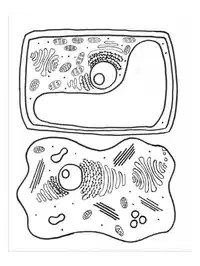
The World of Cells
3
Multiple Choice
What is the importance of understanding cells?
Cells are the building blocks of life
Cells are microscopic and highly specialized
Cells perform various functions such as growth, repair, and energy production
Cells contain organelles like the nucleus, mitochondria, and ribosomes
4
Cells: The Powerhouses of Life
5
The World of Cells
6
Multiple Choice
What are the two main types of cells based on their nucleus?
Prokaryotic and eukaryotic
Mitochondria and ribosomes
Endoplasmic reticulum and ribosomes
Homeostasis and metabolic processes
7
Cell Nucleus
Trivia: The two main types of cells based on their nucleus are prokaryotic and eukaryotic. Prokaryotic cells, like bacteria, lack a true nucleus, while eukaryotic cells, found in plants and animals, have a well-defined nucleus. This distinction is crucial in understanding the complexity of cellular organization and function.
8
The Circulatory System
9
Multiple Choice
What is the main function of the circulatory system?
Transporting blood, oxygen, and nutrients throughout the body
Regulating body temperature
Producing hormones
Filtering waste products
10
Circulatory System:
Trivia: Did you know that the main function of the circulatory system is to transport blood, oxygen, and nutrients throughout the body? It ensures that every cell receives the necessary resources for proper functioning. Without it, our bodies wouldn't be able to survive.
11
The Skeletal System
12
Multiple Choice
Which components make up the framework of our bodies?
Muscles, tendons, and ligaments
Bones, cartilage, and ligaments
Skin, hair, and nails
Blood cells and minerals
13
Framework of Our Bodies
Bones, cartilage, and ligaments are the components that make up the framework of our bodies. Bones provide structure and support, cartilage cushions our joints, and ligaments connect bones to each other. Together, they form the strong and flexible foundation that allows us to move and function.
14
The Muscular System
15
Multiple Choice
What are the three types of muscles in the body?
Skeletal, smooth, and cardiac
Voluntary, involuntary, and cardiac
Bones, organs, and heart
Movement, stability, and pump
16
Types of Muscles
Skeletal, smooth, and cardiac are the three types of muscles in the body. Skeletal muscles are responsible for movement, smooth muscles control involuntary actions like digestion, and cardiac muscles pump blood throughout the body. Understanding these muscle types helps us appreciate the complexity of our bodies.
Explore the fascinating and complex systems that make up the human body. From the intricate network of blood vessels to the powerful muscles, discover the wonders that lie within us. Join us on a journey through the amazing world inside our bodies.
Show answer
Auto Play
Slide 1 / 16
SLIDE
Similar Resources on Wayground

14 questions
Atmosphere
Presentation
•
6th - 8th Grade
13 questions
Quarter 2 Mini-Lesson: Heat Transfer
Presentation
•
6th - 8th Grade
10 questions
Introducing CERs in Science!
Presentation
•
5th - 8th Grade
15 questions
Speed
Presentation
•
6th - 8th Grade
11 questions
Newton's Laws
Presentation
•
6th - 8th Grade
13 questions
MICROSCOPE
Presentation
•
6th - 8th Grade
11 questions
Weathering
Presentation
•
6th - 8th Grade
14 questions
Natural Selection
Presentation
•
6th - 8th Grade
Popular Resources on Wayground
10 questions
How much do you know about our Portrait of an Eagle?

Quiz
•
10th Grade
10 questions
Fast Food Slogans
Quiz
•
6th - 8th Grade
21 questions
Continents and Oceans
Quiz
•
6th Grade
20 questions
Parts of Speech
Quiz
•
5th Grade
16 questions
Subject & Predicate
Quiz
•
5th Grade
25 questions
Multiplication Facts
Quiz
•
5th Grade
12 questions
Map Skills
Quiz
•
3rd Grade
22 questions
Continents and Oceans
Quiz
•
5th Grade
Discover more resources for Science
17 questions
7.6D Aqueous Solutions
Quiz
•
7th Grade
20 questions
Scientific Method and Variables
Quiz
•
8th Grade
20 questions
Scientific method and variables
Quiz
•
8th Grade
27 questions
Counting Atoms - Subscripts
Quiz
•
8th Grade
10 questions
6.6D - Relative Density Review
Quiz
•
6th Grade
20 questions
Claim, Evidence and Reasoning (CER)
Quiz
•
6th - 8th Grade
18 questions
Counting Atoms
Quiz
•
7th - 8th Grade
20 questions
Density
Quiz
•
6th Grade