

Magnets & Electricity Part 1: Magnetism

Presentation
•
Science
•
8th Grade
•
Easy
+13
Standards-aligned

Abby Fancsali
Used 11+ times
FREE Resource
14 Slides • 15 Questions
1
DO NOW: Write what you think the example words mean in your lab manual.
Extra Credit: Find three additional words that use this root and write them and their definition in your lab manual (6 Points Max)

2
3
Multiple Choice
What is a force?
A touch
Any push or pull
Power or energy
Gravity only
4
Multiple Choice
5
Multiple Choice
6
Multiple Choice
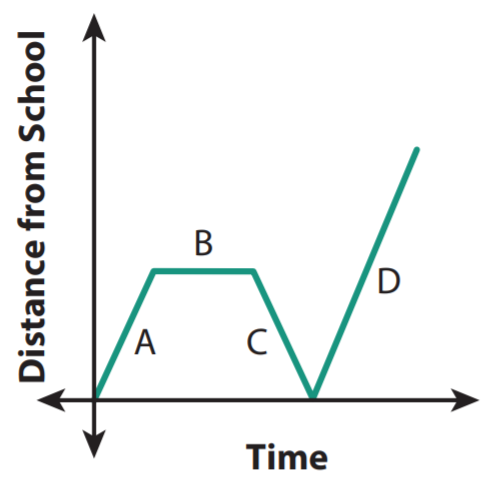
The graph shows Timmy's distance he is as he leaves school one afternoon. What most likely happens in section B?
Timmy is walking back to school because he forgot his math book.
Timmy is talking to a friend and not walking.
Timmy is walking faster home.
Timmy is dancing in the street.
7
Multiple Choice
8
Multiple Choice
9

10

Establish the attraction-repulsion rule for magnetic poles
Relate magnetic-field strength to magnetic field patterns
Show how the relative direction, field, and motion of charged particles affect the force on those particles
11
What is a Magnet?
Magnet: Any material that attracts iron and materials that contain iron
Can vary in size
Ancient Greeks discovered a rock called magnetite, which could attract iron and repel other magnetite rocks.
Magnetism: the attraction or repulsion of magnetic Materials
Most Magnets show the same properties of Magnetite


12
What makes a Magnet a Magnet?
Magnets do three things
Attract iron and materials that contain iron
Magnets can attract or repel other magnets
If allowed to swing freely, one end of the magnet will always point north
13
What are Magnetic Poles?
Each magnet has two ends, regardless of the size or shape of the magnet
Magnetic Pole: The area of the magnet where the magnetic effect is strongest
Two types of Poles exist, one at each end of the magnet
North Pole: Points North
South Pole: Points South

14
Magnetic Force
Magnetic Force: the attraction or repulsion between magnetic poles
Can cause an object to move
It is affected by the distance between the magnets
Can be used to make high-speed vehicles

15
How do Magnets Interact?
When two magnets come together, how they behave depends on how the poles are arranged
Rule of Magnetic Attraction:
Like Poles Repel, Opposite Poles Attract
Magnetic Poles cannot be isolated
If you break a magnet in half, you will wind up two magnets with both poles

16
17
Multiple Choice
Two South Magnetic Poles brought near each other
repel each other
attract each other
cancel each other out
magnetize each other
18
Multiple Choice
Two North Magnetic Poles brought near each other
repel each other
attract each other
cancel each other out
magnetize each other
19
Multiple Choice
A North Magnetic Pole brought near a south magnetic pole
Nullifies the south pole
Attracts the south pole
Repels the south pole
Magnetizes the south pole
20
Multiple Choice
Which of the following is not a property of Magnets?
One end always points north if allowed to move freely
Can Attract other magnets
Can Repel other magnets
Can attract iron
Repels Copper
21
What is a Magnetic Field?
While the magnetic force is strongest at the poles of a magnet, it also exists in other areas of the magnet
Magnetic Field: the area of magnetic force around a magnet
Allows magnets to interact without touching
Can be formed from only one magnet

22
Magnetic Field Lines
Magnetic Field Lines Map out the invisible Magnetic field around a magnet
They spread out from one pole, curve around, and return to the other pole
Form a complete Loop from pole to pole
Lines always leave from the North end of the pole and return to the South
The closer the lines are, the stronger the magnetic field

23
Earth's Magnetic Field
The Earth behaves just like a giant magnet, with a north and south magnetic pole
Causes a compass to always point North
The core of the Earth contains large amounts of liquid iron in motion due to convection currents
These currents help create the magnetic field of the planet
24
Earth's Magnetic Poles
Earth has a North Magnetic pole and a South Magnetic pole
They are not the same as the geographical North and South Poles
Magnetic Declination: the angle found between the geographic poles of the Earth and the Magnetic Poles of the Earth
The magnetic poles shift and move with the convection currents in the core

25
Multiple Choice
True or False: Magnets can interact without touching
True
False
26
Multiple Choice

Why does the top magnet float above the bottom magnet?
The magnets are made of different materials.
The like poles repel each other.
The opposite poles repel each other.
the magnets have different gravitational pull
27
Multiple Choice
True or False: Magnetic field lines always cross each other
True
False
28
Multiple Choice
True or False: Earth's Magnetic Poles are not located in the same place as the geographic poles
True
False
29
Multiple Choice
What creates the Earth's Magnetic Field?
Convection Currents in the Earth
The iron on the tops of mountains
The electrons from lightning
Buildings made of magnetite
DO NOW: Write what you think the example words mean in your lab manual.
Extra Credit: Find three additional words that use this root and write them and their definition in your lab manual (6 Points Max)
Show answer
Auto Play
Slide 1 / 29
SLIDE
Similar Resources on Wayground

22 questions
Motion, Speed, Velocity, & Acceleration
Presentation
•
8th Grade
23 questions
Thermal Energy Transfer
Presentation
•
8th Grade
21 questions
Types of Rocks
Presentation
•
8th Grade
23 questions
Rocks and the Rock Cycle
Presentation
•
8th Grade
21 questions
Unit 8 Mini Review
Presentation
•
8th Grade
20 questions
Quizizz Recovery: Forces
Presentation
•
8th Grade
20 questions
H-R Diagram
Presentation
•
8th Grade
20 questions
Waves
Presentation
•
8th Grade
Popular Resources on Wayground
10 questions
How much do you know about our Portrait of an Eagle?

Quiz
•
10th Grade
10 questions
Fast Food Slogans
Quiz
•
6th - 8th Grade
21 questions
Continents and Oceans
Quiz
•
6th Grade
20 questions
Parts of Speech
Quiz
•
5th Grade
16 questions
Subject & Predicate
Quiz
•
5th Grade
25 questions
Multiplication Facts
Quiz
•
5th Grade
12 questions
Map Skills
Quiz
•
3rd Grade
22 questions
Continents and Oceans
Quiz
•
5th Grade
Discover more resources for Science
20 questions
Scientific Method and Variables
Quiz
•
8th Grade
20 questions
Scientific method and variables
Quiz
•
8th Grade
27 questions
Counting Atoms - Subscripts
Quiz
•
8th Grade
20 questions
Claim, Evidence and Reasoning (CER)
Quiz
•
6th - 8th Grade
18 questions
Counting Atoms
Quiz
•
7th - 8th Grade
20 questions
Elements, Compounds and Mixtures
Quiz
•
8th Grade
10 questions
Exploring Chemical and Physical Changes

Interactive video
•
6th - 10th Grade
10 questions
Decoding the Periodic Table of Elements
Interactive video
•
6th - 10th Grade