
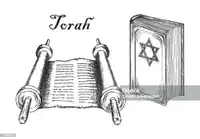
Exploring the Origins of Hebrew Beliefs and Traditions

Presentation
•
History
•
9th Grade
•
Practice Problem
•
Easy

John Martin
Used 4+ times
FREE Resource
9 Slides • 5 Questions
1
Exploring the historical roots and cultural foundations of Hebrew beliefs and traditions, including their impact on modern society.
2
Origins of Hebrew Beliefs
Abraham, the father of Judaism, believed in one god instead of many. He made a covenant with God, leading to the belief that Hebrews were God's chosen people. The Hebrews settled in Egypt and were later enslaved.
3
Multiple Choice
Who is considered the father of Judaism?
Moses
Abraham
David
Solomon
4
Abraham - Father of Judaism
Trivia: Abraham is considered the father of Judaism. He made a covenant with God, who promised to make him the father of a great nation. Abraham's faith and obedience are highly regarded in Jewish tradition. His story is found in the book of Genesis. Fun Fact: Abraham's original name was Abram, but God changed it to Abraham, meaning 'father of many nations'.
5
Exploring Hebrew Beliefs
1312: Moses leads the Jews out of Egypt
1025: Saul becomes the first king of Israel
2000 BC: Israelites dwelt in UR
1800 BC: Israelites establish themselves in Canaan
332: Israel becomes part of the Hellen Empire
63: Pompey enters the Temple and Judea becomes a province of Rome
970-931: Temple of Solomon completed
597-538: Babylonian Captivity ends
The Ten Commandments: Moses receives the Torah from God, including the Ten Commandments
6
Origins of Hebrew Beliefs
7
Multiple Choice
Which figure is associated with the 'oral Torah' that interprets the Torah?
Prophets
Abraham
Moses
Saul
8
Reorder
Reorder the following
Abraham leaves Mesopotamia at the command of God according to the Book of Genesis, and makes a COVENANT with God
Abraham's descendants move to Egypt
The Exodus from Egypt- the story of Moses and the second covenant with God
Solomon build the Temple of Solomon in Jerusalem
Babylonians conquer Jerusalem and destroy the temple
9
Match
Match the following
Made a covenant with God
Prophet, led Israelites out of captivity
Warrior, King, and Prophet
Great and wise king, responsible for the Great Temple
Allows Jews to return home after the Babylonian captivity
Abraham
Moses
David
Solomon
Cyrus
Abraham
Moses
David
Solomon
Cyrus
10
Oral Torah
Trivia: The figure associated with the 'oral Torah' that interprets the Torah is the Prophets. They play a crucial role in providing insights and explanations for the written Torah, ensuring its proper understanding and application. The oral Torah is considered an essential part of Jewish tradition and religious practice.
11
Origins of Hebrew Beliefs
Important People: David, Saul, Solomon
Kingdom of Israel: Split into Israel and Judah
End of the Kingdom: Israel fell to Assyrians, Temple of Solomon destroyed, Judah fell to Babylon
Exile: Hebrews forced into exile, became known as Jews
12
13
Multiple Choice
What event led to the split of the Kingdom of Israel?
The fall of Israel to the Assyrians
The destruction of the Temple of Solomon
The fall of Judah to Babylon
The Hebrews forced into exile
14
The Split of Israel
The fall of Israel to the Assyrians led to the split of the Kingdom of Israel. The Assyrians conquered the northern kingdom of Israel in 722 BCE, resulting in the exile of many Israelites. This event marked the end of the united Kingdom of Israel and the beginning of the separate Kingdom of Judah in the south.
Exploring the historical roots and cultural foundations of Hebrew beliefs and traditions, including their impact on modern society.
Show answer
Auto Play
Slide 1 / 14
SLIDE
Similar Resources on Wayground

11 questions
Linear Equation in two variable
Presentation
•
9th Grade
11 questions
Teenager 5 Session 22: Pronunciation & Speaking
Presentation
•
KG
11 questions
Google Sheets Basics lesson
Presentation
•
9th Grade
11 questions
1.3 Day 1 Solving Eq. with Variable on both Sides
Presentation
•
9th Grade
10 questions
Multiplying & Dividing Exponents
Presentation
•
9th Grade
12 questions
Imperialism
Presentation
•
9th Grade
11 questions
The Protestant Reformation
Presentation
•
10th Grade
10 questions
The Presidents of the United States of America
Presentation
•
8th Grade
Popular Resources on Wayground
10 questions
Safety Day 2026 – Student Review

Quiz
•
9th Grade
21 questions
Continents and Oceans
Quiz
•
6th Grade
20 questions
Parts of Speech
Quiz
•
5th Grade
16 questions
Subject & Predicate
Quiz
•
5th Grade
25 questions
Multiplication Facts
Quiz
•
5th Grade
12 questions
Map Skills
Quiz
•
3rd Grade
22 questions
Continents and Oceans
Quiz
•
5th Grade
15 questions
Rounding Decimals
Quiz
•
5th Grade
Discover more resources for History
25 questions
The American Revolution
Quiz
•
7th - 10th Grade
15 questions
The Bill of Rights
Quiz
•
8th - 12th Grade
15 questions
Ancient Rome
Quiz
•
7th - 10th Grade
16 questions
Students of Civics Unit 2: The Constitution
Quiz
•
7th - 11th Grade
10 questions
Exploring the 7 Principles of the Constitution

Interactive video
•
6th - 10th Grade
10 questions
Significance of the Declaration of Independence
Interactive video
•
6th - 10th Grade
22 questions
Beginning of WW2 Quiz
Quiz
•
9th Grade
10 questions
Exploring the Age of Exploration
Interactive video
•
6th - 10th Grade