

untitled

Presentation
•
•
Practice Problem
•
Medium

Suhailah Mohsin
Used 1+ times
FREE Resource
33 Slides • 59 Questions
1

2

3
Multiple Choice

Enzymes are
Lipids
Protein
Carbohydrates
Nucleic Acids
4
Multiple Choice
Enzymes are responsible for-
Speeding up reactions
Giving the body energy
Slowing down reactions
5
Multiple Choice
Which of these is most likely an enzyme?
Sucrose
Galactose
Fructose
Amylase
6
7
Multiple Choice
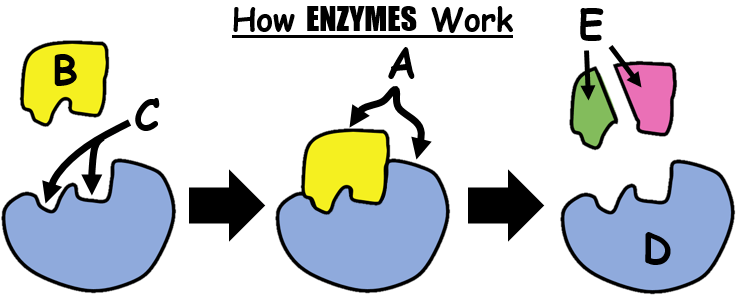
Letter D...
active site
enzyme
substrate
products
8
Multiple Choice
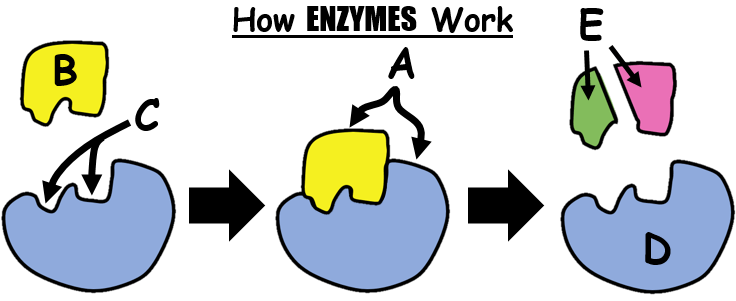
Letter B...
active site
enzyme
substrate
products
9
Multiple Choice
Letter c...
active site
enzyme
substrate
products
10
Multiple Choice
Each enzyme only has 1 substrate that will fit its active site. What is this called?
reusablility
denaturation
specificity
fragility
11

12

13
Multiple Choice
What is a substance called if it speeds up a chemical reaction?
reusable
catalyst
specific
fragile
14

15
Multiple Choice
An enzyme speeds up a chemical reaction in the cell but can only be used once. True or False?
true
false
16

17
Multiple Choice
18

19
Multiple Choice
What happens when enzymes are heated to a high temperature?
The enzymes die.
The shapes of the enzyme are altered denature
The enzymes' amino acid sequence changes.
The enzymes remain the same
20

21
Cell Transport
22
23
Fill in the Blanks
The process of how things move in and out of the cell through the cell membrane is
Type answer...
24
Multiple Select
The two broad categories of cell transport are ...........
(select all correct answers)
passive transport
road transport
food transport
active transport
25
Multiple Choice
In passive transport, .............
energy is required
energy is not required
26
Multiple Choice
In active transport, .............
energy is required
energy is not required
27
Cell Transport
Cell transport is movement of materials across cell membranes.
Two Types:
Passive transport
Active transport
28

29
Passive Transport
30
31

The movement of substances across the cell membrane without using energy from the cell.
Examples:
diffusion
facilitated diffusion
osmosis.
(does not require energy)
Passive Transport
32
Diffusion
33
Experiment
(Demonstrating diffusion)
Hypothesis: Particles move from an area of high concentration to an area of low concentration.
Carefully place about 2ml of dye solution at the bottom of a transparent container of water by using the dropper.
Observe and record what happens after 5 minutes.
What is your conclusion?
34
Open Ended
What is your observation after the 5 minutes?
35
Open Ended
What is your conclusion?
36
Diffusion is the movement of particles from a area of higher concentration to an area of lower concentration.

beginning
after 5 mins
37
Examples of diffusion in everyday life:
The smell of perfumes or incense sticks.
Opening the soda or cold drinks bottle and the CO2 diffuses in the air.
Dipping the tea bags in hot water will diffuse the tea in hot water.
Small dust particles or smoke diffuse into the air and cause air pollution.
Breathing and taking oxygen into the body and diffuses in our blood.
38
Examples of diffusion in everyday life:
Transport of Biomolecules and Minerals in Plants and Animals.
Sugar gets dissolved evenly and sweetens the water without having to stir it.
Removal of Waste Substances and Toxins from our Body.
Gas exchange in the lungs.
Diffusion of waste products, salt, and water in the kidneys
39
Cell Transport
40
41
Fill in the Blanks
The process of how things move in and out of the cell through the cell membrane is
Type answer...
42
Multiple Select
The two broad categories of cell transport are ...........
(select all correct answers)
passive transport
road transport
food transport
active transport
43
Multiple Choice
In passive transport, .............
energy is required
energy is not required
44
Multiple Choice
In active transport, .............
energy is required
energy is not required
45
Cell Transport
Cell transport is movement of materials across cell membranes.
Two Types:
Passive transport
Active transport
46
47
Passive Transport
48
49
The movement of substances across the cell membrane without using energy from the cell.
Examples:
diffusion
facilitated diffusion
osmosis.
(does not require energy)
Passive Transport
50
Diffusion
51
Experiment
(Demonstrating diffusion)
Hypothesis: Particles move from an area of high concentration to an area of low concentration.
Carefully place about 2ml of dye solution at the bottom of a transparent container of water by using the dropper.
Observe and record what happens after 5 minutes.
What is your conclusion?
52
Open Ended
What is your observation after the 5 minutes?
53
Open Ended
What is your conclusion?
54
Diffusion is the movement of particles from a area of higher concentration to an area of lower concentration.
beginning
after 5 mins
55
Examples of diffusion in everyday life:
The smell of perfumes or incense sticks.
Opening the soda or cold drinks bottle and the CO2 diffuses in the air.
Dipping the tea bags in hot water will diffuse the tea in hot water.
Small dust particles or smoke diffuse into the air and cause air pollution.
Breathing and taking oxygen into the body and diffuses in our blood.
56
Examples of diffusion in everyday life:
Transport of Biomolecules and Minerals in Plants and Animals.
Sugar gets dissolved evenly and sweetens the water without having to stir it.
Removal of Waste Substances and Toxins from our Body.
Gas exchange in the lungs.
Diffusion of waste products, salt, and water in the kidneys
57
Multiple Choice
Plants use the following reactants for the light reaction
Water and CO2
Water and NADPH
Water and NADP+
NADPH and ATP
58
Multiple Choice
Photosynthesis goal is to
convert light energy into glucose energy
use light energy to make oxygen gas
convert sugar energy into ATP
convert sugar energy into oxygen gas
59
Multiple Choice
Rubisco is important in which step of photosynthesis
energizing the electrons in chlorophyll
carbon fixation when CO2 is connected to RUBP during calvin cycle
regeneration phase as RUBP is made during calvin cycle
reduction of the carbon chain during the calvin cycle
60
Multiple Choice
If the proton (H+) pump in the thylakoid was not working which molecule could not be made during the light reaction?
NADPH
ATP
Water
Oxygen gas
61
Multiple Choice
The NADP+ is
oxidized during the light reaction
reduced during the light reaction
oxidized during the Calvin cycle
reduced during the Calvin cycle
62
Multiple Choice
Which of the following would have the least affect on photosynthetic rate?
increase the temp from 20 C to 30 C
increasing the CO2 from 400 ppm to 600ppm
increasing the light intesity from 40 Watts to 60 Watts
increasing the amount of O2 from 20% to 30% in the air
63
Multiple Choice
Plants obtain CO2 into the chloroplast by
active transport
diffusion
facilitated diffusion
endocytosis
64
Multiple Choice
Photosystems are made of
chloroplasts
chromosomes
chlorophyll
cytoplasm
65
Multiple Choice
ATP is made during the light reaction using all of the following EXCEPT
proton pump
hydrogen ion gradient
electron energy from photosystem II
NADPH donating electrons
66
Multiple Choice
What is FALSE about the calvin cycle
uses the light reactions products
produces a three carbon sugar (G3P)
produces carbon dioxide
produces NADP+
67
Multiple Choice
During noncyclic photophosphorylation all of the following occur EXCEPT
ATP is made using electron energy that will leave on NADPH
results in oxygen gas being produced
water is split (photolysis)
electrons from photosystem 1 return back to photosystem 1
68
Multiple Choice
Photorespiration involves
the production of oxygen gas during the break down of sugar
the breakdown of sugar when CO2 levels are low.
the production of massive amounts of ATP in the thylakoid
water being pulled out of the plant
69
Multiple Choice
Why does photorespiration occur?
stomata are closed and CO2 levels are too low.
stomata are closed and O2 levels are too low.
stomata are open and too much water is leaving the plant
stomata are open and the plant receives too much CO2
70
Multiple Choice
What does a C4 plant do?
stores CO2 in a separate cell from its photosynthetic cell during the day
stores CO2 in a vacuole during the night.
can't store CO2 so it sufferes photorespiration
can't store CO2 so it speeds up cellular respiration in order to make more CO2
71
Multiple Choice
Plants that store CO2 at night as an acid in a vacuole are called
C3 plants
C4 plants
CAM plants
72
Multiple Choice
Which plant LACKS CO2 storage method
C3
C4
CAM
73
Multiple Choice
What happens to the oxygen levels if a plant were left in the dark over night?
go up due to photosynthesis
go down due to cell respiration
stay the same since stomata are closed
74
Multiple Choice
Which plant would have the most oxygen produced in 1 hour?
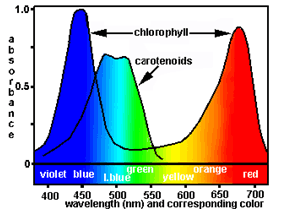
plant given red light only
plant given blue light only
plant given white light
plant given green light only
75
Multiple Choice
An increase in CO2 in the air would most likely
increase photosynthesis
increase cell respiration
increase photorespiration
increase transpiration
76
Multiple Choice
The calvin cycle requires what substances from the light reaction?
CO2 and Water
light and CO2
ATP and NADPH
glucose and O2
77
Multiple Choice
Why does the light reaction perform cyclic photophosphorylation? (where ATP is made with electrons that return to where they started)
because the stomata are closed and CO2 levels are low
because the Calvin cycle runs out of ATP
because the Calvin cycle runs out of NADPH
because there is no water to donate electrons to those that are leaving for the Calvin cycle
78
Multiple Choice
79
Multiple Choice
80
Multiple Choice

81
Multiple Choice
82
Multiple Choice

83
Multiple Choice
84
Multiple Choice
85
Multiple Choice
86
Multiple Choice
87
Multiple Choice
88
Multiple Choice
89
Multiple Choice
90
Multiple Choice

91
Multiple Choice
92
Multiple Choice
Show answer
Auto Play
Slide 1 / 92
SLIDE
Similar Resources on Wayground

87 questions
Brown Girl Dreaming Part III
Presentation
•
5th - 7th Grade
89 questions
Math 7 SOL Review
Presentation
•
7th Grade
88 questions
Lesson 3: Weather Patterns
Presentation
•
6th Grade
86 questions
Geologic Time Scale
Presentation
•
9th Grade
91 questions
Math 7 SOL Review
Presentation
•
7th Grade
90 questions
East and Southeast Asia
Presentation
•
5th - 6th Grade
88 questions
Nubia 1b: The Kushites & Meroë Study Guide
Presentation
•
8th Grade
Popular Resources on Wayground
10 questions
Safety Day 2026 – Student Review

Quiz
•
9th Grade
21 questions
Continents and Oceans
Quiz
•
6th Grade
20 questions
Parts of Speech
Quiz
•
5th Grade
16 questions
Subject & Predicate
Quiz
•
5th Grade
25 questions
Multiplication Facts
Quiz
•
5th Grade
12 questions
Map Skills
Quiz
•
3rd Grade
22 questions
Continents and Oceans
Quiz
•
5th Grade
15 questions
Rounding Decimals
Quiz
•
5th Grade
Discover more resources for
26 questions
SLIME!!!!!
Quiz
•
KG - 12th Grade
20 questions
Place Value
Quiz
•
KG - 3rd Grade
4 questions
K-2 Force and Motion Lesson
Presentation
•
KG - 2nd Grade
12 questions
Tone and Mood
Presentation
•
KG
10 questions
Day and Night Patterns
Quiz
•
KG
20 questions
Disney Characters
Quiz
•
KG
12 questions
Nouns and Verbs
Quiz
•
KG - 2nd Grade
15 questions
Short Vowels
Quiz
•
KG - 2nd Grade