
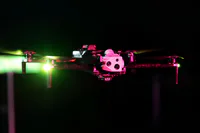
Unveiling the Power of Autonomous Drones for Law Enforcement

Presentation
•
Computers
•
9th - 12th Grade
•
Practice Problem
•
Medium

Scott Freeman
Used 5+ times
FREE Resource
14 Slides • 5 Questions
1
2
Autonomous Drones for Law Enforcement
Unleashing the power of autonomous drones to revolutionize law enforcement operations. Enhancing surveillance, response time, and public safety.
3
The Power of Autonomous Drones
4
Multiple Choice
What is one of the main benefits of using drones in law enforcement?
Enhancing situational awareness and response times
Capturing high-resolution images and videos for evidence collection
Covering large areas quickly for search and rescue operations
Monitoring traffic flow and detecting violations
5
6
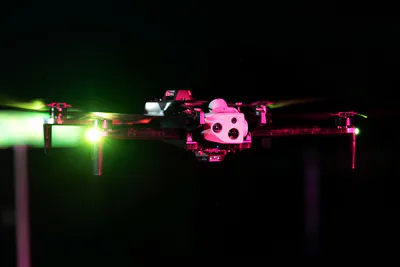
Capturing Evidence with Drones
Drones play a crucial role in law enforcement by capturing high-resolution images and videos for evidence collection. They provide a bird's-eye view, helping investigators gather crucial visual evidence. With their advanced technology, drones can capture details that might be missed by human eyes, enhancing the accuracy and effectiveness of investigations.
7
Autonomous Drone Tracking
8
Multiple Choice
What is one benefit of using autonomous drones for law enforcement?
Enhancing surveillance and response capabilities
Monitoring drone movements in real-time
Preventing drones from entering restricted areas
Identifying and authenticating authorized drones
9
Enhancing Surveillance
Autonomous drones for law enforcement can greatly enhance surveillance and response capabilities. They provide real-time monitoring of drone movements, prevent unauthorized drones from entering restricted areas, and identify and authenticate authorized drones. This technology revolutionizes law enforcement operations, making them more efficient and effective.
10
Challenges of Autonomous Drones
11
Multiple Choice
What is one of the challenges in developing autonomous drones for law enforcement?
Regulatory hurdles
Privacy concerns
Technical limitations
Security risks
12
13
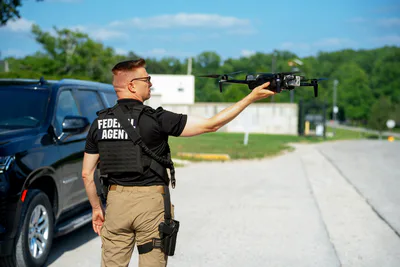
Regulatory Hurdles
Developing autonomous drones for law enforcement faces challenges due to regulatory hurdles. These hurdles involve legal restrictions and requirements that must be met for the deployment and operation of such drones. Compliance with these regulations is crucial to ensure the safe and effective use of autonomous drones in law enforcement activities.
14
Autonomous Drones for Law Enforcement
15
Multiple Choice
What is the main concern when it comes to enhancing law enforcement capabilities using autonomous drones?
Ensuring public safety
Protecting individual privacy rights
Surveillance and crime prevention
Challenges in ensuring public safety
16
Protecting Individual Privacy Rights
Trivia: Autonomous drones used in law enforcement raise concerns about protecting individual privacy rights. While they enhance surveillance and crime prevention, the balance between public safety and privacy is crucial. Striking the right balance is essential to ensure the ethical use of this technology. Public opinion and legal frameworks play a significant role in shaping regulations for drone usage in law enforcement.
17
Autonomous Drones in Law Enforcement
18
Multiple Choice
What is one of the applications of autonomous drones in law enforcement?
Enhancing surveillance capabilities
Expediting search and rescue operations
Monitoring traffic and crowd control
Gathering evidence and crime scene analysis
19
Autonomous Drones in Law Enforcement
Trivia: One of the applications of autonomous drones in law enforcement is enhancing surveillance capabilities. Drones equipped with cameras can provide real-time aerial views, helping law enforcement agencies monitor and gather information about potential criminal activities. This technology allows for more efficient and effective surveillance operations, enhancing public safety.
Show answer
Auto Play
Slide 1 / 19
SLIDE
Similar Resources on Wayground

17 questions
Foundations of Government: Rights and Limited Government
Presentation
•
9th - 12th Grade
14 questions
Supply, Demand and Equilibrium
Presentation
•
9th - 12th Grade
13 questions
Journalism Writing
Presentation
•
9th - 12th Grade
14 questions
Day 1 of the Periodic Table
Presentation
•
9th - 12th Grade
14 questions
PhysSci(H) - Charge & Coulomb's Law
Presentation
•
9th - 12th Grade
11 questions
ILOVEYOU - GRADE 9
Presentation
•
9th - 12th Grade
14 questions
Grammar 4B - Future Tense
Presentation
•
9th - 12th Grade
Popular Resources on Wayground
6 questions
PRIDE Always and Everywhere
Presentation
•
12th Grade
20 questions
Lab Safety Quiz

Quiz
•
6th Grade
26 questions
KOR Review Kahoot Questions
Quiz
•
8th Grade
21 questions
Continents and Oceans
Quiz
•
6th Grade
12 questions
Unit Zero lesson 2 cafeteria
Presentation
•
9th - 12th Grade
20 questions
Parts of Speech
Quiz
•
5th Grade
10 questions
Riddles Riddles fun Riddles
Quiz
•
6th - 12th Grade
16 questions
Subject & Predicate
Quiz
•
5th Grade
