

Irish political system

Presentation
•
English
•
University
•
Practice Problem
•
Hard

Eliana Barreiro
Used 2+ times
FREE Resource
20 Slides • 0 Questions
1
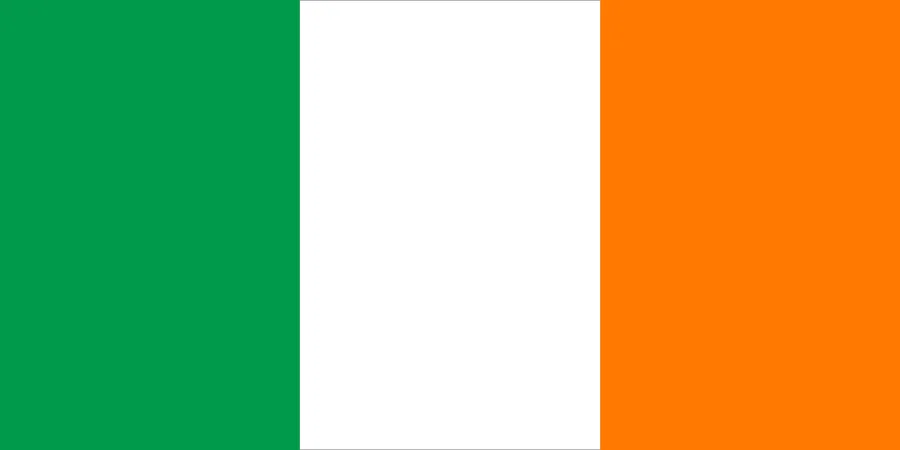
The Irish governmental system
2
President and Prime Minister
How is the government?
The Irish republic is a parliamentary democracy. The country's head of state, the president, is elected directly by the public for a term of seven years and is eligible for reelection for a second term. However, the head of state is NOT the head of government, that is the Prime Minister.
3
President and Prime Minister
Who chooses the Prime Minister?
The Prime Minister is chosen by the lower house of the parliament who normally is part of the mayority members of a political force. They are then formally appointed to office by the President, who is required to appoint whomever the house designates, without the option of declining to make the appointment.
4
The Parliament
Oireachtas Éireann
The bicameral parliament of Ireland, The Oireachtas consists of:
The President of Ireland
The two houses of the Oireachtas
Dáil Éireann (lower house)
Seanad Éireann (upper house)
5
The Parliament
How are they chosen?
Dáil Éireann, the lower house, is directly elected under universal suffrogate of all Irish citizens who are residents and at least eighteen years old. An election is held at least once every five years as required by law; however, the house can be dissolved at any time at the request of the Taoiseach, Prime Minister, (head of government). The Dáil has 160 members.
6
The Parliament
How are they chosen?
The Seanad is not directly elected but consists of a mixture of members selected in a number of different ways. 43 senators are elected by councillors and parliamentarians, 11 are appointed by the Taoiseach, and six are elected by two university constituencies, thus having 60 members in total.
7
The Parliament
Who is the Government responsible to?
The Government is formed from the Dáil and is responsible to it. If the Government loses the support of the Dáil, the result will be either:
• the ending of the current Dáil term by the President (this is called a dissolution) and a general election is called; or
• the formation of a replacement Government.
8
The Parliament
Executive power is vested in the prime minister, not in the president, who choses the cabinet (with the approval of the Dail). The prime minister, the deputy prime minister (or vice-prime minister), and the minister for finance must be members of the Dáil. The other government ministers must be members of either house, but no more than two may be senators.
Comment: There is not vice-president, if a president leaves their position there should be elections within the following 60 days.
9
The Parliament
The Government meets and acts as a collective authority. This means that the Government as a whole, rather than individual members of the Government, makes all decisions. Ministers of State (also known as Junior Ministers) are also appointed by the Prime Minister to assist with the work of Government.
10
Ministers and Minister of State. What's the difference?
Appointment. Unlike senior government ministers, which are appointed by the President of Ireland on the advice of the Prime Minister and the prior approval of Dáil Éireann, Ministers of State are appointed directly by the government, on the nomination of the Prime Minister.
Ministers: https://www.gov.ie/en/organisation-information/9b5048-government-ministers/
11
Let's revise what we've learnt
12
True or False
The Republic of Ireland is a parliamentary democracy.
The president is elected for a term of 5 years.
The president is the head of government.
The prime minister is the head of state.
The primer minister is chosen by parliament.
The president can't decline the appointment of the PM.
13
True or False
The parliament is bicameral.
The lower house (Dáil) is chosen by elections.
The Prime Minister can dissolve the Dáil.
The Seanad is also chosen by elections.
If the government loses suppor of the Dail, the Dail can be dissolved or the government replace by calling new elections.
The prime minister, the deputy prime minister (or vice-prime minister), and the minister for finance must be members of the Dáil.
14
Economy of Ireland
Ireland has a mixed economy.. The constitution provides that the state shall favour private initiative in industry and commerce, but the state may provide essential services and promote development projects in the absence of private initiatives. Thus, state-sponsored (“semistate”) bodies operate the country's rail and road transport, some of its television and radio stations, its electricity generation and distribution system, and its peat industry. State companies also are active in the fields of air transport and health insurance The advent of a single European market in the 1990s encouraged many of these enterprises to privatize and become more competitive.
15
Economy of Ireland
Ireland’s high-technology sector—made attractive by a very low 12.5 percent corporate tax rate— spurred economic growth during the 1990s and helped reduce unemployment . The economic boom, during which the country’s growth was more than double that of most other EU countries, gave rise to the country’s being labeled the “Celtic Tiger.”
16
Economy of Ireland
By 2001, however, the benefits of new jobs created by foreign direct investment via multinational corporations had begun to slow. Still focused on high growth, Ireland’s political leadership and its banking sector turned to the mortgage and construction industries to maintain growth. By 2008 it had become clear that much of the growth in banking and construction was a bubble without capital to back it. Collapse soon followed, and Ireland went into a deep economic recession for several years.
17
Economy of Ireland
A bailout of the Irish financial system by the European Union (EU) and the International Monetary Fund (IMF) in 2010 was accompanied by requirements for deep austerity cuts that further dampened prospects for the domestic Irish economy. Ireland had benefited in the 1990s and early 2000s from a combination of low tax rates and responsive social programs; however, both contributed to the significant budget challenges that came as a result of the 2008 financial collapse.
18
Economy of Ireland
In time, new or growing Irish-owned firms in such fields as agribusiness, building materials, and air transport also became firmly established internationally, and again these took full advantage of the globalised world economy; not just Europe. However, Ireland’s solid economic recovery from crisis depended on the favourable interest rates which were eventually applied to the borrowings made from European sources to meet the costs of the downturn.
That is to say, regulatory efficiency and openness to global trade and investment support Ireland’s competitiveness. However, the budget deficit has been on the rise, increasing the debt burden.
19
Economy of Ireland
Although conventional GDP measures greatly exaggerate Ireland’s prosperity, the macroeconomic advances that have been made would have seemed impossible when Ireland joined the European Economic Community half a century ago,
This is not to imply that Europe has been the sole agent of Ireland’s economic transformation. Instead, it seems that Ireland’s macroeconomic fortunes – for good and ill – over this period have been largely shaped by its embrace of globalisation.
20
Let's read the News
https://www.economist.com/the-economist-explains/2023/10/31/whats-weird-about-irelands-gdp?utm_medium=cpc.adword.pd&utm_source=google&ppccampaignID=19495686130&ppcadID=&utm_campaign=a.22brand_pmax&utm_content=conversion.direct-response.anonymous&gad_source=1&gclid=CjwKCAiAvJarBhA1EiwAGgZl0Ix2eu1-nM5Cb1OJIg8ruzNODlSFL9IKRJ-UzYeZzImfi4DWuvlOGBoC_fEQAvD_BwE&gclsrc=aw.ds
https://cepr.org/voxeu/columns/eu-and-irelands-economic-growth-and-recovery
https://www.irishtimes.com/ireland/housing-planning/2023/03/23/irelands-housing-crisis-facts-and-figures-all-you-need-to-know/
https://www.irishexaminer.com/business/economy/arid-41279260.html
The Irish governmental system
Show answer
Auto Play
Slide 1 / 20
SLIDE
Similar Resources on Wayground

18 questions
Prepositional phrases
Presentation
•
University
18 questions
Future Will / Going to
Presentation
•
University
16 questions
Simple present
Presentation
•
University
16 questions
Types of sentences
Presentation
•
University
13 questions
Phrasal Verbs
Presentation
•
University - Professi...
15 questions
Past simple - Irregular verbs
Presentation
•
University
16 questions
Passive voice
Presentation
•
University
15 questions
Simple Past
Presentation
•
University
Popular Resources on Wayground
20 questions
"What is the question asking??" Grades 3-5

Quiz
•
1st - 5th Grade
20 questions
“What is the question asking??” Grades 6-8
Quiz
•
6th - 8th Grade
10 questions
Fire Safety Quiz
Quiz
•
12th Grade
20 questions
Equivalent Fractions
Quiz
•
3rd Grade
34 questions
STAAR Review 6th - 8th grade Reading Part 1
Quiz
•
6th - 8th Grade
20 questions
“What is the question asking??” English I-II
Quiz
•
9th - 12th Grade
20 questions
Main Idea and Details
Quiz
•
5th Grade
47 questions
8th Grade Reading STAAR Ultimate Review!
Quiz
•
8th Grade