

Biology Interim Review Fall 23

Presentation
•
Biology
•
10th Grade
•
Practice Problem
•
Easy
+18
Standards-aligned

Betsey Martin
Used 13+ times
FREE Resource
21 Slides • 38 Questions
1

2

3
Multiple Select

Based on the food web, what two organisms does the snake eat?
Hawk
Bird
Frog
Owl
4
Reorder
In an marine food web, seals, which feed on birds, fish, and squid, are carnivores. Plankton are autotrophs that feed krill and decopods. Krill are eaten by birds and fish, and decopods are eaten by squid and fish. Based on the food web description provided, create a food chain of the following organisms to accurately represents the flow of energy in this ecosystem.
phytoplankton
krill
fish
seals
5
Multiple Choice
What would be the safest way to reduce the impact of a non-native species while minimizing the impact on other organisms?
Introducing a native species that will prey on the non-native one.
6

7

8

9
Multiple Choice
10
Multiple Choice

In this energy pyramid, which organisms have the most energy available?
Producers
Carnivores
Herbivores
Top Predator
11

12
Multiple Select
Which of the following would be considered density-dependent limiting factors? Select all that apply.
Seasonal changes
Overcrowding
A tornado
Competition between organisms
13

14
Multiple Choice

What does the yellow line represent?
exponential growth
logistic growth
carrying capacity
none of the above
15
Multiple Choice

Based on the information in the graph, what conclusion can be drawn about the time period between 1955 and 2000?
The rabbit population had few factors and the ecosystem is beyond it's carrying capacity.
The rabbit population had many limiting factors and the ecosystem is beyond it's carrying capacity.
The rabbit population had many limiting factors and the ecosystem had not yet reached its carrying capacity.
The rabbit population had few limiting factors and the ecosystem had not yet reached its carrying capacity.
16

17
Multiple Choice
Wolves specialize in cooperative game hunting. In the 1920s, wolves were removed from Yellow Stone Park. The 75-year absence of gray wolves in Yellowstone led to declines in biodiversity, and habitat quality, all of which is gradually returning upon wolf reintroduction. What role does the wolf play in the ecosystem?
Niche species
Keystone species
Invasive species
Producer
18

19
Multiple Choice
How do plants and animals obtain nitrogen?
Bacteria in the soil convert nitrogen from the air into a form that plants can use, and animals get nitrogen by eating the plants.
20

21
Multiple Choice
Why is the phosphorus cycle least affected by atmospheric changes?
22
Multiple Choice
Farmers use fertilizer to make their crops grow larger and fast. What effect on the ecosystem can fertilizer have on groundwater?
23

24

25
Multiple Choice
The main human activity that releases greenhouse gases is
using public transportation and there by reduce the affects of greenhouse gases.
burning fossil fuels
texting on cellphones
eating meat
26
Multiple Choice
What can be done to reduce greenhouse gases?
Cut down trees
use less fossil fuels and take public transit.
drive more
27

28
Multiple Choice
Major geological events and sudden changes in climate can cause the extinction of organisms in an area, which creates vacancies in ecological niches. What happens with these vacancies?
Other organisms will adapt, evolve, and compete to fill the niches.
29
Multiple Select
Which explanations accurately describe how cell structures interact in order to maintain
homeostasis?
The cell wall and vacuole function to maintain the structure of plant cells.
Molecules can enter the cell by passing through the cell membrane and may take part in chemical reactions within the cytoplasm.
The smooth er contains ribosomes for making proteins.
The mitochondria is vital for storing energy.
The rough er and the golgi body produce lipids.
30
Dropdown
31

32
Multiple Choice
How does fire help maintain the stability of an ecosystem?
By clearing out excessive vegetation which maintains the habitat for animals.
33

34
Multiple Choice
How does direct sunlight impact the rate of photosynthesis?
35
Multiple Choice

During photosynthesis, how is the light energy that strikes the cell transformed into the chemical energy stored in sugars?
Energy is transferred to sugars through
intermediates, such as H2O and O2.
Energy is transferred to sugars through
intermediates, such as and CO2.
Energy is transferred to sugars through
intermediates, such as ATP and NADPH.
Energy is transferred directly to sugars without the use of intermediates.
36
Multiple Choice
Plants with small leaves are better adapted to survive long periods with little
water and why?
Smaller surface area therefore it loses less water through
transpiration.
37

38
Multiple Choice
If the smooth er was damaged, what homeostatic process do you predict would be most affected and why?
Protein synthesis will not take place.
Lipids will not be created which are used to form the cell membrane.
Cellular respiration will no longer take place.
39
Match
Match the macromolecule to it's correct function.
Carbohydrate
Lipid
Protein
Nucleic Acid
Quick energy
Long term energy
Build and repair muscle
Store and transmit genetic information
Quick energy
Long term energy
Build and repair muscle
Store and transmit genetic information
40
Multiple Choice
Which macromolecule would be best to repel water from the surface of your car?
Lipids because their
nonpolar nature makes them insoluble in water.
Cellulose because it provides structural support.
Water-soluble protein because it dissolves the water.
Hydrophilic polymer because it adheres to the car.
41

42
Multiple Choice
43
Multiple Choice
Enzymes act on many different substrates
True
False
44
Multiple Choice
Which of the following is MOST LIKELY the main function of this enzyme?
To speed up the rate at which proteins are
digested
To control the movement of materials through the digestive tract
45

46

47
Multiple Choice
Which best describes which directions molecules move during diffusion?
from an area of equilibrium to an area of high concentration
from an area of equilibrium to an area of low concentration
from an area of low concentration to an area of high concentration
from an area of high concentration to an area of low concentration
48
Multiple Choice
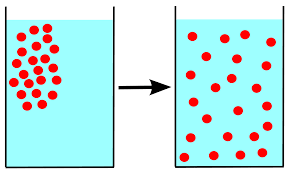
49
Multiple Choice
The movement of gas particles across the cell membrane is an example of which type of transport?
Osmosis
Endocytosis
Diffusion
50

51
Multiple Choice
52
Multiple Choice
In which osmotic state does the cell shrink?
hypertonic
isotonic
hypotonic
53
Multiple Choice
In which osmotic state does the cell look normal?
hypertonic
isotonic
hypotonic
54
Multiple Choice
During which osmotic state does the cell swell and get bigger?
Hypertonic
Isotonic
Hypotonic
55
Multiple Choice
In a hypotonic solution, where is most of the water?
inside the cell
outside of the cell
56
Multiple Choice
In a hypertonic solution, where is most of the water?
inside the cell
outside of the cell
57
Multiple Choice
If a cell is placed in a HYPERTONIC solution, water will move _________ of the cell, causing it to ___________.
58

59
Multiple Choice
Which one is the definition of active transport?
movement of particles through the cell membrane from a region of lower concentration to a region of higher concentration using energy in the form of ATP.
passage of water molecules from a region of their higher concentration to a region of their lower concentration through a partially permeable membrane
net movement of molecule from a region of higher concentration to region of lower concentration. Molecule down a concentration gradient
net movement of molecule from a region of lower concentration to region of higher concentration. Molecule down a concentration gradient
Show answer
Auto Play
Slide 1 / 59
SLIDE
Similar Resources on Wayground

57 questions
Poetic Devices- LESSON
Presentation
•
10th Grade
58 questions
Carbon-Nitrogen Cycle
Presentation
•
10th Grade
55 questions
Linear Characteristics Review
Presentation
•
9th Grade
55 questions
Biology Review
Presentation
•
9th Grade
56 questions
GRAMMAR FOR RECEPTION
Presentation
•
KG
53 questions
Biology: Cells (English)
Presentation
•
10th Grade
54 questions
Unit 2 Family
Presentation
•
10th Grade
Popular Resources on Wayground
21 questions
Continents and Oceans

Quiz
•
6th Grade
20 questions
Parts of Speech
Quiz
•
5th Grade
16 questions
Subject & Predicate
Quiz
•
5th Grade
25 questions
Multiplication Facts
Quiz
•
5th Grade
12 questions
Map Skills
Quiz
•
3rd Grade
22 questions
Continents and Oceans
Quiz
•
5th Grade
15 questions
Rounding Decimals
Quiz
•
5th Grade
20 questions
Brand Labels
Quiz
•
5th - 12th Grade
Discover more resources for Biology
10 questions
Exploring the 4 Major Macromolecules and Their Functions

Interactive video
•
9th - 12th Grade
20 questions
Cell organelles and functions
Quiz
•
10th Grade
20 questions
Cell Transport
Quiz
•
9th - 12th Grade
20 questions
Macromolecules
Quiz
•
10th Grade
20 questions
BIOLOGY-CELL MEMBRANE AND CELL TRANSPORT
Quiz
•
9th - 10th Grade
18 questions
FAKE IT 'TILL YOU MAKE IT: Mitosis vs. Meiosis
Quiz
•
10th Grade
16 questions
AP Biology: Unit 2 Review (CED)
Quiz
•
9th - 12th Grade
16 questions
AP Biology: Unit 1 Review (CED)
Quiz
•
9th - 12th Grade