

PMA Review: 1.4 and 2.1

Presentation
•
Biology
•
12th Grade
•
Practice Problem
•
Medium
+11
Standards-aligned

Alicia Caley
Used 27+ times
FREE Resource
7 Slides • 17 Questions
1
PMA 2 Review: 1.4 and 2.1
2
Human Impacts on the environment
Humans are causing a great loss in biodiversity due to a number of causes:
Habitat loss: The destruction or disruption of earths natural habitats
Invasive species: Introduced species that carry diseases, prey on native species and disrupt food webs
Climate change: largely caused by the burning of fossil fuels which intensify the greenhouse effect
Overharvesting: harvesting resources faster than they can be replenished
3
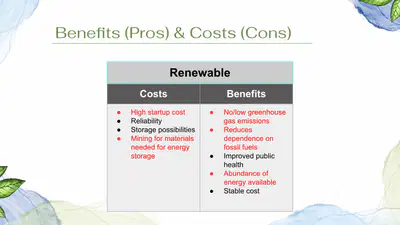
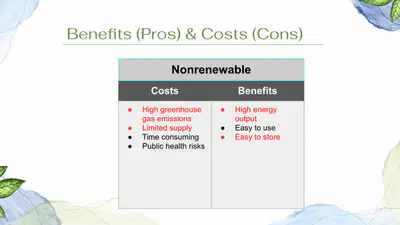
Renewable Vs. Non-renewable resources
4
5
Environmental Parameters
What they are
Factors in the that measure how a specific environment/habitat is performing, what its condition is, or what its status is
pH, temp, salinity, dissolved gases
Why we use them
Protect species and ecosystems
Predict how changes in environment will impact area
Prove is an activity is causing harm to an ecosystem
6
Multiple Choice
What is one disadvantage of using fossil fuels?
Fossil fuels will never run out
Fossil fuels are very efficient forms of energy and are readily available, making them cheaper
Burning fossil fuels contributes to the greenhouse effect which causes global warming.
Fossil fuels are better for the environment.
7
Multiple Choice
Why are fossil fuels considered non-renewable resources if they are still forming beneath the surface today?
They are being formed as a type of methane we cannot use
They are being formed too far beneath the surface
We are depleting the fossil fuels much faster than they can form
8
Multiple Choice
In recent years, the push to switch to renewable sources of energy
from nonrenewable has been much greater. Which of the following
would be reasons to convince someone to make that switch?
The cost of energy to power their homes would increase
They would release less carbon dioxide which decreases effects of global warming when compared to non-renewables
Non-renewable energy sources are in limited supply, so switching to renewable sources would mean less competition for them
In comparison to other houses, their house would be the most efficient at generating energy
9
Multiple Select
When should environmental monitoring occur? Select all that apply
Never
When there is a decline in the size of a population
Only when there is a disturbance in an ecosystem
After the introduction of a new human activity
10
Multiple Choice
In 2014, poor treatment and testing of water resulted in a health crisis where many residents of Flint, Michigan were affected. It was found that there were high levels of copper and lead in the water supply. In 2017, filtration systems were installed in the community and lead pipes were replaced to improve water quality. City officials monitored the levels of copper and lead in water; these minerals have decreased over the last two years. Which statement best describes why it is important to continue monitoring even though levels have dropped?
To evaluate the levels of other pollutants in the water
To compare the water quality of treated and untreated samples
to determine the impact of treatment plants on the environment
to allow officials to fix the issue before it becomes a problem again
11
Multiple Choice
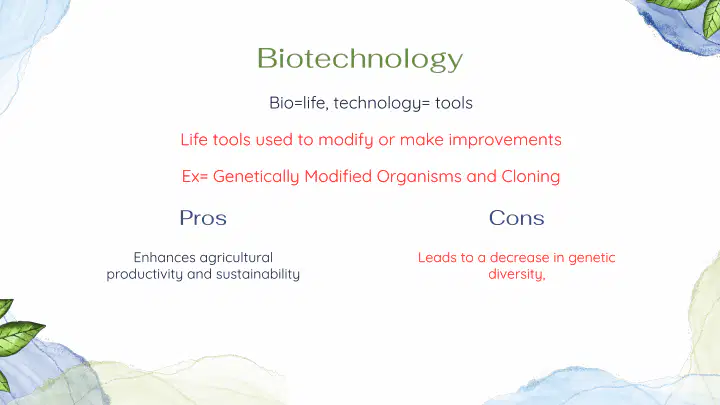
Noah, Olivia and Ethan are discussing the role of biotechnology in agriculture. What would be a potential benefit of using biotech in agricultrue
It can increase crop yield and resistance to pests
It can make the crops taste worse
It has no significant impact
It can decrease the nutritional value of crops
12
Multiple Choice
Cloning is an emerging field that could allow livestock breeders to create exact genetic copies of existing animals that produce high quantities of goods. Which of the following would best explain an environmental impact from the use of cloned livestock?
Consuming these livestock will cause genetic modifications in humans
More food will be produced leading to a decrease in worldwide hunger
Farmers will use more antibiotics to keep the clone healthy
The genetic diversity of the livestock will decrease
13
Multiple Choice
One of the biggest ways that humans are impacting biodiversity is
through habitat destruction caused by farming and urbanization. If the EPA passed a law requiring farmers to restore the habitat that they destroyed, what would happen to biodiversity?
It would continue to decline
Populations of different species would start to fight over the land
Biodiversity would start to increase and be maintained
We would not see any difference because we are already past the
point of restoration
14
Multiple Choice
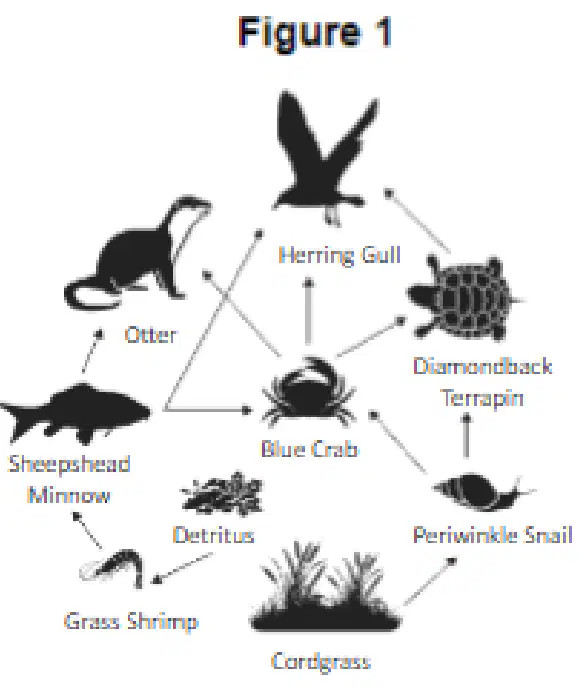
Which of the following best explains the difference in the amount of available energy in the trophic levels of the salt marsh ecosystem?
There is more available energy in the otter because they have greater muscle mass.
There is less energy available in the cordgrass because there are high levels of nitrogen from runoff.
There is more energy available in the second trophic level because more energy and nutrients are available in
the cordgrass.
There is less available energy for the herring gull because of the loss of energy through metabolism in each of
the lower trophic levels.
15
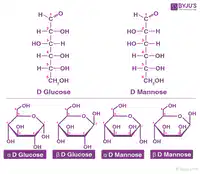
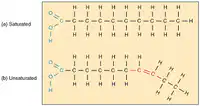
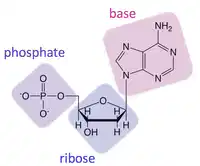
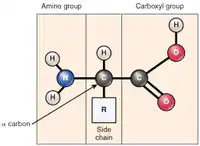
Monomer: Monosacharrides (sugars)
Elements: Carbon, Hydrogen, Oxygen (CHO)
Function: Short term energy
Carbohydrates
Monomer: Fatty Acids + glycerol
Elements: Carbon, Hydrogen, Oxygen (CHO)
Functions: Long term energy/compose cell membranes
Lipids
Monomer: Nucleotides
Element: Carbon, Hydrogen, Oxygen, Phosphorous, Nitrogen (CHONP)
Function: stores genetic info
Nucleic Acids
Monomer: Amino Acids
Elements: Carbon, Hydrogen, Oxygen, Nitrogen
Functions: Cell transport, facilitate reactions
Proteins
Macromolecules
16
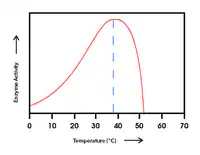
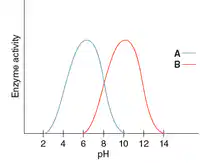
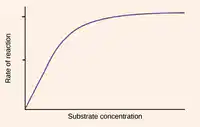
Enzymes are a type of protein called a catalyst
They speed up the rate of chemical reactions by lowering the activation energy
Every enzyme has an optimal temperature, pH, and concentration under which it will operate the best
Outside of these conditions, the enzyme may not function at all
Enzymes
17
Match
Match the following function to the biomolecule
Proteins
Nucleic acids
Lipids
Carbohydrates
Catalyzes specific chemical reactions
stores genetic information
regulates movement into and out of cells
Short term energy
Catalyzes specific chemical reactions
stores genetic information
regulates movement into and out of cells
Short term energy
18
Multiple Choice
What macromolecule is made up of C,H,O,N?
Carbohydrates
Lipids
Proteins
Nucleic acids
19
Multiple Choice
Which macromolecule has monosaccharides as monomers?
Carbohydrates
Lipids
Proteins
Nucleic acids
20
Multiple Choice
This macromolecules is responsible for providing our genetic material. Choose the macromolecule that best fits.
Carbohydrates
Lipids
Proteins
Nucleic acids
21
Match
Match the macromolecule to its structure
protein
protein
lipid
Nucleic acid
Carbohydrate
protein
lipid
Nucleic acid
Carbohydrate
22
Multiple Choice
Enzymes are _______________ that _____________________ chemical reactions by ____________ the amount of activation energy required to start the reaction.
carbohydrates, slow down, lowering
proteins, speed up, increasing
lipids, speed up, lowering
proteins, speed up, lowering
23
Multiple Choice
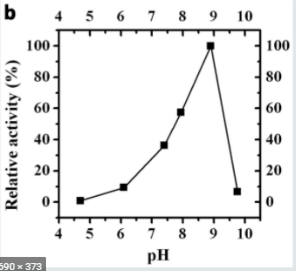
What is the optimal pH for this enzyme?
6
10
9
7
24
Multiple Choice

What is the optimal temperature of this enzyme?
60
40
70
30
PMA 2 Review: 1.4 and 2.1
Show answer
Auto Play
Slide 1 / 24
SLIDE
Similar Resources on Wayground

18 questions
PPC - 6.0 Right Triangle Trigonometry Lesson
Presentation
•
12th Grade
20 questions
4.2 Basic Probability Rules
Presentation
•
12th Grade
20 questions
CAUSATIVE FORM
Presentation
•
12th Grade
19 questions
Summary of Ionic Compounds
Presentation
•
12th Grade
18 questions
Integumentary Quizizz Lesson
Presentation
•
12th Grade
18 questions
Circulatory Diseases and Disorders
Presentation
•
12th Grade
17 questions
6A Components of DNA
Presentation
•
12th Grade
19 questions
AP Bio Summer Math Practice
Presentation
•
12th Grade
Popular Resources on Wayground
10 questions
HCS SCI 03 Summer School Review 4

Quiz
•
3rd Grade
11 questions
HSMS - Standard Response Protocol
Quiz
•
6th - 8th Grade
16 questions
1.1-1.2 Quiz Review
Quiz
•
9th - 12th Grade
12 questions
Exponent Expressions
Quiz
•
6th Grade
20 questions
Adding and Subtracting Integers
Quiz
•
6th - 7th Grade
11 questions
Northeast States
Quiz
•
3rd - 4th Grade
10 questions
Characterization
Quiz
•
3rd - 7th Grade
10 questions
Common Denominators
Quiz
•
5th Grade