

Env Sci 10-1: Land Use and Urbanization

Presentation
•
Science
•
12th Grade
•
Practice Problem
•
Medium
+7
Standards-aligned

Abby Fancsali
Used 10+ times
FREE Resource
12 Slides • 10 Questions
1
Lesson 10-1 Land Use and Urbanization

2
Multiple Choice
If seismic waves are passing through the earth, you are experiencing...
an earthquake
a hurricane
a flood
a tornado
3
Multiple Choice
If you live in a tropical area and are blown around by high-speed wind, you may be experiencing....
an earthquake
a tornado
a hurricane
a tsunami
4
Multiple Choice
diseases that are new to a population or have moved into a new area
infectious disease
emerging disease
pandemic
epidemic
5

Lesson Objectives
Differentiate between land Cover and Land Use, and describe how people affect both
Explain how and where urbanization occurs
Describe the environmental impacts of ubanization
6
Land Cover
Land cover: Vegetation and structures that cover land.
Includes trees, grass, crops, wetlands, etc.

7
Land Use
Land use: Human activities that occur on land
Includes farming, grazing, logging, mining, residential, etc.
Directly ties to the land cover of the area

8
Humans and Land
Humans change land cover, especially in urban areas.
These changes have environmental and economic effects.

9
Urban & Rural Areas
Urban: Land mostly covered with buildings and roads (includes suburbs)
human population of 2500+
Suburbs: Smaller towns or cities outside of a large city
Rural: Any other type of land use or land cover (includes forests, cropland, etc.)

10
Multiple Choice
Which type of area would Miami, Florida, be considered?
Urban
Rural
Country
Subruban
11
Multiple Choice
Human activities that occur on land are known as.....
Land Use
Land Cover
Land Livability
Sprawl
12
Multiple Choice
Which word describes a smaller city or town outside of a larger city?
Townlet
Village
Suburb
Capital
13
Urbanization
Urbanization: a shift from rural areas to cities
Started during the Industrial Revolution when improved farming provided more time for other developments, which led to new industry
Cities are not new, but the enormous size of today’s cities is.
More than 20 cities have at least 10 million residents.
Number of people in cities has more than quadrupled since 1950

14
The Rise of Cities
Factors that contribute to the rise of urbanization include population growth and industrialization.
Jobs in a city draw more people to them
Most cities are located near a transportation route such as a large body of water, railroad, or highway.

15
Environmental Costs of Urbanization-Pollution
Both Passive and active
Many areas take their waste and transport it somewhere else, masking the problem
Increased waste
industrial byproducts
noise pollution
light pollution
Not evenly distributed among residents
Not in My Back Yard (NIMBY) Phenomenon
16
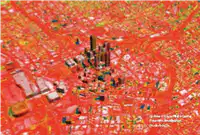
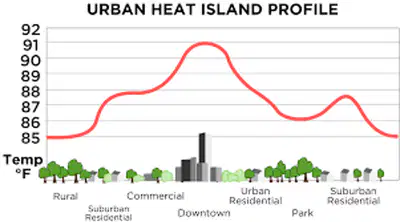
Environmental Costs of Urbanization-Heat
Heat islands: Cities, several degrees warmer than surrounding areas, affect local weather and trap pollutants.
Infrastructure: the facilities services, and installations needed for functioning
Replaces grass areas and other natural plants with concrete, which traps heat
Affects local weather, more storms
17
Environmental Costs of Urbanization-Resources
Imported resources: Resources that are transported from one location to another
Fossil fuels are burned to import food, water, fuel, and raw materials.

18
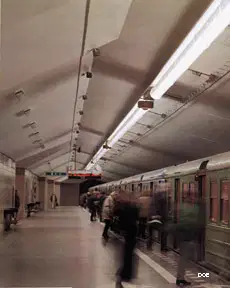
Environmental Benefits of Urbanization
Efficiency: Once resources arrive in cities, Less fuel and resources are needed to distribute goods and services to residents
Universities and research centers: Urban areas tend to foster education and innovation.
Land Preservation: Dense urban centers leave room for agriculture, wilderness, biodiversity, and privacy.
19
Multiple Choice
True or False: The idea of Cities is a relatively new idea
True
False
20
Multiple Choice
What is one of the primary factors that draws people from rural areas to urban areas?
less pollution
more jobs
more open space
heat islands
21
Multiple Choice
The effects of urban areas on the environment are...
only negative
only positive
both negative and positive
nonexistent
22
Multiple Choice
Cities that are several degrees warmer than surrounding areas are known as
Heat islands
Hot Spots
Temperate Zones
Urban Roasters
Lesson 10-1 Land Use and Urbanization
Show answer
Auto Play
Slide 1 / 22
SLIDE
Similar Resources on Wayground

14 questions
Science Lesson
Presentation
•
12th Grade
16 questions
CAMPING
Presentation
•
12th Grade
17 questions
Civics Prep
Presentation
•
11th Grade
17 questions
health and safety
Presentation
•
12th Grade
15 questions
Non-renewable and Renewable energy sources
Presentation
•
12th Grade
19 questions
Urban Heat Islands
Presentation
•
12th Grade
18 questions
Chapter 13: Safety (Section III; pp. 174-190)
Presentation
•
11th - 12th Grade
20 questions
Wind Belts Lesson
Presentation
•
12th Grade
Popular Resources on Wayground
24 questions
PBIS-HGMS Day 10

Quiz
•
6th - 8th Grade
10 questions
HCS SCI 03 Summer School Review 3
Quiz
•
3rd Grade
11 questions
Home Scope
Quiz
•
7th - 8th Grade
15 questions
HCS SCI 05 Summer School Assessment 3 Review
Quiz
•
5th Grade
35 questions
Lufkin Road Middle School Student Handbook & Policies Assessment
Quiz
•
7th Grade
18 questions
Geo 11.3 Area of Circles and Sectors
Quiz
•
9th - 11th Grade