

HR Revision

Presentation
•
Business
•
6th - 8th Grade
•
Easy

Amy Pringle
Used 6+ times
FREE Resource
64 Slides • 43 Questions
1
BUSINESS MANAGEMENT
HR REVISION
2
WORKFORCE PLANNING
HR REVISION
3
Open Ended
What impact did Covid-19 have on the staffing at hospitals?
4
Workforce planning is about deciding how many and what type of workers are required in a business

5

LEARNING INTENTIONS
• We are learning about Workforce Planning
SUCCESS CRITERIA
• Describe the term 'Workforce Planning'
• Describe why an organisation use workforce planning
• Describe the benefits of workforce planning
6
Open Ended
What different types of "workers" are needed at Hillpark Secondary School?
List as many as you can
7
Open Ended
Why is it important that the school plans ahead to plan their workforce? i.e. Why do Glasgow Council "forecast" what their future workforce will look like?
8

Workforce Planning in Brief
• Monitor changes and trends in the labour market
• Identify and estimate when employees will be needed
• Consider skills that will be required in the future
• If necessary training can be organised so employees are
equipped to meet changing job requirements
• Helps achieve organisational objectives
• Without HR planning, organisations could waste money
on unnecessary or ineffective resources
9

The world of work is changing rapidly:
• Increase in part-time working
• Increased number of single-parent families
• More women seeking work
• Ageing population
• Greater emphasis on flexible working hours
• Technology allows employees to communicate more effectively whilst
apart – working from home
• People rarely stay in the same job for life
10

Past Paper Question
1. Describe the purpose of Workforce
Planning for NHS. (2)
11

Past Paper Question
1. Describe the purpose of Workforce Planning
for NHS. (2)
-
The NHS must ensure to plan effectively so they have the
correct staff in roles with the right skills. Planning the staff
they need will ensure that they are not left short staff or
have too many staff placed in jobs that are not required.
Workforce planning ensures the NHS don't spend finance
on staff they do not need, they can plan ahead and budget
to spend their finance on other activities.
12
RECRUITMENT & SELECTION
HR REVISION
13
RECRUITMENT
N5 & HIGHER

14
Fill in the Blanks
Recruiting by filling a role with someone who does not already work within the business
15
Fill in the Blanks
Recruiting by filling a role with someone who already works within the business is known as
16

Internal Recruitment
Ways a business can advertise INTERNALLY
Staff newsletter
Notice board
Intranet
12

17
Multiple Select
What are the benefits of recruiting internally?
The candidate already knows about the business processes
It can be a quick way to find a candidate
Your staff will be more motivated to work hard for promotion
It leaves a role which needs to be filled
18


Internal Recruitment
ADVANTAGES
• Fills vacancy more quickly
• Enhance staff morale
• Prior knowledge of applicant’s skills
• Save induction training
DISADVANTAGES
• Limited pool of candidates
• No fresh injection of ideas
• Results in another vacancy elsewhere
13
19
Word Cloud
If you were looking for a new job, where would you look to find a job advertised?
20


External Recruitment
Ways a business can advertise EXTERNALLY
• National and local newspaper adverts
• Specialist magazines and journals e.g. The Scottish Farmer, Accountancy Age
• Internet Adverts – on own website or specialist recruitment sites such as
S1jobs.com, Monster.co.uk
• Job Centre
• Recruitment Agency – job seekers register an interest and the agency selects
• Contact with colleges and Universities
14
21

External Recruitment
Advantages
✓ People with new ideas can
be brought into the
organisation
✓ Can attract large quantities
of applicants - more chance
of getting right employee
✓ Specialists can be hired
✓ Doesn’t create a chain of
vacancies – back fill
Disadvantages
Existing employees who
applied but weren’t successful
may feel unvalued – drop in
motivation
New employee may be
resented by others
Expensive process
Person is unknown therefore
high chance the wrong person
could have been chosen
15
22
Match
Match the following advantages of each method
Internal
External
Internal
External
Is a cheaper method
Can attract more applicants
Already knows business processes
Can bring new ideas
Is a cheaper method
Can attract more applicants
Already knows business processes
Can bring new ideas
23
SELECTION
HR REVISION
24

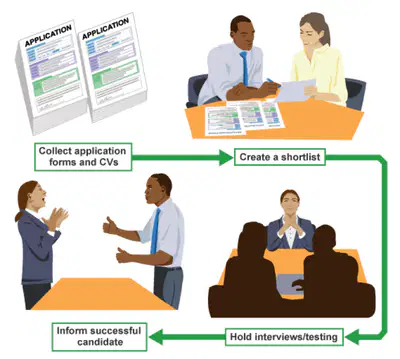
THE SELECTION PROCESS
LI:
Identify the stages in
the selection process
25

SELECTION methods are used to ensure the business
is choosing the correct person for the position.
Once people have applied for the role, the business needs to
then decide who is best for the job and how they can ensure
they are selecting the right candidate.
26
Drag and Drop
except that the applicant creates this
27
Multiple Select
Different types of testing available to assess a candidate prior to giving them the job
Personality
Skills
Fitness
Intelligence
28
Fill in the Blanks
Can be held in a panel or 1-1 to discuss candidates experience and see their body language
29
Multiple Choice
What can be included in a candidate reference?
30
TRAINING
HR REVISION
31
TRAINING
HIGHER

32
TRAINING
N5

33
Fill in the Blanks
Murdo has started a new job at Nando's. What is the name of the training that he is given on his first day?
Type answer...
34
30
Induction Training – what does it include?
Background information on company e.g. history, main strategic
objectives, mission statement
Organisation procedures e.g. how to apply for annual leave
Health and Safety rules e.g. fire safety training
How company communicates with staff e.g. use of the Intranet or e-mail
system
Staff attend induction training in first few days or weeks of employment
It includes:
35

31
Induction Training – what
are the benefits?
• Helps new staff feel part of the organisation more quickly and bond
with other new staff
• Can motivate new employees who feel more “welcome”
• Fulfils Health and Safety requirements e.g. fire drill training
• Creates an image of a good employer who cares about staff needs and
may reduce staff turnover as loyalty is fostered
• Helps employees get to know their working environment before day-
to-day work demands are made on them
36

33
Types of Training for Existing Staff
Off the job training:
training is conducted in a
different location from the workplace and
sometimes by external trainers.
e.g. Attending college to study for an HNC in
Business Administration or going to the company’s
HQ for an ‘in-house’ course
37

34
Types of Training for Existing Staff
On the job training : carried out at the
employee’s place of work during a normal day with
real tasks. No need to pay external training fees
and training should be very relevant to demands of
the job
38
Fill in the Blanks
Ciaran works in the warehouse at Iceland. He wants to train in different areas so spends some time working with someone on checkouts and then in the office. What type of training is this?
Type answer...
39
Multiple Choice
A member of staff is studying for a degree in management studies at a local university. What type of training is this?
On-the-job training
Off-the-job training
Induction training
40
Open Ended
Why would it benefit the organisation to train their staff? List 2 reasons.
41

32
Why should training be a
continuous process?
• Changes in technology requires skills to be updated
• Reinforcement of skills
• Shows workforce that they are valued - increases motivation
• Helps build up a good reputation
• Can reduce number of accidents and mistakes - saving money
• Helps keep up with competitors
• Allows staff to aim for continual improvement/ promotion
42

35
Training Methods
Demonstrations : trainee watches then carries out
task themselves
Coaching : trainee taken through task step-by-step
and given feedback from trainer
Job rotation : trainee moves around different jobs
learning different tasks
Distance learning : pack of materials sent to trainee
to work at their own pace e.g. on PC. Sends completed
work to an assessor for marking. May gain external
qualification as a result
43
Match
Match the following methods of On the Job Training
Demonstrations
Coaching
Job Rotation
Distance Leanring
trainee watches an experienced member
taken through task step-by-step
moving around different jobs
packs of material given to complete
trainee watches an experienced member
taken through task step-by-step
moving around different jobs
packs of material given to complete
44

36
Costs and Benefits of Training
COSTS
Financial cost of course e.g. at college
In-house training centre costs e.g. premises and equipment
Wages of trainee who is not productive
Experienced staff have reduced output whilst supervising new staff
Cost of correcting errors made whilst developing skills
Accommodation/ transportation costs
Cost of covering staffing who attend course e.g. locum or supply staff
Staff resistance to training may create bad feeling
Staff may leave for better paid jobs or ask for pay rise
45

37
Costs and Benefits of Training
BENEFITS
Improved production levels and greater profitability
Increased competitiveness as quality of product/service increases
Increased staff motivation – less staff turnover
Less accidents and wastage - saving costs
Increased flexibility of staff to fulfil several job roles
Image of organisation improves - better reputation
Change is easier to implement
Ability to recruit better staff who are attracted by training opportunities
46
Multiple Choice
Which of the following is a disadvantage of on-the-job training?
Employees may learn skills that are not relevant to the business
Cost of training may be high
Trainees may pick up bad habits from other workers
47
Multiple Select
Identify disadvantages of off-the-job training?
Employees may learn skills that are not relevant to the business
Cost of training may be high
48
Open Ended
EXPLAIN two benefits of providing ongoing staff training. (2)
Remember to EXPLAIN - giving the impact in detail
49
TRAINING - TASK
ON TEAMS - COMPLETE ASSIGNMENT
N5 TRAINING
50
HIGHER
APPRAISALS
51
TRAINING
HIGHER
52
Poll
Have you ever had a learner conversation with your teacher?
Yes
No
Can't remember
53
Poll
Have you had a learner conversation with a teacher which you felt was valuable?
Yes
No
Can't remember
54
Open Ended
What is discussed in a learner conversation?
55
BM Unit 2 - LO4
1
Staff Appraisal Process
What is an appraisal?
An appraisal is a meeting of generally an employee and their manager, providing opportunity for constructive communication between them to discuss what they expect from each other and how well those expectations are being met.
Appraisals are a evaluation of results achieved, an assessment of future potential and a reflection on effectiveness; in other words, what went well, what didn’t go so well and what can be done to make improvements for the future.
56
BM Unit 2 - LO4
2
Staff Appraisal Process
Final result is:-
an agreed set of goals for the employees to achieve
within the year
identified training needs to either help the employee
perform better or support career advancement.
57
BM Unit 2 - LO4
3
Appraisal – Benefits and Objectives for
Organisation
To identify future training needs
To improve performance of employee and consider their development needs
To provide positive feedback and constructive criticism about performance
To identify employees with potential for promotion and those with additional skills which may be used elsewhere
To set new targets – but danger of demotivating staff if not carried out properly
58
Open Ended
What do you think makes a valuable learner conversation?
59

BM Unit 2 - LO4
4
Staff Appraisal
You have a meeting with the Year Head to discuss your performance – what can the school do to make this a positive experience and not threatening?
60
BM Unit 2 - LO4
5
Staff Appraisal – No threat!
Ensure that everyone understands the process in advance – and what the outcomes at the end.
Issue agenda and paperwork in advance to allow employee to review before appraisal meeting
You have a meeting with the Year Group Head to discuss your performance – what can the
school do to make this a positive experience rather than threatening?
Ensure the interview is conducted in a non threatening way e.g. round a table
Give positive feedback and constructive criticism
Reward achievement of targets either financially or with promotion
61
METHODS OF APPRAISAL
Research and write a definition for the following types of appraisal:
One-to-one
360 degree
Peer-to-peer
BM Unit 2 - LO4
11
Find 2 advantages and 2 disadvantages of each.
Add these in the Teams PowerPoint created.
62

BM Unit 2 - LO4
7
Continuing
Professional
Development
(CPD)
Is the means by which members of
professional associations maintain, improve
and broaden their knowledge and skills and
develop the personal qualities required in their
professional lives.
Discussed and reviewed during appraisal
process
e.g. teachers have a contractual commitment
to undertake 35 hours CPD each year (courses,
reading, attending lectures or industrial visits)
63

DIFFERENT TYPES OF APPRAISAL
One-to-one - between an employee and employer
360-degree - skills and performance of an employee are
compared against others who work around them using a
thorough self-evaluation process.
Peer-to-peer - colleague at the same level of the hierarchy
conducts the appraisal
BM Unit 2 - LO4
12
64

THE PERFORMANCE APPRAISAL
https://www.youtube.com/watch?v=unmKnS5jPOc
Watch the video of an appraisal, write down if you think the
appraisal went well or not and if not, why not?
13
65

BM Unit 2 - LO4
14
Staff Appraisal – No
threat!
You have a meeting with the Year Group Head to
discuss your performance – what can the school do to
make this a positive experience rather than
threatening? 5 minutes to answer this in jotter
66

BM Unit 2 - LO4
15
Staff Appraisal – No
threat!
Ensure that everyone understands the process in advance
– and what the outcomes at the end.
Issue agenda and paperwork in advance to allow
employee to review before appraisal meeting
Encourage the employee to contribute throughout
Ensure the interview is conducted in a non threatening
way e.g. round a table
Give positive feedback and constructive criticism
Ensure fairness and consistency in the appraisal process
for all staff
Reward achievement of targets either financially or with
promotion
However, some argue that you should separate pay from
appraisal
You have a meeting with the Year Group Head to discuss your performance – what can the
school do to make this a positive experience rather than threatening?
67

2016 PAST PAPER
2016 QUESTION 2 (b)
Explain the benefits of an appraisal system. (4)
BM Unit 2 - LO4
16
68

BM Unit 2 - LO4
17
Past Paper Question
SPECIMEN PAPER
Describe the following appraisal methods:
• one-to-one
• 360-degree
• peer-to-peer.
(3)
Complete within 5/6 minutes
69

METHODS OF
MOTIVATION
N5 & HIGHER
70

Retaining & Motivating Staff
LEARNING INTENTION
We are learning about the methods used by organisations to motivate and retain (keep) employees.
SUCCESS CRITERIA
I can:
•
Identify and describe financial methods used to
motivate and retain employees
•
Identify and describe non-financial methods to
motivate and retain employees
71

Why are staff important?
People are vital assets in a business and need to be managed
effectively.
➢Largest expenditure in a business is staff wages
➢Recruitment, training and creation of good working relationships are key to a businesses success
There are a number of ways that businesses ensure their staff are motivated and happy in their work, in order to keep them within the business.
72

MOTIVATION
What motivates you to come to school?
What would increase your motivation to attend school?
73
Word Cloud
What motivates you to come to school?
74
Open Ended
What would increase your motivation to attend school?
75
What is motivation?
Motivation is about the ways a business can encourage staff to give
their best. Motivated staff care about the success of the business and
work better. A manager needs to be able to motivate their staff.
A motivated workforce results in:
• Increased output caused by extra effort from workers.
• Improved quality as staff take a greater pride in their work.
• A higher level of staff retention – workers are keen to stay with the firm and also reluctant to take unnecessary days off work.
76
Open Ended
How could you be motivated financially to come to school, or go to work?
77
Open Ended
How could you be motivated non-financially to come to school/ go to work?
78

How do you motivate staff?
Financial
• Provide a good wage/salary
• Bonus payments e.g. for meeting targets
• Extra payments - e.g. overtime
• Commission payments for number of products sold
Non-financial
• Flexible working practices
• Fringe benefits (perks) e.g. free meals
• Varied and interesting work
• Responsibility to make decision
• Being praised for good work
• Promotion opportunities
• Good working conditions
• Social events
79

Wages - are based on hourly rates and normally paid weekly
Salaries - are based on yearly figures and are paid each month
FINANCIAL
METHODS
Time Rate
Overtime
Piece Rate
Commission
Bonus
Salary
80

Increasing Motivation – Financial
Time Rate
• Payment for the time taken to complete a job – can encourage worker to take longer to finish
Overtime
• Payment when a job cannot be completed in the normal time – often paid at a higher rate
Piece Rate
• Payment for the number of products finished – can encourage speed but may reduce quality
Bonus Payments
• Extra payments if a job is finished early or by a specified deadline
Commission
• Payment of a basic wage plus a percentage of the value of items sold or made – common in sales jobs
81
Open Ended
Identify 2 methods of financial motivation used (2)
82
Fill in the Blanks
Paid to staff monthly based on an annual amount
Type answer...
83
Multiple Choice
Payment for the number of products finished – can encourage speed but may reduce quality
Time Rate
Commission
Bonus
Piece Rate
84
Multiple Choice
Payment made on top of wages for number of items sold
Bonus
Commission
Piece Rate
85

Increasing Motivation – Non-Financial
Fringe Benefits (Perks)
• These include company cars, pensions, private healthcare –
mangers are more likely to receive these than workers
Working Conditions
• A positive work environment can help sustain workers’ motivation
throughout the day.
Social Events
• Social events can help developa great team spirit and trust amongst
employees.
86

Increasing Motivation – Non-Financial
Flexible Working Practices
• Jobshare – this is when 2 employees share the duties and salary
of one full-time job.
• Flexitime – working a set number of hours with flexibility over
your start and finish times.
• Teleworking/homeworking – employees work from home or
other premises away from the workplace.
87
Open Ended
Explain why flexible working practices would benefit the organisation. (2)
88
Fill in the Blanks
When two members of staff share the one role. (no spaces)
Type answer...
89
Multiple Choice
When staff are able to start and finish at different times to suit them.
job share
homeworking
flexitime
90
Multiple Choice
Explain the benefits of introducing flexitime.
Introducing flexible working practices such as flexitime means staff will be able to fit their working patterns around their home life. This reduces their stress levels as they can see to home commitments which means staff will be more productive at work. More productive staff will mean better quality goods and services are provided by the business. This will lead to increased reputation and sales.
How many marks would you award this response?
2
3
4
91

THEORIES OF MOTIVATION
HIGHER
92

1.Maslow’s Hierarchy of Needs
2. Herzberg’s two-factor theory
THEORIES OF MOTIVATION
93
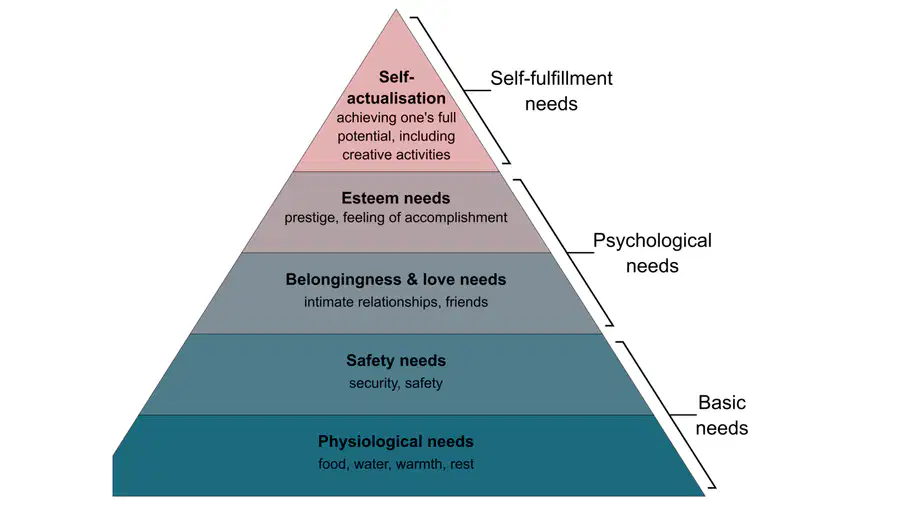
• Maslow’s theory states that employees
have 5 levels of human needs to be met
at work
• These needs are in a hierarchy- The
lowest level of need must be satisfied
before a person can move on to the next
level
MASLOW’S HIERARCHY OF NEEDS
94
95
Open Ended
What BASIC needs do you need to be met to perform well at school?
96
Open Ended
What PSYCHOLOGICAL needs do you need to be met to perform well at school?
97
98
MASLOW’S HIERARCHY OF NEEDS
LEVELS OF THE HIERARCHY EXPLAINED
Self Actualisation
People want to feel they are achieving something. Managers
should help staff set and reach their own personal targets.
Self-Esteem
People want to feel valued by others. Managers should praise
and encourage, and give financial rewards for good
performance.
Love
People enjoy the company of others. Managers should
encourage team work and social contact.
Safety
People want to feel safe and secure from harm. Managers
should give their workers job security.
Physiological/ Basic
People need food, water, shelter, clothing and warmth. These
should be met by a basic wage.
99
Multiple Choice
People want to feel valued by others. Managers should praise
and encourage, and give financial rewards for good
performance.
Love
Belonging
Self Actualisation
Psychological
100
Multiple Choice
People enjoy the company of others. Managers should
encourage team work and social contact.
Love
Belonging
Self Actualisation
Psychological
101
Fill in the Blanks
People want to feel valued by others. Managers should praise
and encourage, and give financial rewards for good
performance.
Type answer...
102
Open Ended
Describe self-actualisation.
103
Open Ended
Describe two factors of Maslow's Hierarchy of needs. (2)
104

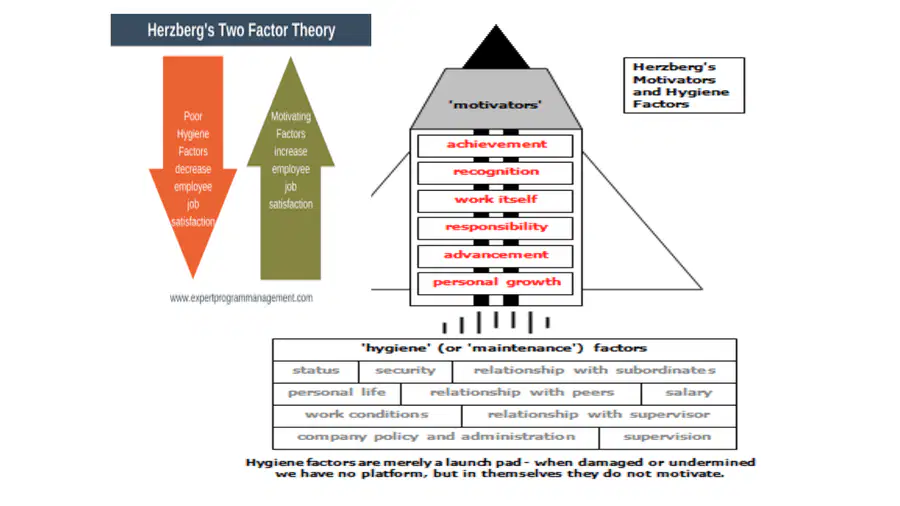
• Herzberg’s ideas are much more straightforward than
Maslow’s. Herzberg believed all the needs of workers
can be put into two groups.
• Hygiene Factors – are the things a business has to
provide to keep workers contented. These include
clean, quiet and safe working conditions – as well as
adequate rest breaks.
• Motivating Factors – are the things that will encourage
workers to do their best – like praise from managers,
career advancement for good workers and more
responsibility
HEZBERG’S TWO-FACTOR THEORY
105
106

ICT IN HR
HIGHER
107

56
ICT Supporting Training
• Multimedia interactive packages used whereby trainees work through
materials on their own.
• Completed work could be e-mailed to tutors for comments
• Computer simulation software can help train technical posts e.g. pilots
• Power point presentations used in lecturers
• Video conferencing used to link people in remote areas to a trainer
• Video recordings made of people learning eg interview skills
• Trainer may use an LCD projector when showing work on a PC
• Information for projects, reports obtained by using the Internet
• Preparation of materials
• Staff database used to identify staff requiring training, courses already taken
etc
BUSINESS MANAGEMENT
HR REVISION
Show answer
Auto Play
Slide 1 / 107
SLIDE
Similar Resources on Wayground

99 questions
NGS5- LA -6G0-6G- 2ND MIDTERM REVISION
Presentation
•
6th - 8th Grade
106 questions
Introduction to Ecology
Presentation
•
6th - 8th Grade
106 questions
Ecology Biology
Presentation
•
6th - 8th Grade
104 questions
MYP1 What Do Scientists Do?
Presentation
•
5th - 7th Grade
102 questions
Maya
Presentation
•
6th Grade
101 questions
Physical Science SOL Review
Presentation
•
6th - 8th Grade
104 questions
1st Year Christmas Exam Prep
Presentation
•
6th - 8th Grade
100 questions
Extra Credit
Presentation
•
6th - 8th Grade
Popular Resources on Wayground
10 questions
How much do you know about our Portrait of an Eagle?

Quiz
•
10th Grade
10 questions
Fast Food Slogans
Quiz
•
6th - 8th Grade
21 questions
Continents and Oceans
Quiz
•
6th Grade
20 questions
Parts of Speech
Quiz
•
5th Grade
16 questions
Subject & Predicate
Quiz
•
5th Grade
25 questions
Multiplication Facts
Quiz
•
5th Grade
12 questions
Map Skills
Quiz
•
3rd Grade
22 questions
Continents and Oceans
Quiz
•
5th Grade