
Ecological Relationships terms part 2
Presentation
•
Biology
•
9th - 12th Grade
•
Medium
+5
Standards-aligned
Stacey Ramay
Used 59+ times
FREE Resource
11 Slides • 26 Questions
1
Multiple Choice
Organisms that have to eat other organisms are called
producers
autotrophs
consumers
prey
2
Multiple Choice
An organism that cannot make its own food is called a(n)
autotroph
heterotroph
producer
3
Multiple Choice
4
5
Multiple Choice
What does the root "bio" mean...
living
nonliving
toxic
variety
6
Multiple Choice
What does the root "diversity" mean...
living
nonliving
toxic
variety
7
Multiple Choice
8
Multiple Choice
Which ecosystem is more likely to survive a change in the environment?
One with High biodiversity
One with Low biodiversity
9
10
11
Multiple Choice
According to the image, what is the producer?
plant
insect
mouse
snake
12
Multiple Choice
What are "producers" producing?
the energy for the food chain
the insects for the food chain
13
Multiple Choice
14
Multiple Choice
Another word for producer is
autotroph
heterotroph
carnivore
decomposer
15
16
Multiple Choice
remains of something that was once alive
biota
organic matter
parent material
sediment
17
18
Multiple Choice
process that changes once-living material into organic matter
biota
parent material
decomposition
pore
19
Multiple Choice
A(n) _____ is an animal that eats both plants and animals.
A(n) _____ is an animal that eats dead plants and animals.
detritivore, omnivore
omnivore, detritivore
carnivore, herbivore
herbivore, carnivore
20
21
Multiple Choice
22
23
24
Multiple Choice
25
Multiple Choice
26
27
Multiple Choice
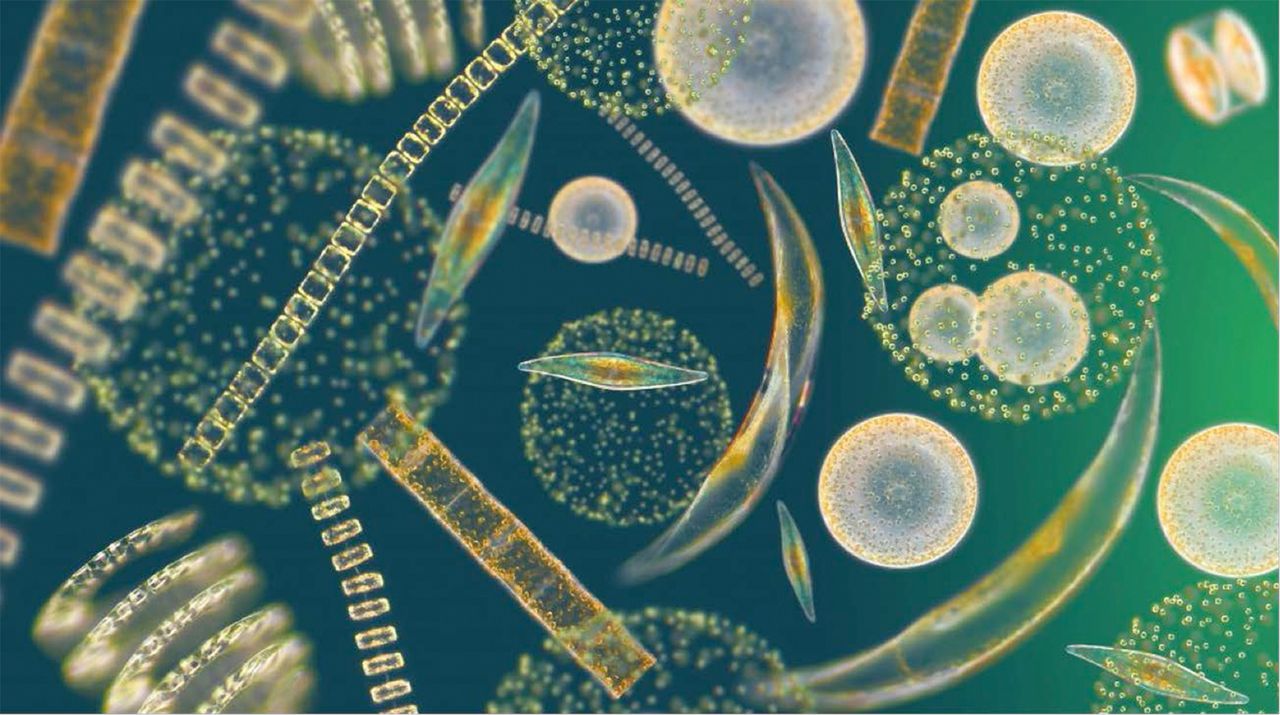
Drifting animals in the ocean
Phytoplankton
Zooplankton
Diatoms
Algae
28
29
Multiple Choice
What is pesticides?
Pesticides are compounds used to control pests.
Pesticides are natural components of crop production.
Pesticides are the balance of nature.
Pesticides are chemical components of crop production.
30
31
Multiple Choice
Increase in amount of a chemical in organisms as you move up a food chain
Biomagnefication
10% Rule
Bioaccumulation
Metabolism
32
Multiple Choice
What are the potential dangers of biomagnification in food chains?
Increased biodiversity in the ecosystem
Decreased levels of pollution in the environment
Enhanced nutrient cycling in the food chain
Toxins becoming more concentrated as they move up the food chain
33
Multiple Choice
The word "primary" means "first."
If that's true, what does primary consumer mean?
Hint: look carefully at the food chain!
the first organism in a food chain
the first organism that consumes something else for energy
34
Multiple Choice
What kind of organisms are usually primary consumers?
plants
herbivores
carnivores
35
Multiple Choice
A secondary consumer
Only eats meat
Only eats plants
makes its own food
eats the primary consumer
36
Multiple Choice
tertiary consumers
Eat the primary consumer
Eat plants and animals
Consume the producer
eat the secondary consumer
37
Multiple Choice
a producer always
eats other producers
gets energy from the sun
is a herbivore
is a plant
Organisms that have to eat other organisms are called
producers
autotrophs
consumers
prey
Show answer
Auto Play
Slide 1 / 37
MULTIPLE CHOICE

Similar Resources on Wayground
31 questions
Photosynthesis Lesson
Presentation
•
9th - 12th Grade
32 questions
Active Transport 1
Presentation
•
9th - 12th Grade
30 questions
Unit 2.6: Fossil Fuels
Presentation
•
9th - 12th Grade
35 questions
Regulating the Cell Cycle + Cancer (part 3)
Presentation
•
9th - 12th Grade
32 questions
Intro to Cell Membrane
Presentation
•
9th - 12th Grade
32 questions
El subjuntivo
Presentation
•
9th - 12th Grade
33 questions
Ecological Succession Lesson
Presentation
•
9th - 12th Grade
Popular Resources on Wayground
10 questions
5.P.1.3 Distance/Time Graphs
Quiz
•
5th Grade
10 questions
Fire Drill
Quiz
•
2nd - 5th Grade
20 questions
Equivalent Fractions
Quiz
•
3rd Grade
15 questions
Hargrett House Quiz: Community & Service
Quiz
•
5th Grade
20 questions
Main Idea and Details
Quiz
•
5th Grade
20 questions
Context Clues
Quiz
•
6th Grade
20 questions
Inferences
Quiz
•
4th Grade
15 questions
Equivalent Fractions
Quiz
•
4th Grade
Discover more resources for Biology
14 questions
Ecological Succession: Primary and Secondary
Quiz
•
9th Grade
20 questions
Cladogram Practice
Quiz
•
10th Grade
20 questions
Evolution and Natural Selection
Quiz
•
9th Grade
21 questions
Cell Cycle and mitosis
Quiz
•
9th - 10th Grade
45 questions
Unit 9 Review: Biosphere
Quiz
•
9th Grade
20 questions
Food Chains and Food Webs
Quiz
•
7th - 12th Grade
20 questions
Sex-Linked Traits
Quiz
•
9th - 12th Grade
22 questions
AP Biology: Unit 7 Review (CED)
Quiz
•
9th - 12th Grade