

Argument Slides Review

Presentation
•
English
•
10th Grade
•
Practice Problem
•
Hard
Standards-aligned

Meagan Love
Used 2+ times
FREE Resource
28 Slides • 0 Questions
1

ARGUMENTATIVE WRITING
English 10-H
2

Argument
Persuasion
Goal
Convince/persuade the audience of something
Promote an opinion on a particular position that
is rooted in truth
General
technique
Good reasoning and evidence to persuade an
audience to accept a “truth”
Uses personal, emotional, or moral appeal to
convince an audience to adopt a particular point
of view
Methods
• Considers other perspectives on the issue
• Offers facts that support the reasons
• Predicts and evaluates the consequences of
accepting the argument
• May considers other perspectives on the issue
• Blends facts and emotion to make its case,
relying often on opinion
PERSUASION VS. ARGUMENT
3

COUNTERARGUMENT
▪Counterargument:A solid and reasonable
argument that opposes or disagrees with your
claim
▪ Acknowledge the other side
▪ Anticipate and address objectionsto your
arguments
4


REBUTTAL
▪A response to a
counterargument
5

CALL TO ACTION
▪Call to action: tell your audience what you want
them to do at the end of your essay/speech. Be
clear and specific.
Example:
Parents give their teens a phone for a reason. They should
be able to reach their child at school if necessary. Schools
should be more respectful of parents’ wishes and change
their policies.
6

What is rhetoric?
According to Aristotle, rhetoric is “the art of effective or
persuasive speaking or writing.” There are three types of
rhetorical strategies.
7
REBUTTAL
▪A response to a
counterargument.
8

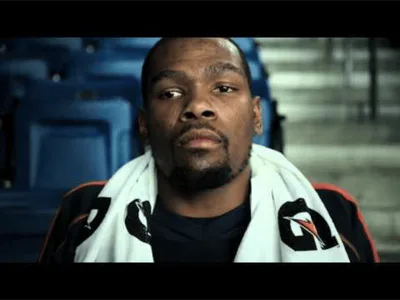
3 Rhetorical Strategies
1. Ethos(appeal to the
speaker’s credibility)
How do I do that?
If people believe and
trust in you, you’re
more likely to persuade
them.
9


3 Rhetorical Strategies
2. Pathos(appeal to the
speaker’s or audience’s
emotions)
How do I do that?
Getting people to feel
happy, sad, or angry can
help your argument.
10


3 Rhetorical Strategies
3. Logos(appeal to
logic)
How do I do that?
Facts, numbers, and
information can be
very convincing.
11

12

The Rhetorical Triangle
SPEAKER
AUDIENCE
PURPOSE or OCCASION
(pathos)
(ethos)
(logos)
Whether you're presenting
ideas for problem solving,
analysis, or just to
entertain, your audience
will try to figure out your
motives, beliefs, values ,
and assumptions. This
allows them to evaluate
your credibility and decide
whether you are being
sincere.
13

VALIDITY OF EVIDENCE
▪Consider all information provided
▪ Is the evidence presented so far
relevantand connectedto the
argument?
▪ Is it sufficient, or thorough and
specific enough, to support the
argument?
14

15

Logical Fallacies (#1)
▪ Ad Hominem attack: discrediting an opponent instead
of his/her argument
▪We cannot approve of this recycling idea. It was thought of by a bunch of hippie weirdos!
▪ Faulty Cause & Effect: if event B occurs after event A, then A causes B
▪
I didn’t study for my test and still got an A, so I clearly don’t ever need to study to pass!
▪ Either-Or: suggesting there are only two possibilities
for any given situation
▪You either support Spongebob for President or you don't believe in sea creatures’ rights!
16

Logical Fallacies (#2)
▪ Guilt by Association:Discrediting an idea/person/belief
by associating it with an undesirable person/group
▪Laura is the class president. She believes that the class should sponsor a dance as a fundraiser. Then she learns that a group of
girls that she doesn't like also support the idea of a dance as a fundraiser. So, Laura changes her mind and decides that the class
should plan a race instead.
▪ Loaded Question: a question phrased so that it forces an
answer based on a false/controversial premise
▪“Are you sure you want to hire an entitled millennial?”
▪Loaded questions are often used to exploit stereotypes such as this to
influence the other person’s decisions.
17


BIAS
▪Bias:
a preference for
one thing over
another,
especially an
unfair one
18

Identifying bias
1.
Who owns/produces the source?
2.
Who advertises in the source? Are the advertisements appropriate for the source?
3.
Is there a political slant in the content?
4.
Does the content contain all the facts or at least present both sides of an argument
fairly?
5.
What type of diction is being used? Does the author use strong language or hyperbole?
6.
Do they back up their argument with factual evidence? Can you see where they got their evidence through links or citations?
19

Other keywords to keep in mind
when evaluating for bias
1.
Agenda -- the underlying intentions or motives of a particular person or group
2.
Hyperbole -- exaggerated statements or claims not meant to be taken literally
3.
Objective -- (of a person or their judgment) not influenced by personal feelings
or opinions in considering and representing facts
4.
Subjective -- based on or influenced by personal feelings, tastes, or opinions
5.
Parody -- an imitation of the style of a particular writer, artist, or genre with
deliberate exaggeration for comic effect
6.
Satire -- The use of humor, irony, exaggeration, or ridicule to expose and criticize
people's folly and vice
20

Other keywords to keep in mind
when evaluating arguments
7.
parallelism -- the repetition of similar grammatical forms. It is a powerful tool in
public speaking and writing.
a.Ex: You can fool all the people some of the time, and some of the people all the time,
but you cannot fool all the people all the time. – Abraham Lincoln
i.Lincoln repeats people and time in all three clauses. But he changes the order of the words
some and all. The 28-word quotation is easy to memorize because of its rhythm and
parallel structure.
b.
Ex: I came, I saw, I conquered. – Julius Caesar
i.The repetition of “I” followed by a verb makes this an example of parallel structure.
Parallelism helps make an idea or argument clear and easy to remember. It also shows that
each repeated structure is of equal importance. And, it is a powerful tool for public
speaking.
21

Other keywords to keep in mind
when evaluating arguments
8.
anaphora -- repetition at the beginning of a sentence to create
emphasis.
- To create a rhythm: Judicious
repetition can make a piece of text more musical and lilting and,
therefore, more pleasant to read or hear.
Poet Amanda Gorman explains,
“What anaphora can do is, similar to
alliteration, it can create a moment
in your poem whose energy and
momentum is based off of that same phrase. In poetry, we might even call this a refrain.”
- To give emphasis: Anaphora draws attention to
the repeated words, as well as those directly
around them. This makes anaphora a particularly
popular tool for public speaking, where the
audience might have a more limited attention
span and lacks the option to reread any words
they’ve missed.
- To link, compare, or contrast
ideas: Sometimes the ideas
that follow the successive
repeated words are quite
different. In these cases,
anaphora invites the audience
to appreciate the contrast
more deeply.
22


Other keywords to keep in mind
when evaluating arguments
9.
analogy-- two unrelated objects are compared for their shared qualities.
a.
Unlike a simile or a metaphor, an analogy is not a figure of speech, though
the three are often quite similar. Instead, analogies are strong rhetorical
devices used to make rational arguments and support ideas by showing
connections and comparisons between dissimilar things.
Ex: "Remember this, ladies and gentlemen. It's an old phrase,
basically anonymous -- that politicians are a lot like diapers:
They should be changed frequently and for the same reason.
Keep that in mind next time you vote. Good night."
– Robin Williams, Man of the Year
23


Other keywords to keep in mind
when evaluating arguments
10.
syntax -- the arrangement of words and
phrases to create well-formed sentences in a language
a.The structure of language, including the rules and
principles that govern how words are combined to
create meaning.
b.Syntax can be used to create a range of effects, such as emphasizing certain words or ideas, creating rhythm and flow, and conveying tone and mood.
c.Helps to establish a particular style or voice, and can shape the reader’s experience of the text by influencing their interpretation and emotional response.
24

RHETORICAL ANALYSIS
I. Rhetorical Analysis
II. Types of Rhetorical Devices
III. How to Write About Rhetoric
25


Rhetorical Analysis
◻When you perform a rhetorical analysis, you
are looking at the individual elements of a text
and commenting on how those elements work to
create the argument of the text. You are also
considering WHY the author used those specific
elements. You are also considering WHAT
EFFECT those specific elements had on the
audience.
◻Rhetorical analysis commits both the intentional
fallacy (what did the author intend to do?) and
the affective fallacy (how did the choices of
the author affect the argument?).
26

Rhetorical Analysis
(SOAPStone(d)
◻ There are several methods for analyzing the rhetorical choices
of a text. One such strategy is SOAPStone(d):
� S(peaker) - Who is delivering the message? What is his credibility?
What is the exigence or impetus for argument? (e.g. the event/cause
that led to the argument being written) What is his persona (public
image)? How does the speaker choose to present his/her
information/evidence?
� O(ccasion) - What is the context of the message? What is the
exigence or impetus for this argument? What is the cultural
landscape in the time when the argument occurred?
� A(udience) - Who is the intended audience? Who is the
general/specific audience? What values does the audience hold that
the speaker appeals to?
27

Rhetorical Analysis
(SOAPStone(d))
� P(urpose) - What is the speaker’s intention in delivering this
argument? Is this text persuasive, didactic, informative, or
entertaining?
� S(ubject) - What is the main idea of the passage? What are the
principal lines or reasoning or kinds of arguments used?
� Tone - How does the author feel about the subject/argument?
How does the author feel about the audience? What is the
author’s overall attitude about this topic?
� Devices - What specific rhetorical tropes and organizational
patterns did the author use and what was their intended effect?
28

Kairos
Greek for “right time,” “season” or “opportunity”
▪Refers to the “timeliness” of an argument.
▪Often, for an ad or an argument to be successful, it needs appropriate tone and
structure and come at the right time.
▪For example, an ad featuring Super Soakers would be more appropriate on
Nickelodeon than on CNN
▪Kairos is also the reason you might send a different kind of complaint email to
your boss than you would to your mom or to a close friend. You may want similar
results from all three of these recipients, but depending on who will read it, you
may adjust the timing, tone and level of formality within the email itself.
ARGUMENTATIVE WRITING
English 10-H
Show answer
Auto Play
Slide 1 / 28
SLIDE
Similar Resources on Wayground

20 questions
Causative Form
Presentation
•
10th Grade
23 questions
Ethos, Logos, Pathos
Presentation
•
10th Grade
19 questions
Complete Sentences vs. Fragments
Presentation
•
10th Grade
20 questions
Irony Lesson
Presentation
•
10th - 11th Grade
23 questions
Drama Terms Lesson
Presentation
•
9th - 10th Grade
23 questions
Conditional Sentence (type zero, one and two)
Presentation
•
10th Grade
21 questions
Participial Phrases
Presentation
•
9th Grade
21 questions
Argumentative Text Structure
Presentation
•
11th Grade
Popular Resources on Wayground
24 questions
PBIS-HGMS Day 10

Quiz
•
6th - 8th Grade
10 questions
HCS SCI 03 Summer School Review 3
Quiz
•
3rd Grade
11 questions
Home Scope
Quiz
•
7th - 8th Grade
15 questions
HCS SCI 05 Summer School Assessment 3 Review
Quiz
•
5th Grade
35 questions
Lufkin Road Middle School Student Handbook & Policies Assessment
Quiz
•
7th Grade
18 questions
Geo 11.3 Area of Circles and Sectors
Quiz
•
9th - 11th Grade