Search Header Logo
Index fossils and Embryos

Index fossils and Embryos

Assessment

Presentation

Science, Biology

8th Grade

Practice Problem

Medium

NGSS
MS-LS4-1, MS-LS4-2, MS-ESS1-4

+2

Standards-aligned

Created by

Kaitlin Siler

Used 11+ times

FREE Resource

41 Slides • 11 Questions

1

media

There are three main pieces of evidence
that scientists use to prove evolution.

Fossil evidence
Comparative anatomy
Embryology

2

media
media

Paleontology--The Study of Past Life

Paleontologists look
for fossils, or the
remains of ancient
organisms.

(they study fossils of
old dead things)

3

media
media

Fossils are formed when a plant or animal dies in a watery
environment and is buried in mud and silt quickly.

Fossil
formed
No
Fossil
formed

4

media
media

Fossils are rare

It is estimated that 1 in 80
million T-Rex became
fossilized. That is why
intact fossils are so
expensive.
($31.8 million)

5

media
media

Most of the
evidence for
Evolution of
organisms
comes from
fossils

6

media

Which organism lived the longest?

Fossil
Layer 5

Fossil
Layer 4

Fossil
Layer 3

Fossil
Layer 2

Fossil
Layer 1

A

B

C

D

7

Multiple Choice

Question image

Which organism lived the longest?

1

A

2

B

3

C

4

D

8

media

Which organism lived the longest?

Fossil
Layer 5

Fossil
Layer 4

Fossil
Layer 3

Fossil
Layer 2

Fossil
Layer 1

A

B

C

D

9

media

Which organism lived the longest?

Fossil
Layer 5

Fossil
Layer 4

Fossil
Layer 3

Fossil
Layer 2

Fossil
Layer 1

A

B

C

D

10

media

Which organism lived the shortest amount
of time?

Fossil
Layer 5

Fossil
Layer 4

Fossil
Layer 3

Fossil
Layer 2

Fossil
Layer 1

A

B

C

D

11

Multiple Choice

Question image

Which organism lived the shortest amount of time?

1

A

2

B

3

C

4

D

12

media

Which organism lived the shortest amount
of time?

Fossil
Layer 5

Fossil
Layer 4

Fossil
Layer 3

Fossil
Layer 2

Fossil
Layer 1

A

B

C

D

13

media

Which organism went extinct?

Fossil
Layer 5

Fossil
Layer 4

Fossil
Layer 3

Fossil
Layer 2

Fossil
Layer 1

A

B

C

D

14

Multiple Choice

Question image

Which organism went extinct?

1

A

2

B

3

C

4

D

15

media

Which organism went extinct?

Fossil
Layer 5

Fossil
Layer 4

Fossil
Layer 3

Fossil
Layer 2

Fossil
Layer 1

A

B

C

D

16

media

Which organism is widely distributed?

Fossil
Layer 5

Fossil
Layer 4

Fossil
Layer 3

Fossil
Layer 2

Fossil
Layer 1

A

B

C

D

Widely Distributed

17

Multiple Choice

Question image

Which organism is widely distributed?

1

A

2

B

3

C

4

D

18

media

Which organism is widely distributed?

Fossil
Layer 5

Fossil
Layer 4

Fossil
Layer 3

Fossil
Layer 2

Fossil
Layer 1

A

B

C

D

Widely Distributed

19

media
media

Index fossils are:

Fossils of widely
distributed
organisms that lived
during only one
short time period.

20

media
media

An Index Fossil is widely distributed and short lived.

Widely Distributed

Short
Lived

21

media

Which organism would make the best index
Fossil?

Fossil
Layer 5

Fossil
Layer 4

Fossil
Layer 3

Fossil
Layer 2

Fossil
Layer 1

A

B

C

D

22

Multiple Choice

Question image

Which organism would make the best index Fossil?

1

A

2

B

3

C

4

D

23

media

Which organism would make the best index
Fossil?

Fossil
Layer 5

Fossil
Layer 4

Fossil
Layer 3

Fossil
Layer 2

Fossil
Layer 1

A

B

C

D

24

media
media

Index Fossils
help tell how old
the rock around
it is

25

media
media
media

Through carbon
dating this index
fossil dates at
about 245 to 65
million years old.

26

media
media

Which suggest the rocks
around it are also 245 to
65 million years old.

27

media
media
media

So any other
fossils around
it would have
to be that old
also.

28

media

There are three main pieces of evidence
that scientists use to prove evolution.

Fossil evidence
Comparative anatomy
Embryology

29

media
media

Cladogram
Activity

30

Multiple Choice

Question image

Which organisms are most closely related?

1

5 & 6

2

6 & 7

31

media
media

1. Which
organisms are
most closely
related?

a. 5 & 6

b. 6 & 7

32

media
media

1. Which
organisms are
most closely
related?

a. 5 & 6

b. 6 & 7

33

media

Evolution

Embryology

34

media

There are three main pieces of evidence
that scientists use to prove evolution.

Fossil evidence
Comparative anatomy
Embryology

35

media

There are three main pieces of evidence
that scientists use to prove evolution.

Fossil evidence
Comparative anatomy
Embryology

36

media

Evolution

(Embryology)

37

media

Embryology

(study of embryos)

Organisms that are closely related may also have

physical similarities before they are even born!

38

media
media

Embryo

em·bry·o

noun

an unborn or unhatched
offspring (baby) in the first
processes of
development.

39

media
media

Anatomy of an
Embryo
(parts)

Gills

Eye

Tail

40

Developmental Biology

  • Embryology: The study of embryos, leading up to birth.

  • Pharyngeal Pouches: A feature present in the embryos of vertebrates.

media

41

media
media

Which one of these is a human embryo?

​Which of these is a human embryo?

42

media
media

It could be because they all look a lot a like. Which is the point.
All mammals (including humans) start this way.

43

media

44

media
media
media

Comparative Embryology

45

Multiple Choice

Question image

The diagram illustrates an embryonic stage of two organisms.

Which of the following can be determined by observing the embryos shown in the diagram? 

1

The organisms share a common ancestry.

2

The organisms belong to the same mother.

3

The organisms are native to the same geographic areas.

4

The organisms will grow into anatomically similar adults.

46

Molecular Biology

  • Molecular Biology: The study of gene structure and function.

  • Comparing Sequences: An analysis of DNA Sequences across different species.

  • Divergence: The idea that DNA mutations over time causes animals to be less related than others.

media

47

Multiple Choice

Question image

Scientists have found evidence that about 2.4 million years ago a gene regulating jaw muscles mutated and may have led to the more graceful human jaw we see today. The diagram below shows the skulls of 3 hominid species.

Which statement below most closely explains the link between jaw size and hominid evolution? 

1

The jaws of hominids evolved to be smaller and less protruding over time.

2

The jaws of hominids evolved to be larger and more protruding over time. 

3

There appears to be no change in the jaws of hominids over time.

4

The jaws of hominids changed over time due to a change in brain size. 

48

media

Fossil Evidence

We don’t see modern
animals in the fossil record.
We do see similar structured
fossils helping us concluded that there was a
change over
time.

Comparative
Anatomy

We see similar structures
with similar functions in animals
that are very
different; for example,
humans and bats. Animals and fossils that share
similar bone structures
help prove that they may still have a shared common ancestor.

Embryology

Every organism’s
embryos (first stages of a development) has gills, eyes, and tail regardless of whether or not they have
all those features when mature. But this
further proves that all to most things
all evolved from the same
common ancestor.

49

Multiple Choice

Similar patterns of embryological development provide further evidence that organisms have descended from totally separate and different ancestors.

1

True

2

False

50

51

Multiple Choice

Question image

What are the oldest fossils and why?

1

B, C- because they are closest to the top

2

A, B- because they are closest to the bottom

3

They are all the same age- because they are all found on layer 2

4

A, B- because they are found closest to the top

52

Multiple Choice

Question image

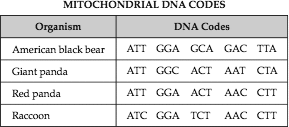
What conclusions can be made based on this table shown?

1

the American black bear and the giant panda are most closely related

2

the giant panda and the red panda are most closely related

3

the red panda and the racoon are the most closely related

4

the giant panda and the racoon are most closely related

media

There are three main pieces of evidence
that scientists use to prove evolution.

Fossil evidence
Comparative anatomy
Embryology

Show answer

Auto Play

Slide 1 / 52

SLIDE