Forces of Evolution
Presentation
•
Science
•
9th - 12th Grade
•
Medium
+4
Standards-aligned
Kaitlynn Chrzan
Used 9+ times
FREE Resource
18 Slides • 27 Questions
1
2
3
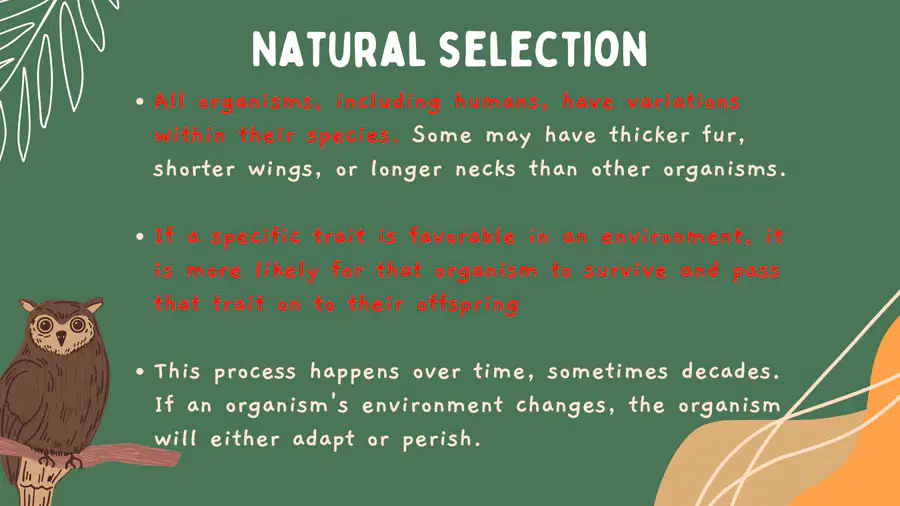
Review
Natural selection: a process in which organisms better suited to their environment are able to survive and reproduce more offspring
Selective pressure: An environmental factor that causes certain traits to be more or less advantageous, leading to changes in the frequency of those traits
Fitness: An organism's ability to survive and reproduce; species that are more 'fit' will reproduce and pass on their genes more often
4
As you proceed:
Record the definitions/descriptions of the following terms in your "Evolution Vocab" note sheet.
Mutation
Gene flow
Genetic drift
Founder effect
Bottleneck effect
5
Multiple Choice
Which rabbit has the selective advantage?
6
Multiple Choice
Which rabbit has the selective advantage?
7
Multiple Choice
Natural selection happens when an individual's genes ______________ from the genes of other members of its species.
Become different
Stay the same
Become separated
8
Multiple Choice
True or False? All changes in genes are harmless.
True
False
9
Multiple Choice
Some changes in genes can help organisms _____
Survive
Mutate
Rest
10
Multiple Choice
What is Natural Selection?
11
Multiple Choice
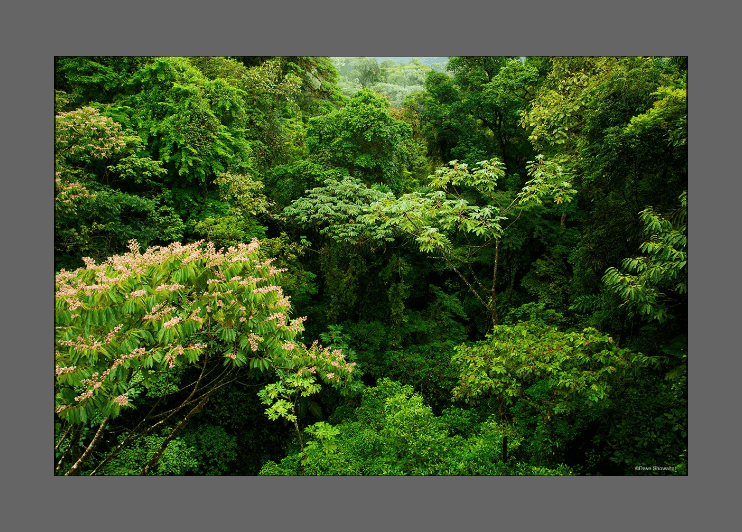
A yellow morph and green morph of an insect lives in the rainforest canopy. You would expect:
the green population to increase and the yellow to decrease
both populations should stay the same
both populations will increase
the green population to decrease and the yellow to increaseThis is a wrong answer
12
Multiple Choice
What word describes a trait that helps an organism survive in its environment?
natural selection
mutation
camouflage
adaptation
13
Multiple Choice
14
Multiple Choice
Why are advantageous traits more likely to be passed onto offspring?
Because they are more likely to survive and reproduce.
Because they come from dominant alleles.
Because they come from recessive alleles.
Because the organism knew it needed that trait, survives, and passes it on.
15
16
17
18
19
Multiple Choice
Mutations are a change in what?
DNA
Proteins
RNA
tRNA
20
Multiple Choice
This is the process that ultimately creates new variations and changes in DNA; leads to the creation of new alleles
Microevolution
Mutation
Gene flow
Genetic drift
21
22
23
Multiple Choice
What is gene flow?
A change in the gene pool due to chance
A reduction in populations caused by natural disasters, disease, and hunting
The addition or removal of genes due to individuals entering or leaving the population
A change in gene frequencies when a new population arises from a few individuals
24
25
2 Types: Founder Effect & Bottleneck Effect
26
Founder effect
The founder effect occurs when a portion of the population (i.e. “founders”) separates from the old population to start a new population with different allele frequencies.
27
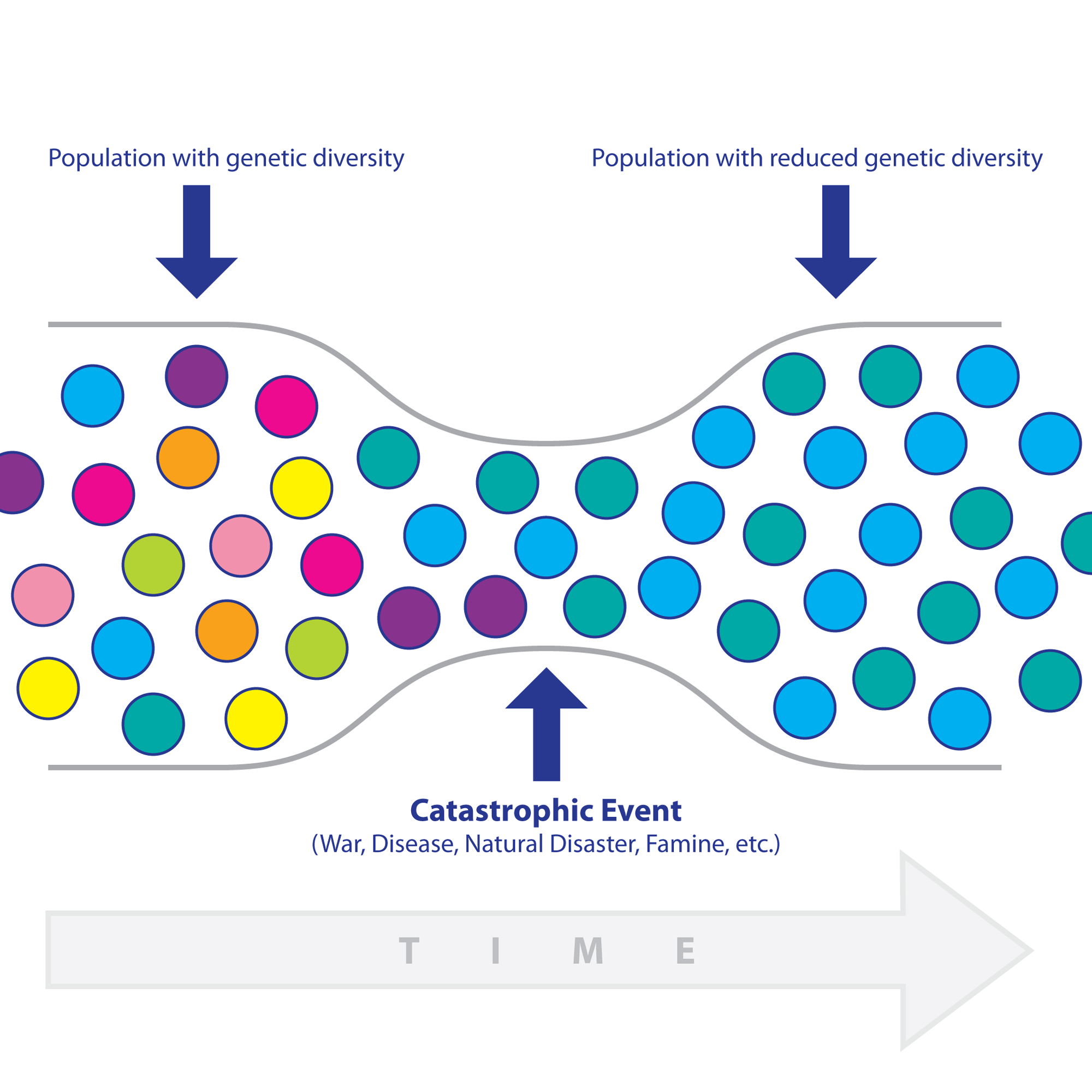
The Bottleneck Effect
Occurs when only a few individuals survive and reduce variation in the gene pool of a population.
The genetic structure of the survivors becomes the genetic structure of the entire population, which may be very different from the pre-disaster population.
28
29
Multiple Choice
When Christopher Columbus came to the Americas, he randomly chose 3 chickens from Spain to bring along. These 3 chickens were the only chickens to breed in the Americas for hundreds of year.
Natural Selection
Bottleneck
Founder Effect
30
Multiple Choice
A drastic reduction in the size of a population that can change allele frequencies is called
the bottleneck effect
the founder effect
the gene flow effect
the Thanos effect
31
32
33
Multiple Choice
If a trait HELPS an organism survive, what may happen to it?
It dies, cannot reproduce and DNA cannot be passed on
It changes its traits to adapt and survive
It survives, reproduces and passes on its DNA
34
35
Multiple Choice
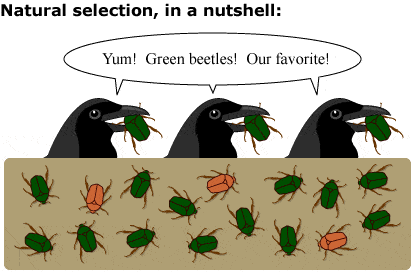
There are two types of beetles: red beetles and green beetles. The beetles live in a forest full of trees. The birds in the forest seem to be eating ONLY the red beetles. The green beetles are not eaten. Which phenotype is favored and why?
The green beetles because they stand out the most
The red because they are more delicious so they are eaten more
The red beetles because are not as big
The green beetles are favored because they blend in with the trees
36
Multiple Choice
During the dry season, when water is low, an elephant will dig holes to find underground springs, drawing as much as two gallons at a time with its trunk. The water holes also give elephants access to important mineral sources buried deep below the surface.
Overproduction of offspring
Struggle to survive
Inherited variation
Non-random mating
37
Multiple Choice
What does the image represent?
Genetic drift
Mutation
Adaptation
Gene flow
38
Multiple Choice
What do we call ALL of the genetic information found in a population?
Population
Genetic Drift
Evolution
Gene pool
39
Multiple Choice
A trait or change in lifestyle that helps a plant or animal survive in its environment
adaptation
evolution
homologous
vestigial
40
Multiple Choice
One example of ___ is how moths that couldn't blend in with their environments as well as others died out over time.
mutation
natural selection
extinction
41
Multiple Choice
42
Multiple Choice
Which adaptation this organism using?
camouflage
mimicry
hide and seek
use body covering
43
Multiple Choice
44
Multiple Choice
Which of the following is an example of natural selection?
Bald Eagles are hunted until near extinction, population recovers.
Small group of iguanas floats to an island, starts a new population.
Red fox pups are more likely to survive in a snowy environment if they are born white.
Farmer chooses seeds from largest apples to plant next year. This results in larger apples from year to year.
45
Multiple Choice
Show answer
Auto Play
Slide 1 / 45
SLIDE

Similar Resources on Wayground
40 questions
Science 9 Semester 2 Review
Presentation
•
9th - 12th Grade
37 questions
Intro to Chemical Bonding
Presentation
•
9th - 12th Grade
41 questions
Interactions between organisms
Presentation
•
9th - 11th Grade
40 questions
6.3 Nuclear Energy
Presentation
•
9th - 12th Grade
44 questions
Properties of Water
Presentation
•
9th - 12th Grade
41 questions
Physical and Chemical Properties and Changes
Presentation
•
9th - 12th Grade
39 questions
Final review Earth and environmental
Presentation
•
9th - 12th Grade
39 questions
Commas
Presentation
•
9th - 12th Grade
Popular Resources on Wayground
16 questions
Grade 3 Simulation Assessment 2
Quiz
•
3rd Grade
19 questions
HCS Grade 5 Simulation Assessment_1 2526sy
Quiz
•
5th Grade
10 questions
Cinco de Mayo Trivia Questions
Interactive video
•
3rd - 5th Grade
17 questions
HCS Grade 4 Simulation Assessment_2 2526sy
Quiz
•
4th Grade
24 questions
HCS Grade 5 Simulation Assessment_2 2526sy
Quiz
•
5th Grade
13 questions
Cinco de mayo
Interactive video
•
6th - 8th Grade
20 questions
Math Review
Quiz
•
3rd Grade
30 questions
GVMS House Trivia 2026
Quiz
•
6th - 8th Grade
Discover more resources for Science
100 questions
Biology EOC Review
Quiz
•
9th - 12th Grade
38 questions
Biology EOC Review Game
Quiz
•
10th Grade
25 questions
Biology EOC review Quiz
Quiz
•
9th - 12th Grade
20 questions
Human Impact on the Environment Review #2
Quiz
•
9th Grade
20 questions
Balancing Chemical Equations
Quiz
•
9th Grade
11 questions
EOC Domain 1: Cells
Presentation
•
9th - 10th Grade
14 questions
EOC Domain 2: Genetics
Presentation
•
9th - 10th Grade
10 questions
Exploring the Human Respiratory System
Interactive video
•
6th - 10th Grade