Evolution by Natural Selection and The Origin of Species
Presentation
•
Biology
•
10th Grade
•
Easy
+15
Standards-aligned
Michael Hairston
Used 4+ times
FREE Resource
26 Slides • 44 Questions
1
Who was Jean Baptiste Lamarck?? was he before or after Darwin?
2
Lamarks Theory
Inheritance of acquired characteristics
Organism will acquire traits that are needed over its life
EX: a giraffe can get a longer neck simply by stretching daily.
3
Lamark's Theory
Giraffes all had SHORT necks originally
Giraffe’s Necks got LONGER from stretching for food
“Acquired” trait (long necks) then passed to offspring
Giraffe population became long-necked
4
5
Lamark's Theory
Acquired characteristics are heritable
EX: If you crop a dogs ears, all their offspring will be born with cropped ears.
Ex: If you get a tattoo, all you children will be born with that same tattoo
6
Multiple Choice
Will puppies born look like the dog on the right or the left?
The puppies will all be born with floppy ears
The puppies will all be born with cropped ears
7
Darwin's Theory
Survival of the fittest
Those animals with the best adaptations/characteristics survive and reproduce, passing on their superior genetics.
EX: Giraffes with short necks starved to death while longer necked giraffes survived and passed on their long necked trait.
8
9
10
Who was Charles Darwin and what was so special about his boat ride on the Beagle??
11
Multiple Choice
Scientist that contributed the most to our understanding of evolution
Darwin
Lamarck
12
Multiple Choice
What is evolution?
A process by which species of organisms arise from earlier life forms and undergo change over time.
13
Evolution
14
Evolution is Change over
Time....but how much time?
? A short or a long time....
? How does this change take place....
? How does it effect a population after time passes...
Who was Charles Darwin and what was so special about his boat ride on the Beagle??
15
Multiple Choice
Individuals that are better able to cope with the challenges of their environment tend to
Increase in population over time.
Decrease in population over time.
Leave fewer offspring than those less suited to the environment.
Both (a) and (c)
16
Warm up
■ What makes an organism better fit for its
environment?
What will make you better suited to address the concepts connected to Evolution ?
https://www.youtube.com/watch?v=Njw0r_eDWXo
17
Multiple Choice
Structures that have the same function but evolved independently are called
homologous
analogous
vestigial
embryological
18
Multiple Choice
19
Multiple Choice
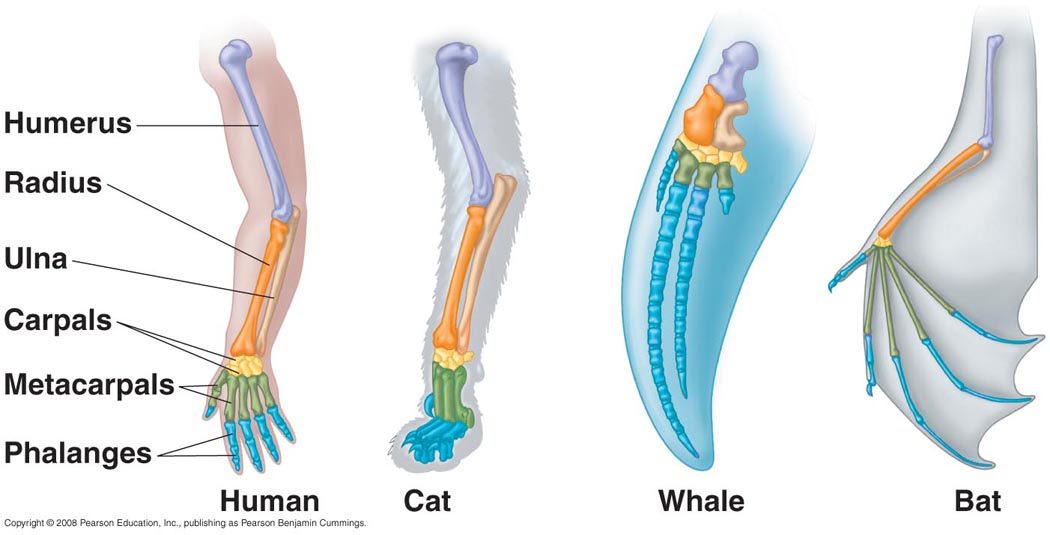
Structures with the same parts but have different functions, suggesting that organisms with a backbone share common ancestry is called…
Not related
Not homologous
Homologous
Young in origin
20
Multiple Choice
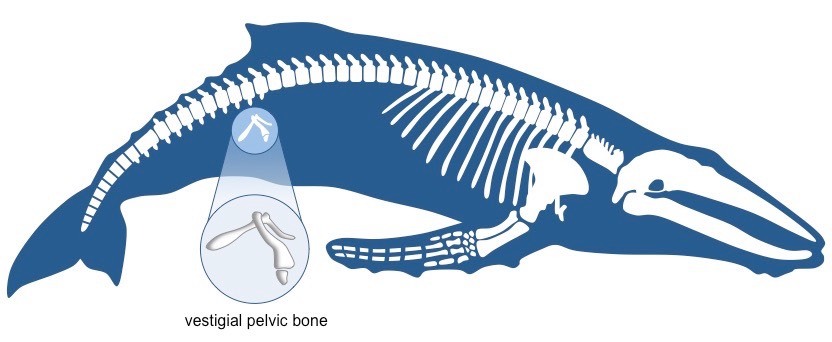
An anatomical feature that no longer seams to have a purpose in the current form of an organism
Homologous structure
Analogous structure
Vestigial structure
None of the above
21
Adaptations
■ Adaptation- change in a species that
makes it better suited to its
environment
Large feet for
standing in the
sand
A hump to store nutrition during
long trips or when food or water
is scarce
Calluses on the the knees
to protect from abrasion
Long eyelashes to
protect their eyes
from the sand when
the wind is blowing
Nostrils that close to
keep sand out
Fur inside the ears to
protect inner ear from
sand
22
Types of
Adaptations:
Can you Adapt (as it pertains to evolution) or are you born with certain traits passed to you by your parents?
Turn and Talk with your table mate: 2 mins
23
Types of Adaptations
Structural
■ Changes in structure or anatomy
■ Example: bird’s beak or claws
■ Mimicry- a harmless species
resembles a harmful one, predators
learn to avoid both species
■ Camouflage- species features blend
in with the environment
24
Mimicry
25
Camouflage
http://www.youtube.com/
watch?v=YVvn8dpSAt0
Marine Camouflage
26
Types of
Adaptations
Physiological
■ Changes in chemical
makeup
■ Examples:
digestion enzymes,
snake venom,
octopus ink
27
Types of Adaptations
■ Behavioral
■ Responses to the environment
■ Example: bird migration
28
Multiple Choice
What type of adaptation affects how an organism acts?
Behavioral
Physiological
Structural
29
Multiple Choice
What type of adaptation affects a physical aspect of organism?
Behavioral
Physiological
Structural
30
Multiple Choice
What type of adaptation affects body chemistry and metabolism?
Behavioral
Physiological
Structural
31
Multiple Choice
Physiological
Structural
Behavioral
32
Multiple Choice
Physiological
Structural
Behavioral
33
Multiple Choice
Physiological
Structural
Behavioral
34
Multiple Choice
Physiological
Structural
Behavioral
35
Multiple Choice
Physiological
Structural
Behavioral
36
Multiple Choice
Physiological
Structural
Behavioral
37
Multiple Choice
Physiological
Structural
Behavioral
38
Dropdown
39
Multiple Choice
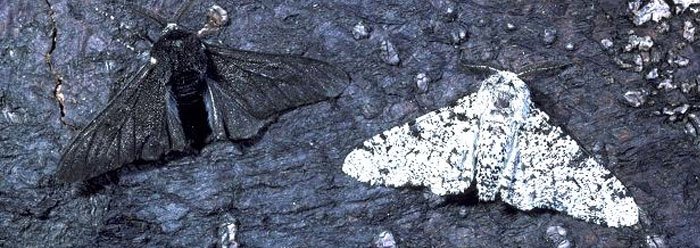
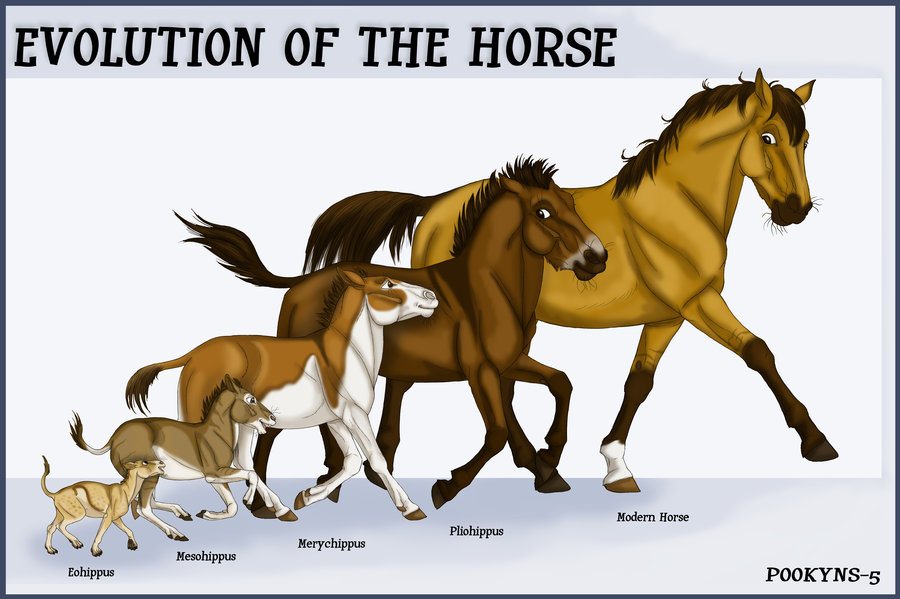
which of the following is an example of microevolution?
a. the evolution pesticide resistance in pests
b. the increase in size, over time, of the horse species.
c. the change in color of the peppered moth due to pollution
Both A and C
40
Multiple Choice
Structures with no function that are remnants of an organism’s evolutionary past are
Not visible organisms
Young in origin
Vestigial
Useful to the organism
41
Multiple Choice
The fossil record provides evidence that
Fossils cannot be dated.
All species were formed during Earth’s formation and have changed little since then.
The fossilized species have no connection to today’s species.
Older species gave rise to more-recent species.
42
Multiple Choice
The presence of pelvic bones in the baleen whale is evidence of which of the following?
Whales can travel on land when necessary.
Whales are developing into animals with four functioning limbs.
Whales have functional legs that are hidden by fat and skin.
Whales evolved from four-legged animals.
43
Multiple Choice
What is suggested by the similary of early embryos of different species of vertebrates?
No evolutionary relationship between the groups
A recent common ancestry
Similar environments in the past
Evolution from a distant common ancestor
44
How does natural selection
act on a phonotype?
■ Warm up what is natural selection?
■ What is a phenotype?
45
Multiple Choice
46
Multiple Choice
The ability of an organism to survive and reproduce.
fitness
energy
agility
instinct
47
Multiple Choice
48
Multiple Choice
49
Multiple Choice
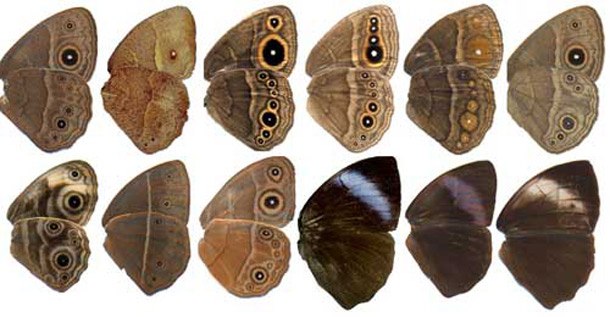
50
Natural Selection acts on
variation in a population
■ 1.stabilizing – favors average
individual
■ 2.directional – favors one
extreme variation
■ 3.disruptive – favors both
extremes of variation
51
Multiple Choice
What is gene expression?
The process by which the instructions in our DNA are converted into a functional product, such as a visible trait.
52
Multiple Choice
Structures or behaviors that help an
organism survive in its surroundings
adaptations
inherited traits
learned behaviors
structural behaviors
53
Natural Selection acts on
variation in a population
■ 1.stabilizing – favors average individual
■ 2.directional – favors one extreme variation
■ 3.disruptive – favors both extremes of variation
■ 4.diversifying- two or more phenotypes develop,
different selective pressures operate at the same
time
■ 5. heterozygote advantage- heterozygote (Aa)
has higher fitness than either homozygote (AA or
aa)
■ Example- sickle cell anemia
54
Natural Selection acts on
variation in a population
Stabilizing
selection
Directional
Selection
Disruptive
selection
55
Name the selection type
56
You do
■ Types of Natural Selection
57
Multiple Choice
What is the process where animals live or die based on their adaptations to their environment.
Genetic Drift
Natural Selection
The Circle of Life
Mammoth
58
Multiple Choice
Adaptations can be:
camouflage
ability to survive cold weather
hunting skills
all of the above
59
Multiple Choice
A species could go extinct if:
food becomes more plentiful.
members of the species have adaptations to enhance survival.
the environment changes drastically and no one can adapt.
there is less competition for resources.
60
Multiple Choice
61
Multiple Choice
A species that is not native to an area is called a ---
Native Species.
Natural Species.
Invasive Species.
Symbiotic Species.
62
Multiple Choice
Shows how different groups of organisms have changed over time.
fossil record
homologous structures
embryology
63
Dropdown
64
Multiple Choice
What is the purpose of a cladogram?
65
Multiple Choice
When looking at a cladogram, what is a derived character?
A trait that is unique to the most common ancestor and passed to its defendants.
66
Trojan Time
67
Multiple Choice
The Asian shore crab invaded parts of the eastern coast of the United States about 15 years ago. The Asian shore crab preys on blue mussels. In the time since the Asian shore crab arrived, the average shell thickness of the blue mussel population has increased.
Which of the following is the most likely reason that this increase in shell thickness has occurred?
Blue mussels with thick shells attract more crabs that mussels without thick shells.
Blue mussels with thick shells grow in larger colonies than mussels without thick shells.
Blue mussels with thick shells catch more food per day than mussels without thick shells.
Blue mussels with thick shells survive and reproduce more successfully than mussels without thick shells.
68
Multiple Choice
What is the purpose of taxonomic classification?
To determine the probability of passed on genes.
To predict the next generations traits
69
Multiple Choice
Comparing the human hemoglobin amino acid sequence to the chimpanzees, horses, kangaroos, and chickens, reveal that humans have the fewest amino acid differences with
kangaroos
horses
chickens
chimpanzees
70
Multiple Choice
This image is an example of a.....
Mendelian Life Graph
Cladogram
Punnett Square
Pedigree Chart
Who was Jean Baptiste Lamarck?? was he before or after Darwin?
Show answer
Auto Play
Slide 1 / 70
SLIDE

Similar Resources on Wayground
64 questions
KEANEKARAGAMAN HAYATI
Presentation
•
10th Grade
62 questions
World Religions
Presentation
•
10th Grade
62 questions
French Revolution and Napoleon
Presentation
•
10th Grade
59 questions
Biology Interim Review Fall 23
Presentation
•
10th Grade
64 questions
Cell Cycle and Mitosis
Presentation
•
9th Grade
67 questions
M4 unit 4 vocab 1
Presentation
•
9th - 10th Grade
64 questions
chemistry is the central science
Presentation
•
10th Grade
67 questions
Practice Questions
Presentation
•
10th Grade
Popular Resources on Wayground
20 questions
STAAR Review Quiz #3
Quiz
•
8th Grade
20 questions
Equivalent Fractions
Quiz
•
3rd Grade
6 questions
Marshmallow Farm Quiz
Quiz
•
2nd - 5th Grade
20 questions
Main Idea and Details
Quiz
•
5th Grade
20 questions
Context Clues
Quiz
•
6th Grade
20 questions
Inferences
Quiz
•
4th Grade
19 questions
Classifying Quadrilaterals
Quiz
•
3rd Grade
12 questions
What makes Nebraska's government unique?
Quiz
•
4th - 5th Grade
Discover more resources for Biology
20 questions
Food Chains and Food Webs
Quiz
•
7th - 12th Grade
20 questions
Genetics 2026
Quiz
•
10th Grade
10 questions
Exploring Evidence of Evolution
Interactive video
•
6th - 10th Grade
15 questions
STAAR Review Quizziz 3
Quiz
•
10th Grade
16 questions
AP Biology: Unit 2 Review (CED)
Quiz
•
9th - 12th Grade
20 questions
Codominance and Incomplete Dominance
Quiz
•
9th - 10th Grade
15 questions
Photosynthesis and Cellular Respiration
Quiz
•
10th Grade
10 questions
Evolutionary Fitness and Natural Selection Worksheet
Quiz
•
10th Grade