

Market Structure

Presentation
•
Other
•
9th - 12th Grade
•
Practice Problem
•
Easy

Tong Boon Yee undefined
Used 1+ times
FREE Resource
22 Slides • 8 Questions
1
Market Structure

Monopoly
Oligopoly
Monopolistic Competition
Perfect Competition
2

It can be defined based on the 4 main characteristics /features.
1) Number of firms in the industry
2) Type of product
3) Entry & exit conditions
4) Market power
3

4
Multiple Choice
Firms are classified under four different market structures according to the competitiveness of the market in which they operate.
Arrange the four market structures by level of competition, from lowest to highest.
Monopoly, monopolistic competition, oligopoly and perfect competition
Monopoly, oligopoly, monopolistic competition and perfect competition
Perfect competition, oligopoly, monopolistic competition, and monopoly
Perfect competition, monopolistic competition, oligopoly and monopoly
5
Multiple Choice
Which of the following statements is true?
A perfectly competitive firm and a monopolist are price takers.
A perfectly competitive firm and a monopolist are price setters.
A perfectly competitive firm is a price taker, whereas a monopolist is a price setter.
A perfectly competitive firm is a price setter, whereas a monopolist is a price taker.
6
Multiple Choice
Which of the following is a characteristic of monopolistic competition?
Ownership of a key resource by a single large firm
Weak barriers of entry and exit
Identical products
High barriers of entry and exit with patents
7
Summary
Firms are classified under four different market structures according to the competitiveness of the market they operate in.
The competitiveness of a market refers to the extent to which individual firms have the power to affect the market price or the terms on which their products are sold.
The main types of market structures are perfect competition, monopolistic competition, oligopoly and monopoly.
Each market structure is characterised by the following:
Number and size of firmsNature of product
Level of barriers to entry
Degree of market power
The characteristics of the market structure affect the behaviour of firms in the industry, and the decisions and strategies undertaken. These in turn have an impact on the performance of the industry.
8

Why is it difficult to find examples of perfect competition in the real world?
Why are agricultural markets considered some of the closest examples of perfect competition?
Perfect Competition
9

A perfectly competitive market structure is quite rare in the real world, as this economic model has strong underlying assumptions.
We often use it as a basis for comparison with other market structures such as monopoly, monopolistic competition and oligopoly.
Perfect Competition
10
There are large number of sellers and buyers
There are numerous sellers or producers (firms) in a perfectly competitive market. Each firm produces an insignificant proportion of the total or market output, and hence is unable to influence the market price.
There are numerous buyers (consumers) in a perfectly competitive market. Each consumer purchases an insignificant proportion of the total output, and hence is unable to influence the market price.
Thus, consumers and firms accept the price determined by the market (industry). They are price takers.
Characteristics of Perfect Competition
11

The product is homogeneous / identical
All firms sell homogeneous (identical) products. Consumers regard the product supplied by an individual firm as a perfect substitute for the product supplied by any other firm in the same market. There is therefore no branding or advertising in the market.
Characteristics of Perfect Competition
12
There is perfect market information
Consumers have perfect knowledge of the prices offered by all firms in the market, so they will not buy at a price that is higher than necessary.
Firms have perfect knowledge of factor or input prices and the latest available technology. Thus, they will choose the productively efficient method of production so as to minimise their costs.
Firms also have perfect knowledge of the type of profit made by every producer in the market. Thus, new firms will be attracted to enter the industry when they know that the existing firms are enjoying supernormal profits.
Characteristics of Perfect Competition
13
There is free entry and exit of firms
There are no obstacles (e.g. high costs, copyright, patents and government regulations) preventing firms from entering or leaving the industry. Firms are free to enter and leave the industry.
These characteristics of a perfectly competitive market mean that individual firms have no power to control prices and can only earn normal (zero economic) profits in the long run.
Characteristics of Perfect Competition
14
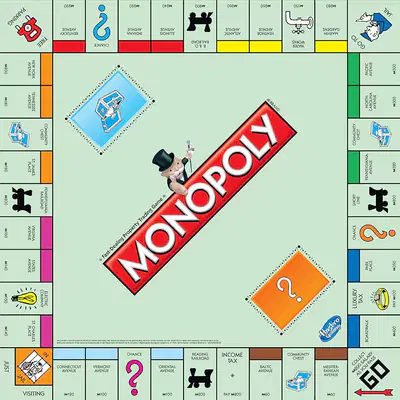
Why is the monopolist considered the “king” of the industry?
Monopoly
15
Multiple Select
Which two options are characteristics of a monopoly?
A single buyer
A dominant seller
Free entry and exit
A unique product
16

High barriers to entry
Barriers to entry are defined as obstacles that prevent entry by potential competitors. They may either be natural or man-made (artificially created).
Types of barriers to entry include: financial barriers, cost barriers (including internal economies of scale), control of raw materials, legal barriers and strategic entry barriers created by rival firms.
When the barriers to entry are so high that new firms are prevented from entering and there is only one player in the market, the market is called a monopoly.
Characteristics of Monopoly
17

A single producer controls the entire supply of a product
This means that the single producer has substantial market power.
Since there is only one firm,
the firm is the industry;
the firm has no rivals; and
the firm has the power to dictate either the price or the quantity sold.
Characteristics of Monopoly
18

The product sold is unique
There are no close substitutes for the product sold by the monopolist.
Characteristics of Monopoly
19

Why are there numerous small businesses in a monopolistically competitive industry?
Monopolistic Competition
20

Relative freedom of entry for firms
To enter the industry, firms generally do not require a very large start-up financial capital as compared to monopolies and oligopolies.Thus, there are weak or no barriers to entry in the monopolistically competitive industry.
Characteristics of Monopolistic Competition
21
Open Ended
Monopolistic competition is nearer to the competitive end of the spectrum.
In a monopolistically competitive market, there are a large number of relatively small firms competing against one another. None of the individual firms is large enough to dominate the industry.
Can you think of examples of monopolistically competitive firms?
22

There are numerous small firms
None of the individual firms is large enough to dominate the market.Consider the number of neighbourhood boutique stores, hair salons and cafes that can be found in a typical large city. These could be possible examples of monopolistic competitive markets.
Characteristics of Monopolistic Competition
23
Each firm's product is sligtly differentiated from the others
Each firm’s product is largely similar but not identical to one another’s i.e. they are close but not perfect substitutes.
The differences in the products may be real or imaginary.
Product differentiation could be real in terms of physical design, workmanship and quality of service. Imaginary differences could be created through advertisement, packaging, branding and trademarks.
Because of product differentiation, each firm is able to carve out a share of the market for itself. For instance, if a boutique store increases its price, it will not lose all its customers, unlike what would happen under perfect competition.
Thus, a monopolistically competitive firm has some degree of market power and some ability to set prices; it is a price-setter.
Characteristics of Monopolistic Competition
24
Multiple Choice
A monopolistically competitive market is characterised by ________
numerous small firms, differentiated products and high barriers to entry.
numerous small firms, differentiated products, and relative freedom of entry.
a few large firms, identical products, and relative freedom of entry.
a few large firms, differentiated products, and high barriers to entry.
25

Why are large firms more commonly found in oligopolies?
Oligopoly
26
Open Ended
An oligopolistic market structure is nearer to the monopolistic end of the spectrum.
There are a few large firms dominating the industry.
Some oligopolistic firms could be so large that they have operations worldwide. Can you think of examples of oligopolistic firms?
27
There are a few large firms dominating the industry
Please note that “few” is not defined in terms of a fixed number of firms. An oligopoly may have as few as three or four firms or as many as a dozen firms dominating or leading the industry.The market is considered to have few sellers as the actions of any individual seller can affect the market and the other sellers.
Each seller takes the actions and reactions of their rivals into account when making their own production and marketing decisions.
This is known as interdependence, rival consciousness or simply rivalry.
Characteristics of Oligopoly
28
Products can be homogenous or differentiated
The product can either be homogeneous (e.g. raw materials or primary products like crude oil and electricity) or differentiated (e.g. consumer or final goods like automobiles and consumer electronics).
Characteristics of Oligopoly
29
There are high barriers to entry and exit
The barriers to entry are often lower than those in a monopoly but are still high enough so that entry into the market is limited or restricted to a few sellers.Some examples of the barriers to entry are:
High Start-up Costs
Internal Economies of Scale
Characteristics of Oligopoly
30
Multiple Choice
Which of the following statements about oligopolies is true?
An oligopolistic market has numerous small sellers.
Firms in an oligopolistic industry are interdependent on one another, unlike those in a monopolistically competitive industry.
Oligopolistic firms do not design strategic barriers to discourage potential entrants from entering and competing in the market.
The actions of any one seller do not have an impact on the profits of all other sellers.
Market Structure
Monopoly
Oligopoly
Monopolistic Competition
Perfect Competition
Show answer
Auto Play
Slide 1 / 30
SLIDE
Similar Resources on Wayground

22 questions
VHS Expectation: Thoughtful
Presentation
•
9th - 12th Grade
19 questions
Energy Sources
Presentation
•
9th - 12th Grade
23 questions
Writing Slope Intercept Equations
Presentation
•
9th - 12th Grade
23 questions
En la escuela
Presentation
•
9th - 12th Grade
23 questions
Direct Object Pronouns
Presentation
•
9th - 12th Grade
22 questions
Personal Letters (surat pribadi)
Presentation
•
10th - 12th Grade
24 questions
Binary numbers
Presentation
•
9th - 12th Grade
20 questions
Agriculture, Retail, Manufacturing and Service Industries
Presentation
•
KG - University
Popular Resources on Wayground
6 questions
Secondary Safety Quiz
Presentation
•
9th - 12th Grade
10 questions
MyPath Diagnostic Overview
Presentation
•
6th - 8th Grade
20 questions
Lab Safety Quiz

Quiz
•
6th Grade
21 questions
Continents and Oceans
Quiz
•
6th Grade
20 questions
Adding and Subtracting Decimals
Quiz
•
5th Grade
20 questions
Parts of Speech
Quiz
•
5th Grade
16 questions
Subject & Predicate
Quiz
•
5th Grade
21 questions
Lab Safety
Quiz
•
10th Grade
Discover more resources for Other
6 questions
Secondary Safety Quiz
Presentation
•
9th - 12th Grade
21 questions
Lab Safety
Quiz
•
10th Grade
10 questions
Fact Check Ice Breaker: Two truths and a lie
Quiz
•
5th - 12th Grade
12 questions
Lab Safety Quizizz
Quiz
•
9th Grade
20 questions
Bloom Day School Community Quiz
Quiz
•
10th Grade
20 questions
Characteristics of Life
Quiz
•
9th - 10th Grade
10 questions
Scientific Method (The scientific method)

Interactive video
•
9th Grade
20 questions
REGULAR Present tense verbs
Quiz
•
8th - 9th Grade