
Unit 9 STAAR REVIEW

Presentation
•
Social Studies
•
8th Grade
•
Practice Problem
•
Medium

Johanna Mares
Used 5+ times
FREE Resource
29 Slides • 7 Questions
1

Unit 9 STAAR Review
SECTIONALISM – GROWING DIVISION 1820S-1850S
2

Unit Vocabulary
U9
3


Sectionalism
Concern for regional needs and interests. North vs. South
vs. West
4
Open Ended
List and describe the differences between the sections?
(north, south, and west)
5

Discuss
What were some differences between the sections?
the North was industrialized
the South was agricultural
the West was in the process of development
6


Compromise
An agreement in which both sides give up some
demands. Meet in the Middle.
7


States’ Rights
Powers given to the states, generally seen as a check
to federal powers
8


Protective Tariffs
A tax on imported goods that is intended to protect
domestic business
9


Nullification
The idea that states can refuse to follow federal laws
The U.S.
Government
South
Carolina
10

Geographical
Sectionalism
Unit 9 Growing Division 1920s-1950s
11


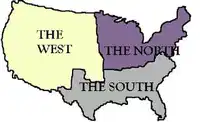
Map of Sectionalism
12


The North
Geography
◦Cold
◦Natural Transportation (Rivers, Harbors)
◦Developed Transportation (Canals, Railroads)
Economy
◦Industrialized economy with factories and Trade
◦Supported/benefitted from high tariffs
View on Slavery
◦Abolitionists
Politics
◦Strong Federal Government
13


The South
Geography
◦Hot
◦Large amounts of cheap land
Economy
◦Plantation Agriculture
◦Cash Crops (Cotton)
◦Wanted low/no tariffs
View on Slavery
◦Slaves provided labor and were viewed as a necessity.
Politics
◦Believed in States’ Rights
14


The West
Geography
◦Variety
◦Opened to settlement with the construction of roads and transcontinental
railroad
◦Large amounts of resources
Economic
◦Mining, Subsistence Agriculture
View on Slavery
◦Slavery in the West was up in the air
Politics
◦Mixed
15
Multiple Choice

Sample STAAR Question
F
G
H
J
16
Multiple Choice

Sample STAAR Question
F
G
H
J
17

Important People in
Sectionalism
Unit 9 Growing Division 1920s-1950s
18

Henry Clay
Known as the Great Compromiser. Was responsible for
◦The Missouri Compromise
◦The Compromise Tariff of 1833
◦The Compromise of 1850
Tried to reduce sectional conflict
Balanced the concerns on both sides of slavery
19

John C. Calhoun
7th Vice President of the U.S.
Defender of Slavery
Important in the Nullification Crisis
Pushed for States’ Rights
20

Events Leading to
Sectionalism
Unit 9 Sectionalism - Growing Division 1920s-1950s
21


Northwest Ordinance
Established the plan for admitting
new states to the Union (The
United States)
5,000 to create a self-government
with a constitution
60,000 to apply for statehood
22


Missouri Compromise
Needed to maintain
slave-state/free-state balance.
Missouri = Slave State
Maine = Free State
What about future settling of
Louisiana Purchase?
◦Imaginary line (36 30’)
◦North of Line = Free
◦South of Line = Slave
23
Multiple Choice

Sample STAAR Question
A
B
C
D
24


Nullification Crisis
South Carolina, generally against tariffs,
nullified the Tariff of Abominations.
When President Jackson demanded South
Carolina to follow the law, South Carolina
threatened to secede.
Importance:
◦Stirred the debate over states’ rights
◦Further divided the country
25
Multiple Choice

Sample STAAR Question
A
B
C
D
26


Mexican Cession
The United States claims a large
amount of land from Mexico
How do we organize this land?
California Wishes to Join as a Free
State
◦How does this go against the Missouri
Compromise?
27


Compromise of 1850
California = Free State
The remainder of the Mexican
Cession was divided into two
territories
◦New Mexico and Utah
◦Slavery decided through popular
sovereign
Slave Trade in Washington D.C. was
banned.
Fugitive Slave Act Passed
28


Fugitive Slave Law of 1850
Required the return of escaped
slaves to their slaveholders
Helping fugitive slaves became
illegal
Free Blacks in the North were at
risk of capture
Inspired the Underground
Railroad
29


Kansas/Nebraska Act
Two new states – Kansas and Nebraska
◦Popular Sovereignty will decide slavery
Abolitionists and Slave Supporters
flooded the territory to sway the vote.
Bleeding Kansas: Fighting breaks out
between northerners and southerners
in Kansas.
◦John Brown massacres five slave supporters
30

Dred Scott v. Sandford
31

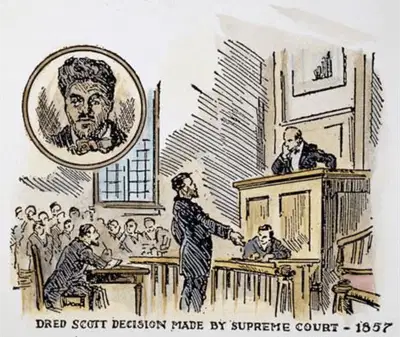
Importance of the Decision
Declared slaves were not citizens
◦Had no rights
Slaves are property
Missouri Compromise
Unconstitutional
◦Congress did not have the authority to
prohibit slavery in territories
32
Multiple Choice

Sample STAAR Question
A
B
C
D
33

Free Blacks and Slaves
34

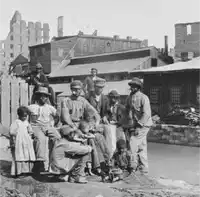
Free Blacks
North
Limited Political Voice
◦Only a few states allowed Free Blacks to vote
Most worked as low-wage earners
Could own property
Could own a business
35


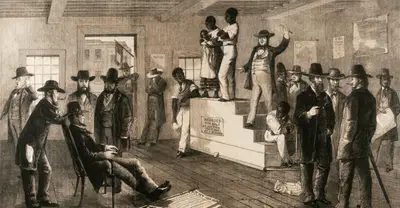
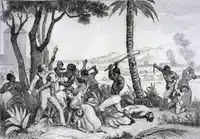
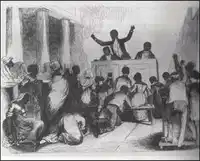
Slaves
South
No political voice. No rights
Viewed as property.
Families were often torn apart
Could not own property
36
Multiple Choice

Sample STAAR Question
A
B
C
D
Unit 9 STAAR Review
SECTIONALISM – GROWING DIVISION 1820S-1850S
Show answer
Auto Play
Slide 1 / 36
SLIDE
Similar Resources on Wayground

29 questions
U.S. Constitution & the 27 Amendments
Presentation
•
8th Grade
27 questions
American Revolution Review
Presentation
•
8th Grade
34 questions
Western Expansion: Land Acquisition
Presentation
•
8th Grade
31 questions
Articles of Confederation/Constitutional Convention Review
Presentation
•
8th Grade
29 questions
American Revolution, Day 8
Presentation
•
8th Grade
31 questions
https://quizizz.zendesk.com/President Washington
Presentation
•
8th Grade
25 questions
US Constitution
Presentation
•
8th Grade
29 questions
Scarcity and Opportunity Costs
Presentation
•
9th Grade
Popular Resources on Wayground
21 questions
Continents and Oceans

Quiz
•
6th Grade
20 questions
Parts of Speech
Quiz
•
5th Grade
16 questions
Subject & Predicate
Quiz
•
5th Grade
25 questions
Multiplication Facts
Quiz
•
5th Grade
12 questions
Map Skills
Quiz
•
3rd Grade
22 questions
Continents and Oceans
Quiz
•
5th Grade
15 questions
Rounding Decimals
Quiz
•
5th Grade
20 questions
Brand Labels
Quiz
•
5th - 12th Grade
Discover more resources for Social Studies
10 questions
Exploring the Age of Exploration: Key Events and Figures

Interactive video
•
6th - 10th Grade
10 questions
Causes of the American Revolution
Quiz
•
8th Grade
15 questions
Historical Inquiry Vocab Quiz
Quiz
•
6th - 8th Grade
19 questions
Influencing Govt (Interest Groups-Media)
Quiz
•
6th - 8th Grade
10 questions
Declaration of Independence
Presentation
•
8th Grade
5 questions
Articles of Confederation Video
Interactive video
•
8th Grade
8 questions
Notes: Argumentative Writing
Presentation
•
7th - 8th Grade
13 questions
American Revolution Review
Quiz
•
8th Grade