Search Header Logo
Year 6 GL review

Year 6 GL review

Assessment

Presentation

Science

5th Grade

Medium

Created by

Mahwush javid

Used 7+ times

FREE Resource

12 Slides • 38 Questions

1

media

Science – Grade 5/Y6

Review

TERM 3

2

media

Success Criteria

I can explain what are

characteristics

of living things

I can

d

efine what are

classifications

of living things

I can explain

how adaptations helps the

living things to survive

3

media

Starter:Grouping Organisms

Sort the organisms below into two groups.

Be prepared to justify your choices.

4

media

5

Starter: Grouping organisms into two groups

media

6

media

Vertebrates are animals with a backbone. They have a hard skeleton made of

bone. It holds their body up and gives them shape.

7

media

Invertebrates do not have a backbone, or a skeleton made of bones. Many have a hard shell outside their bodies to protect them. Others have soft, flexible bodies.

8

media

Vertebrates can be separated into five broad groups:

9

Multiple Choice

Which is not feature of all birds?

1

two legs

2

feathers

3

lives in trees

4

lay eggs

10

Multiple Choice

What is not the feature of all mammals?

1

Eat leaves

2

hair or fur

3

warm blooded

4

have a backbone

11

Multiple Choice

Vertebrates and invertebrates are groups in the ___ Kingdom.

1

Animal

2

Plant

3

Fungi

4

Protist

5

Monera

12

Multiple Choice

What is the major difference between vertebrates and invertebrates?

1

Invertebrates are smaller than vertebrates.

2

Invertebrates live in water and vertebrates do not.

3

Invertebrates have a backbone and vertebrates do not.

4

Vertebrates have a backbone and invertebrates do not.

13

Multiple Choice

Mammals, fish, birds, reptiles and amphibians are all ___.

1

vertebrates

2

invertebrates

14

Multiple Choice

Question image

Which group does it belong to?

1

vertebrate

2

invertebrate

15

media

What is a classification key?

A key is a set of questions about the characteristics of
living things.

You can use a key to identify a living thing or decide which
group it belongs to by answering the questions.

16

Multiple Choice

Question image

What is the answer for box 1?

1

cow

2

human

3

moth

4

octopus

17

Multiple Choice

Question image

What is the answer for box 2?

1

cow

2

human

3

moth

4

octopus

18

Multiple Choice

Question image

What is the answer for box 3?

1

cow

2

human

3

moth

4

octopus

19

Multiple Choice

Question image

What is the answer for box 4?

1

cow

2

human

3

moth

4

octopus

20

Labelling

Place the correct plant into the correct place on the classification key.

Drag labels to their correct position on the image

Sunflower

Apple tree

Pine Tree

Lily

21

media

22

Multiple Choice

Adaptations are characteristics that help an organism to survive in its environment and/or reproduce.

1

True

2

False

23

Multiple Choice

How do adaptations help animals?

1

to hide from predators

2

to hunt for food

3

to survive in their habitats

4

All of the answers are correct

24

Multiple Choice

An animal's color or pattern that helps it blend into its surroundings

1

Hibernation

2

Mimicry

3

Camouflage

4

Echolocation

25

Multiple Choice

Question image
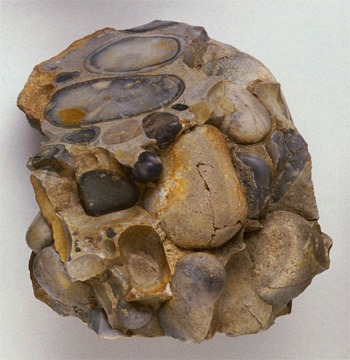
This rock formed when bits of other rocks became pressed into a solid. What type of rock is it?
1
Sedimentary Rock
2
Metamorphic Rock
3
Igneous Rock

26

Multiple Choice

What are the 3 major types of rocks?
1
Igneous, Metamorphic, Sedimentary
2
Metamorphic, Igneous, Cementation
3
Brown, Red, Gray
4
Streak, Hardness, Breakage

27

Multiple Choice

Question image
This rock was formed by smaller pieces of rock that settled at the bottom of a lake millions of years ago. What type of rock is this?
1
Sedimentary
2
Igneous
3
Metamorphic

28

Multiple Choice

Question image
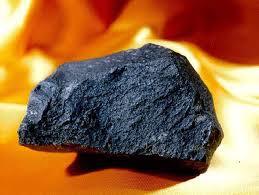
This rock was found near the mouth of a volcano. What type of rock is this?
1
Sedimentary
2
Igneous
3
Metamorphic

29

Multiple Choice

Extreme Heat and Pressure creates a _________ rock.
1
Igneous
2
Metamorphic
3
Sedimentary
4
Mineral

30

Multiple Choice

Question image
Chalk and Limestone are made up of the bodies and shells of dead animals.  They are both examples of this type of rock.
1
Sedimentary
2
Igneous
3
Metamorphic

31

Multiple Choice

Question image
Which rocks are MOST likely to be the strongest, and have the shiniest crystals?
1
Sedimentary
2
Igneous
3
Metamorphic

32

Multiple Choice

Question image

Cactus have spines and waxy leaves to prevent water loss because they live in the ...

1

Desert

2

Rocky mountain

3

Grassland

4

Tropical Rainfroest

33

Multiple Select

How cactus survive in the desert? (list 2 things)

1

Thrones

2

Hump

3

It doesn't store water

4

Wax on its stem

34

Multiple Choice

Question image

How arctic fox adapt

1

fur

2

herbination

35

Multiple Choice

an adapation that helps the camel not sink

1

a large hump

2

large surface area of feet

3

thick eyelashes

4

large leg to body ratio

36

Multiple Choice

Question image

What type of beak is best for sucking nectar from flowers?

1

Chopstick

2

Spoon

3

Straw

4

Tweezer

37

Multiple Choice

Question image

Which adaptation of a frog most helps it capture insects to eat?

1

croaking sound

2

sticky tongue

3

laying eggs

4

smooth skin

38

Multiple Choice

Some bears have thick layers of fat and fur that help to keep them warm. These adaptations are best suited to an environment that is –

1

dry

2

cold

3

dark

4

windy

39

Multiple Choice

Question image

Camels live in the desert and have wide, flat, leathery pads on the bottoms of their feet. This adaptation most likely helps them –

1

walk on hot sand

2

find sources of water

3

climb rocky hills

4

sleep standing up

40

Multiple Choice

Question image

Many animals hibernate during the winter. During the winter they spend most of the time sleeping. This behavior is an adaptation that helps animals by –

1

allowing them to avoid harsh sun and rains

2

building strong muscles for fighting enemies

3

conserving energy when food is hard to find

4

making them easy for predators to see

41

Multiple Choice

If the Earth’s temperature gradually decreased over a long period of time, which change would help animals survive?

1

A thicker neck

2

A larger mouth

3

Being taller and faster

4

More fur and fat on the body

42

Multiple Choice

Question image

Emperor penguins live a very cold climate. Which characteristic helps Emperor penguins to stay warm?

1

Ability to survive for weeks without food

2

Ability to swim underwater

3

Thick layer of feathers

4

Black and white feathers

43

media

44

Multiple Choice

Question image
What are the three types of Rocks?
1
Sedimentary, Igneous, Metamorphic
2
Sedimentary, Igneous, Marble
3
Sandstone, Lava, Metamorphisis
4
Sediment, Lava, Heat and Pressure

45

Multiple Choice

Question image
You can see layers in this rock.  Could be sand, or pebbles.
1
Sedimentary
2
Igneous
3
Metamorphic
4
Sand Rock

46

Multiple Choice

Question image
Which type of rock would you find bubbles in?
1
Sedimentary
2
Igneous
3
Metamorphic
4
bubble rock

47

Multiple Choice

Question image
Which rocks are MOST likely to be the strongest, and have the shiniest crystals?
1
Sedimentary
2
Igneous
3
Metamorphic

48

Multiple Choice

Question image
Chalk and Limestone are made up of the bodies and shells of dead animals.  They are both examples of this type of rock.
1
Sedimentary
2
Igneous
3
Metamorphic

49

Multiple Choice

Question image

Adam looks at a rock. Based on the table which type of rock is Adam looking at?

1

Obsidian

2

Sandstone

3

Limestone

4

Pumice

50

media

Exit ticket

media

Science – Grade 5/Y6

Review

TERM 3

Show answer

Auto Play

Slide 1 / 50

SLIDE