

PROJECT X MOISES

Presentation
•
English
•
Professional Development
•
Hard

Moises C
FREE Resource
17 Slides • 12 Questions
1
PROJECT X

Moises Craveiro
2
Mc
Graw
Hill
3
Chapter 21 -Life Goes On
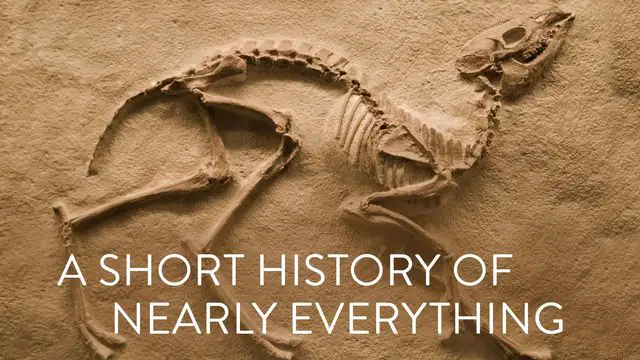
It isn’t easy to become a fossil. The fate of nearly all living organisms—over 99.9 percent of them—is to compost down to nothingness.

4
Multiple Choice
What % of living organisms become fossilized?
.1%
10%
20%
5%
5
Chapter 21 -Life Goes On
It isn’t easy to become a fossil. The fate of nearly all living organisms—over 99.9 percent of them—is to compost down to nothingness. When your spark is gone, every molecule you own will be nibbled off you or sluiced away to be put to use in some other system. That’s just the way it is. Even if you make it into the small pool of organisms, the less than 0.1 percent, that don’t get devoured, the chances of being fossilized are very small.

6
Fill in the Blanks
When your spark is gone, every molecule you own will be nibbled off you or
7
Chapter 21 -Life Goes On
It isn’t easy to become a fossil. The fate of nearly all living organisms—over 99.9 percent of them—is to compost down to nothingness. When your spark is gone, every molecule you own will be nibbled off you or sluiced away to be put to use in some other system. That’s just the way it is. Even if you make it into the small pool of organisms, the less than 0.1 percent, that don’t get devoured, the chances of being fossilized are very small.

8
In order to become a fossil, several things must happen. First, you must die in the right place. Only about 15 percent of rocks can preserve fossils, so it’s no good keeling over on a future site of granite.

9
Multiple Choice
What percent of rocks can preserve fossils?
5%
10%
15%
20%
25%
10
In practical terms the deceased must become buried in sediment, where it can leave an impression, like a leaf in wet mud, or decompose without exposure to oxygen, permitting the molecules in its bones and hard parts (and very occasionally softer parts) to be replaced by dissolved minerals, creating a petrified copy of the original.

11
Multiple Choice
Must be able to decompose without coming in contact with what?
Carbon Dioxide
Water
Oxygen
12
Multiple Choice
The molecules in your bones will be replaced with...?
Minerals
Oil
Air
13
Then as the sediments in which the fossil lies are carelessly pressed and folded and pushed about by Earth’s processes, the fossil must somehow maintain an identifiable shape. Finally, but above all, after tens of millions or perhaps hundreds of millions of years hidden away, it must be found and recognized as something worth keeping.

14
Fill in the Blanks
Then as the sediments in which the fossil lies are carelessly
15
Multiple Choice
How long does it take (years) for a bone to be fossilized?
Tens of millions
1 Billion years
Hundreds of millions
one milllion
16
Only about one bone in a billion, it is thought, ever becomes fossilized. If that is so, it means that the complete fossil legacy of all the Americans alive today.....-

17
Multiple Choice
only _ bone(s) in a billion is thought to be fossilized
1
5
10
3
18
.....that’s 270 million people with 206 bones each will only be about fifty bones, one quarter of a complete skeleton. That’s not to say of course that any of these bones will actually be found. has spawned.

19
Multiple Choice
How many bones does a human have?
205
204
206
208
20
Bearing in mind the they can be buried anywhere within an area of slightly over 3.6 million square miles, little of which will ever be turned over, much less examined, it would be something of a miracle if they were. Fossils are in every sense vanishingly rare. Most of what has lived on Earth has left behind no record at all.

21
Multiple Choice
How many square miles roughly can a fossil be found?
3.6 million
5.8 milllion
32 million
16.7 million
22
It has been estimated that less than one species in ten thousand has made it into the fossil record. That in itself is a stunningly infinitesimal proportion. However, if you accept the common estimate that the Earth has produced 30 billion species of creature in its time.....

23
...and Richard Leakey and Rogin Lewin’s statement (in The Sixth Extinction )that there are 250,000 species of creature in the fossil record, that reduces the proportion to just one in 120,000. Either way, what we possess is the merest sampling of all the life that Earth

24
Multiple Choice
How many species is estimated to be produced by the earth
10 billion
20 billion
30 billion
40 billion
25
Moreover, the record we do have is hopelessly skewed. Most land animals, of course, don’t die in sediments. They drop in the open and are eaten or left to rot or weather down to nothing.

26
The fossil record consequently is almost absurdly biased in favor of marine creatures. About 95 percent of all the fossils we possess are of animals that once lived under water, mostly in shallow seas.

27
Multiple Choice
Most of the fossils (95%) we find are
Land animals
Ocean Animals
28
-Albert Einstein

29


PROJECT X
Moises Craveiro
Show answer
Auto Play
Slide 1 / 29
SLIDE
Similar Resources on Wayground

19 questions
Past Perfect Tense
Presentation
•
Professional Development
26 questions
Articles & prepositions
Presentation
•
Professional Development
22 questions
RELATIVE CLAUSES
Presentation
•
University
21 questions
Present Simple and Present Continuous
Presentation
•
University
22 questions
Kids 1 Part 4 Lesson 29
Presentation
•
Professional Development
23 questions
Possessive Pronouns
Presentation
•
Professional Development
20 questions
Future Tenses
Presentation
•
University
20 questions
Present perfect continuous
Presentation
•
University
Popular Resources on Wayground
10 questions
Safety Day 2026 – Student Review

Quiz
•
9th Grade
21 questions
Continents and Oceans
Quiz
•
6th Grade
20 questions
Parts of Speech
Quiz
•
5th Grade
16 questions
Subject & Predicate
Quiz
•
5th Grade
25 questions
Multiplication Facts
Quiz
•
5th Grade
12 questions
Map Skills
Quiz
•
3rd Grade
22 questions
Continents and Oceans
Quiz
•
5th Grade
15 questions
Rounding Decimals
Quiz
•
5th Grade