
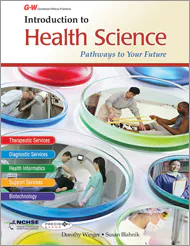
PHS - Ch. 1 Welcome to Health Science (Slides 1-16)

Presentation
•
Other
•
9th Grade
•
Easy

Reagan Johnson
Used 29+ times
FREE Resource
19 Slides • 5 Questions
1
(Slides 1-16)
1. Evolution of Healthcare
2. Future Trends
3. Current Issues In Healthcare
2
3
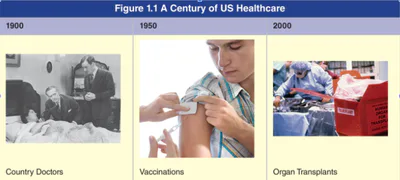
In the past 100 years, there have been advancements in the world of medicine and the acceptance of new attitudes and beliefs about healthcare that have been guided by medical research and development.
4
👨⚕️ Doctors in medical school focused on studying diseases—their symptoms and how they developed/progressed.
🩺 Physicians could often diagnose illnesses and predict the likely outcome (prognosis).
💊 Treatments were usually meant to relieve pain or make patients comfortable.
❌ Most diseases could not be cured—only managed.
5
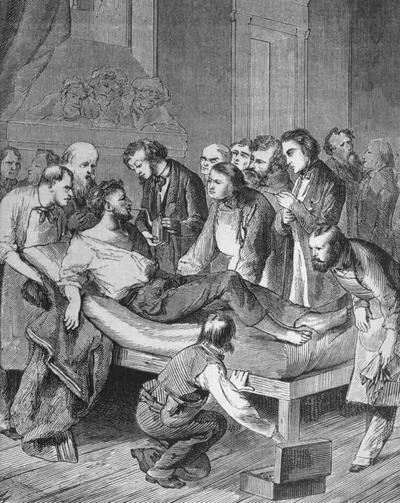
🧪 Limited technology – no advanced machines, scans, or lab tests like we have today.
💉 Few medications existed (no antibiotics until the 1940s!).
🧬 Very little knowledge about germs, viruses, and genetics compared to now.
🏥 Hospitals focused more on caring for patients rather than curing them.

6
🔬 Research and discoveries kept improving medical care.
💊 New & better drugs were developed.
Penicillin → powerful antibiotic that cured infections once deadly (like bacterial meningitis).
Insulin → life-saving treatment for people with diabetes.
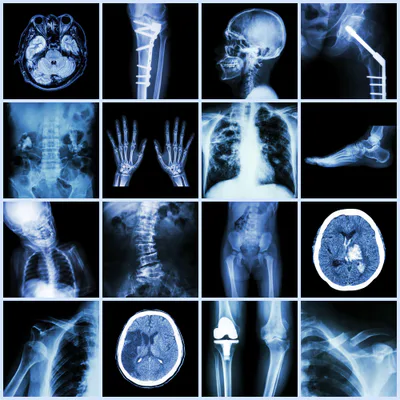
🦴 X-rays became common to check for broken bones.
7
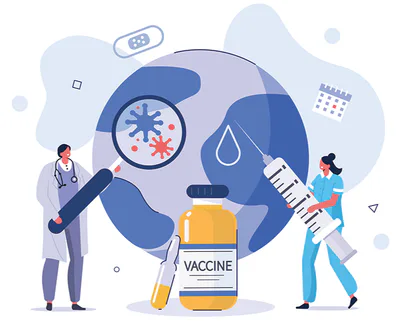
💉 Vaccines helped stop many serious diseases.
Smallpox vaccine → wiped out a deadly disease worldwide.
Tetanus vaccine → protected people from life-threatening infections.
🛡️ These vaccines greatly reduced illness and death rates.
8
🧪 We have highly advanced technology to treat and cure diseases.
🚀 New discoveries are being made all the time.
💓 Patients can now receive life-saving treatments, such as:
❤️ Heart bypass surgeries (help blood flow around blocked arteries)
🫀 Heart valve replacements (fix damaged heart valves)
🧑🤝🧑 Organ transplants (kidneys, liver, heart, lungs, etc.)
9
What are 3 differences between doctors from 100 years ago and doctors today?
🏠 Then: Doctors made home visits.
❤️ Then: Doctors could not cure most diseases.
✅Now: Doctors can use life-saving treatments.
🏥 Then: There were not enough hospitals to provide advanced care.
✅Now: Hospitals have modern technology and treatments.
10
Multiple Choice
As recently as 100 years ago, doctors might have been able to __________ an illness, but they were often unable to ____________ it.
diagnose, cure
cure, diagnose
11
Multiple Choice
After fifty years of medical advancements, physicians had _________ to cure bacterial infections.
antibiotics
12
Multiple Choice
Today, medical care is changing rapidly because of advances in ____________
technology
vaccinations
shots
advances in educational opportunities
13
The evolution of healthcare is not limited to changes in patient care and treatment; it also includes changes in the current attitudes and beliefs.
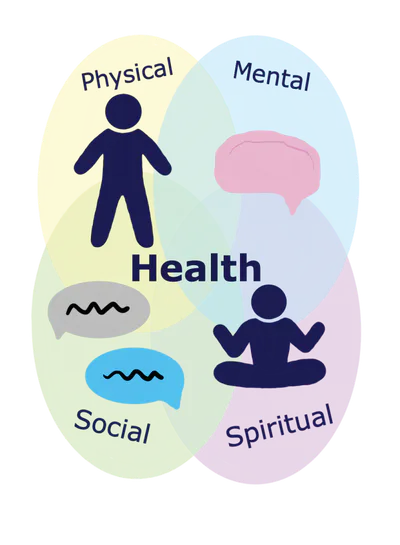
🌿 What is Holistic Care?
👤 Treats the whole person (not just symptoms).
🧠 Considers mental health.
❤️ Includes physical health.
👥 Looks at social well-being.
🙏 Takes spiritual health into account.
🌱 Uses alternative & complementary therapies (ex: meditation, massage, acupuncture).
14
Genomic Medicine
🧬 Uses a patient’s unique genes & chromosomes.
🎯 Provides personalized medical care (different for each person).
🛡️ Helps prevent illness before it happens.
💪 Supports long-term health and wellness.
What diseases can Genomic Medicine treat?
Hepatitis B, Heart Disease, Cancers
15
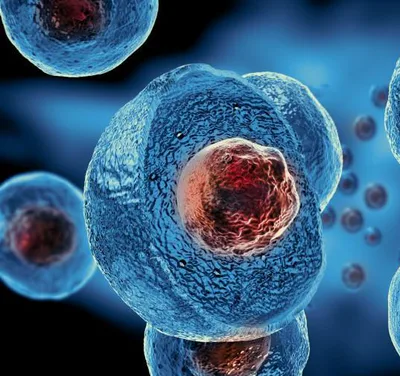
Regenerative Medicine
🧪 A type of medical care that creates living tissue.
🧍♂️ Helps replace or repair tissues and organs.
⏳ Used when body parts are damaged from:
👵 Aging
🤒 Disease
🤕 Injury
👶 Birth disorders
16
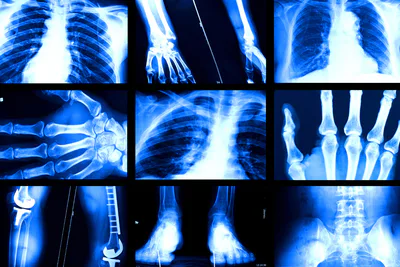
Medical Imaging
🩻 X-Rays → check bones & injuries
🖥️ CT Scans → detailed cross-section images
🧲 MRI → uses magnets to see inside the body
👶 Ultrasound → safe imaging (commonly for pregnancies, organs)
📹 Colonoscopy → camera to view inside the colon
17
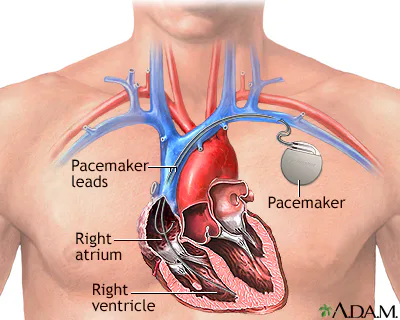
⚙️ Medicine + engineering = smaller, smarter devices
❤️ Stents → keep blood vessels open
🔋 Pacemakers → help regulate heartbeat
🧬 Nanotechnology could lead to microscopic tools working inside the body
18
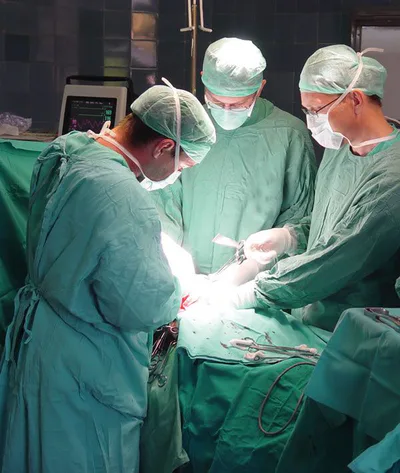
🏥 Technology is changing how surgeries are done
🩺 Examples:
💉 Catheters → tubes used for treatment or diagnosis
🔪 Laparoscopic procedures → small incisions, less recovery time
🏃♂️ Outpatient procedures → patients go home the same day
🤖 Robotic surgeries → robots assist surgeons for precision
19
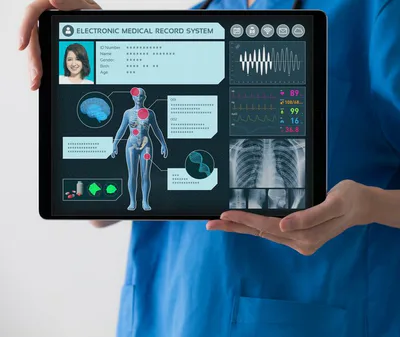
💻 Digital patient records = Electronic Health Records (EHRs)
🩺 Healthcare workers can:
📊 Access patient information quickly
📝 Enter vital signs & treatments
⚡ Improves accuracy, efficiency, and communication in healthcare
20
Multiple Choice
Healthcare professionals are now embracing a more ___________ approach to healthcare that focuses on more than just the physical needs of the patient.
holistic
basic
minimal
genomic
21
Match
Match the following:
Uses a patient’s genes to prevent illness and keep them healthy.
Creates living tissue to replace damaged organs or tissues.
Creating smaller, more powerful medical devices.
Techniques that give detailed images of the body’s internal structures.
Stores all patient information and treatments digitally.
genomic medicine
regenerative medicine
miniaturization
medical imaging
Electronic Health Records (EHRs)
genomic medicine
regenerative medicine
miniaturization
medical imaging
Electronic Health Records (EHRs)
22
Affordability Vs. Accessibility
💸 Many people in the U.S. struggle to pay for healthcare.
🏥 Lack of access can lead to earlier deaths or untreated illnesses.
🤝 Efforts are being made to improve affordability and access for everyone.
23
Why are healthcare costs rising in the United States?
💻 New technologies → advanced treatments can be expensive
⏳ Longer lifespans → more years of medical care needed
🍔 Lifestyle choices → chronic conditions like diabetes increase costs
24
Addressing the Issues✅

Affordable Care Act (2010)
🏛️ Signed into law to reform healthcare in the U.S.
💳 Aims to provide insurance to more Americans.
🏥 Goal: Make healthcare more accessible and affordable for everyone.
(Slides 1-16)
1. Evolution of Healthcare
2. Future Trends
3. Current Issues In Healthcare
Show answer
Auto Play
Slide 1 / 24
SLIDE
Similar Resources on Wayground

19 questions
Macbeth - Context: witches (in class lesson)
Presentation
•
8th - 10th Grade
22 questions
CPR 1st Aid
Presentation
•
9th Grade
19 questions
Medical math:the basics unit 1
Presentation
•
10th Grade
18 questions
grade:10 Module 4 lesson 1
Presentation
•
10th Grade
16 questions
Sec 3 SS CH2 Review Quiz (1)
Presentation
•
8th Grade
19 questions
PHS - Ch. 7 Slides #2 (Information Technology/Med Math)
Presentation
•
9th Grade
18 questions
US First Lesson Immigration
Presentation
•
8th - 9th Grade
Popular Resources on Wayground
10 questions
Safety Day 2026 – Student Review

Quiz
•
9th Grade
21 questions
Continents and Oceans
Quiz
•
6th Grade
20 questions
Parts of Speech
Quiz
•
5th Grade
16 questions
Subject & Predicate
Quiz
•
5th Grade
25 questions
Multiplication Facts
Quiz
•
5th Grade
12 questions
Map Skills
Quiz
•
3rd Grade
22 questions
Continents and Oceans
Quiz
•
5th Grade
15 questions
Rounding Decimals
Quiz
•
5th Grade
Discover more resources for Other
10 questions
Safety Day 2026 – Student Review
Quiz
•
9th Grade
20 questions
REGULAR Present tense verbs
Quiz
•
8th - 9th Grade
26 questions
SLIME!!!!!
Quiz
•
KG - 12th Grade
10 questions
Test Your Knowledge on Bullying
Quiz
•
9th Grade
12 questions
Absolute Value Equations
Quiz
•
9th Grade
20 questions
Position vs. Time Graphs
Quiz
•
9th Grade
20 questions
Function or Not a Function
Quiz
•
8th - 9th Grade
10 questions
Exploring Chemical and Physical Changes

Interactive video
•
6th - 10th Grade