

13.1

Presentation
•
Biology
•
12th Grade
•
Practice Problem
•
Hard

Spencer Law
Used 1+ times
FREE Resource
13 Slides • 0 Questions
1

Unit 30a
Nervous & Endocrine Systems
How the nervous system controls physiological processes
How the endocrine system contributes to homeostasis
2

13.1: The importance of the Nervous
System
3


Organization of the Nervous System
Divided into:
● central nervous system (CNS)
○ Brain, spine
○ Coordinating center
● peripheral nervous system (PNS)
○ Other nerves
○ Relays info between body and CNS
4


5


6


Organization of the Nervous System
7


Anatomy of a Nerve Cell
● Neurons - Transmit impulses
● Glial cells - structural and metabolic support to neurons.
● Copy and label:
Synaptic gap
8

Anatomy of a Nerve Cell
● Axons that send messages faster:
○ Myelinated - have nodes of ranvier, ↑ diameter
● PNS nerves have neurilemma - promote repair.
○ Formed by Schwann cells.
● CNS: no neurilema - damage often permanent
○ White matter vs Grey matter (myelinated?)
9

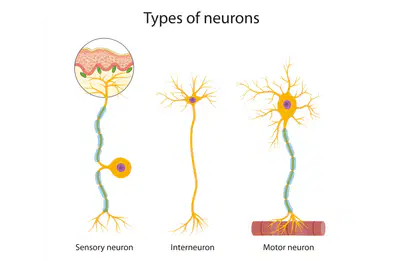
3 types of Nerve Cells
● Sensory (afferent)
○ relay info from sensory receptor
○ Groups = ganglia (sing. ganglion)
● Interneurons
○ Links neurons
● Motor (efferent)
○ relay info to effectors: muscles, glands, and organs.
10

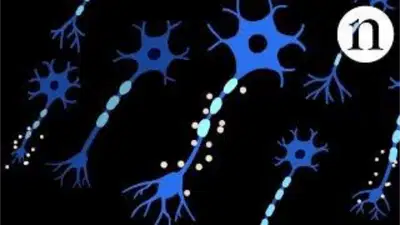
Repairing Damaged Nerves
● PNS allows for slow repair
○ Neurilemma
● CNS does not
● Our research into CNS repair
includes:
○ Stem cells
○ More time is needed
11

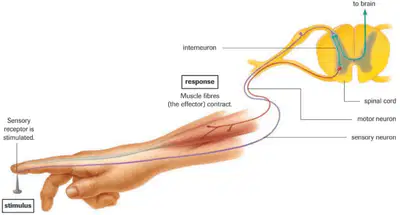

The Reflex Arc
● 5 Parts:
○ Sensory receptor
○ sensory neuron
○ Interneuron
○ motor neuron
○ effector
12

Learning and Plasticity
● Make a brief summary
13


Unit 30a
Nervous & Endocrine Systems
How the nervous system controls physiological processes
How the endocrine system contributes to homeostasis
Show answer
Auto Play
Slide 1 / 13
SLIDE
Similar Resources on Wayground

10 questions
GESTIONANDO LMS
Presentation
•
KG
9 questions
ICT SKILLS chapter 1
Presentation
•
12th Grade
12 questions
Mercury
Presentation
•
12th Grade
8 questions
Human Anatomy and Physiology
Presentation
•
11th Grade
8 questions
Intro to Anatomy and Body Systems
Presentation
•
11th Grade
8 questions
Anatomy and Physiology: Introduction
Presentation
•
11th Grade
8 questions
Human Body System Lesson
Presentation
•
11th Grade
9 questions
Lesson 1.3: Modern Economic Systems
Presentation
•
12th Grade
Popular Resources on Wayground
10 questions
HCS SCI 03 Summer School Review 4

Quiz
•
3rd Grade
11 questions
HSMS - Standard Response Protocol
Quiz
•
6th - 8th Grade
16 questions
1.1-1.2 Quiz Review
Quiz
•
9th - 12th Grade
12 questions
Exponent Expressions
Quiz
•
6th Grade
20 questions
Adding and Subtracting Integers
Quiz
•
6th - 7th Grade
11 questions
Northeast States
Quiz
•
3rd - 4th Grade
10 questions
Characterization
Quiz
•
3rd - 7th Grade
10 questions
Common Denominators
Quiz
•
5th Grade