Search Header Logo
Lesson 10 - Enzymes

Lesson 10 - Enzymes

Assessment

Presentation

Biology, Science

9th - 12th Grade

Practice Problem

Easy

NGSS
HS-LS1-1, HS-LS2-5, HS-PS1-5

+2

Standards-aligned

Created by

Samah Al-hamadi

Used 9+ times

FREE Resource

17 Slides • 31 Questions

1

media

2

media

3

media

4

Multiple Choice

Question image

Enzymes are

1

Lipids

2

Protein

3

Carbohydrates

4

Nucleic Acids

5

Multiple Choice

Enzymes are responsible for-

1

Speeding up reactions

2

Giving the body energy

3

Slowing down reactions

6

Multiple Choice

Which of these is most likely an enzyme?  

1

Sucrose

2

Galactose

3

Fructose

4

Amylase

7

media

8

Multiple Choice

Question image

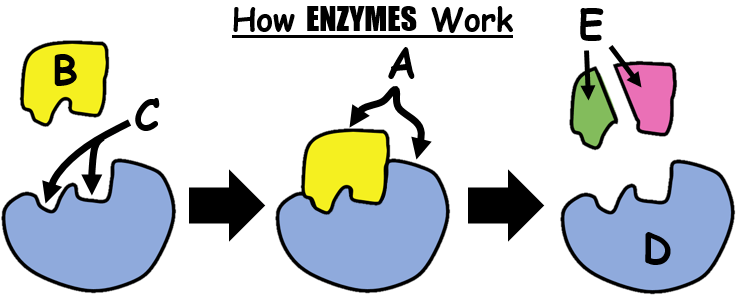
Letter D...

1

active site

2

enzyme

3

substrate

4

products

9

Multiple Choice

Question image

Letter B...

1

active site

2

enzyme

3

substrate

4

products

10

Multiple Choice

Question image

Letter c...

1

active site

2

enzyme

3

substrate

4

products

11

Multiple Choice

Each enzyme only has 1 substrate that will fit its active site.  What is this called?

1

reusablility

2

denaturation

3

specificity

4

fragility

12

media

13

media

14

Multiple Choice

What is a substance called if it speeds up a chemical reaction?

1

reusable

2

catalyst

3

specific

4

fragile

15

media

16

Multiple Choice

An enzyme speeds up a chemical reaction in the cell but can only be used once.  True or False? 

1

true

2

false

17

media

18

Multiple Choice

After the enzyme and substrate bind together and perform the reaction, what does the substrate become?
1
a substrate
2
an enzyme
3
a product
4
an active site

19

media

20

Multiple Choice

What happens when enzymes are heated to a high temperature?

1

The enzymes die.

2

The shapes of the enzyme are altered denature

3

The enzymes' amino acid sequence changes.

4

The enzymes remain the same

21

media

22

Dropdown

Enzymes are ​
that ​
chemical reactions by​
the amount of activation energy required to start the reaction.

23

Labelling

1.Fill out the graphic organizer below:

Drag labels to their correct position on the image

Protein

genetic Info

Fatty Acid

chemical reactions

Glucose

Store energy

Amino Acid

Quick Energy

Nucleic Acid

24

Drag and Drop

Enzymes bind with a specific
at the enzyme's ​
.
Drag these tiles and drop them in the correct blank above
active site
substrate
induced fit
lock and key

25

Fill in the Blank

The enzyme is reused under pH and temperature conditions that are favorable, also called optimal conditions. If the enzyme is NOT in these conditions, it will not longer work. This is called being -

26

Multiple Choice

Question image

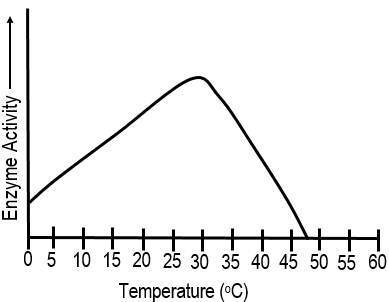
Taq polymerase is an enzyme used in the polymerase chain reaction (PCR) to replicate fragments of DNA. A study published in 1976 examined the properties of Taq polymerase after the enzyme was isolated from Thermus aquaticus, a thermophilic bacterium that lives in the hot springs of Yellowstone National Park. The graph shows one of the results of the study. Which statement about enzyme activity is best supported by this graph?

1

An enzyme must be composed of multiple polypeptides, or subunits, to be active.

2

An enzyme’s rate of activity increases with time until it becomes inactive.

3

An enzyme functions best under specific temperature conditions.

4

An enzyme works equally well in bacteria that are adapted to high temperatures and in eukaryotic cells such as human cells.

27

media

28

Multiple Choice

The enzyme-substrate complex is formed when?

1

The enzyme combines with a substrate.

2

The enzyme reacts with a protein.

3

An enzyme dissolves water.

4

An enzyme is placed at a high temperature.

29

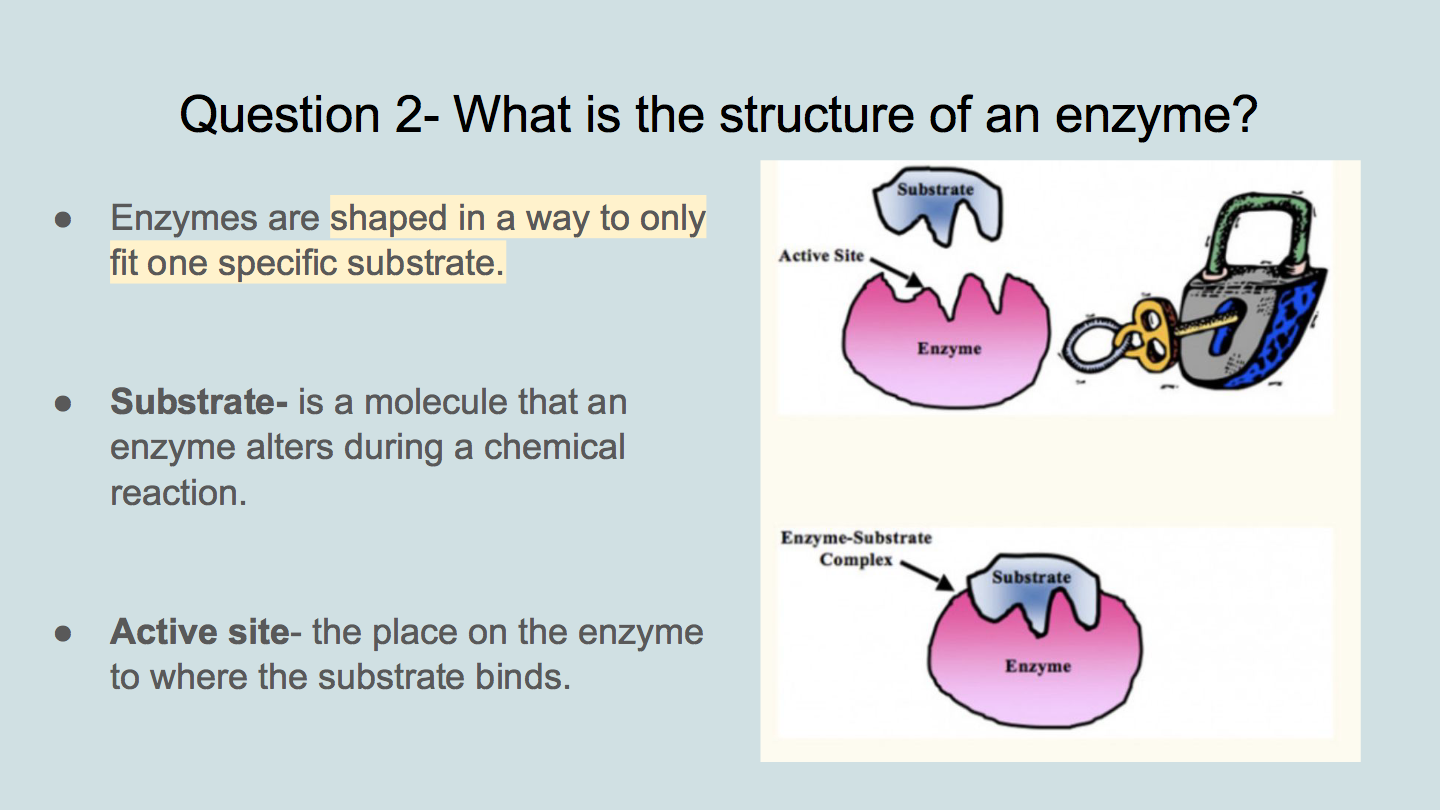
Enzymes are Biological Catalysts

  • They are proteins

  • Catalysts speed up chemical reactions

  • Structure = Function: Enzymes are specific to their Substrate (reactants). Active site of the enzymes fits together with the substrate(s)

  • Different reactions require different enzymes

media

30

Enzyme Specificity - The shape of the enzyme (structure) fits it's substrate (function)

media

31

The induced-fit model is the more accurate model

media

32

Multiple Choice

Question image
1

F

2

G

3

H

4

J

33

Optimal Enzyme Function

When the reaction rate is the highest!

media

34

Multiple Choice

Question image
Which enzyme is most efficient in a basic solution?
1

A

2

B

35

Multiple Choice

Question image
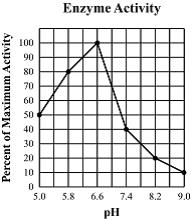
Which of the following conclusions can be drawn from this graph?
1

The optimum pH of the enzyme is 6.6.

2

The optimum pH of the enzyme is 5.8

3

The enzyme’s activity increases as pH increases 5.0 to 9.0

4

The enzyme’s activity is greater around pH of 8.0 .

36

Factors affecting reaction rates

  • Substrate concentration

  • Enzyme concentration

  • pH, temperature, and ion concentrations

media

37

Multiple Choice

Question image
1

A

2

B

3

C

4

D

38

Denaturation = to lose shape

  • Structure (shape) = function

  • If enzymes lose their shape they no longer function correctly

  • Lower enzyme function = slower reaction rates

  • Factors that can affect shape & function of enzymes: Temperature, pH, salinity (ion concentration)

media

39

Multiple Choice

Question image
1

A

2

B

3

C

4

D

40

Multiple Choice

Question image
Based on the graph, what temperature does this enzyme work best? 
1
15 C
2
40 C
3
30 C
4
47 C

41

Multiple Choice

Question image
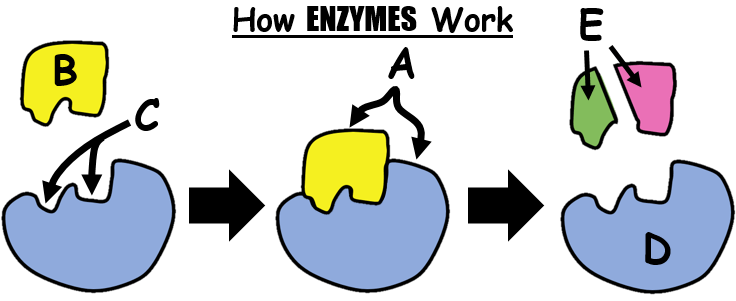
Letter D...
1
active site
2
enzyme
3
substrate
4
products

42

Multiple Choice

Question image
Letter B...
1
active site
2
enzyme
3
substrate
4
products

43

Multiple Choice

Question image
Letter C...
1
active site
2
enzymes
3
substrate
4
products

44

Multiple Choice

Question image
Letter E...
1
active site
2
enzyme
3
substrate
4
products

45

Labelling

Label the parts of the enzyme model

Drag labels to their correct position on the image
Substrate
Products
Enzyme
Active site

46

Multiple Choice

Enzymes are an example of

1

Lipids

2

Carbohydrate

3

Protein

4

Nucleic Acid

47

Multiple Choice

Each enzyme only has 1 substrate that will fit its active site.  What is this called?
1
reusable
2
catalyst
3
specific
4
fragile

48

Multiple Choice

Question image
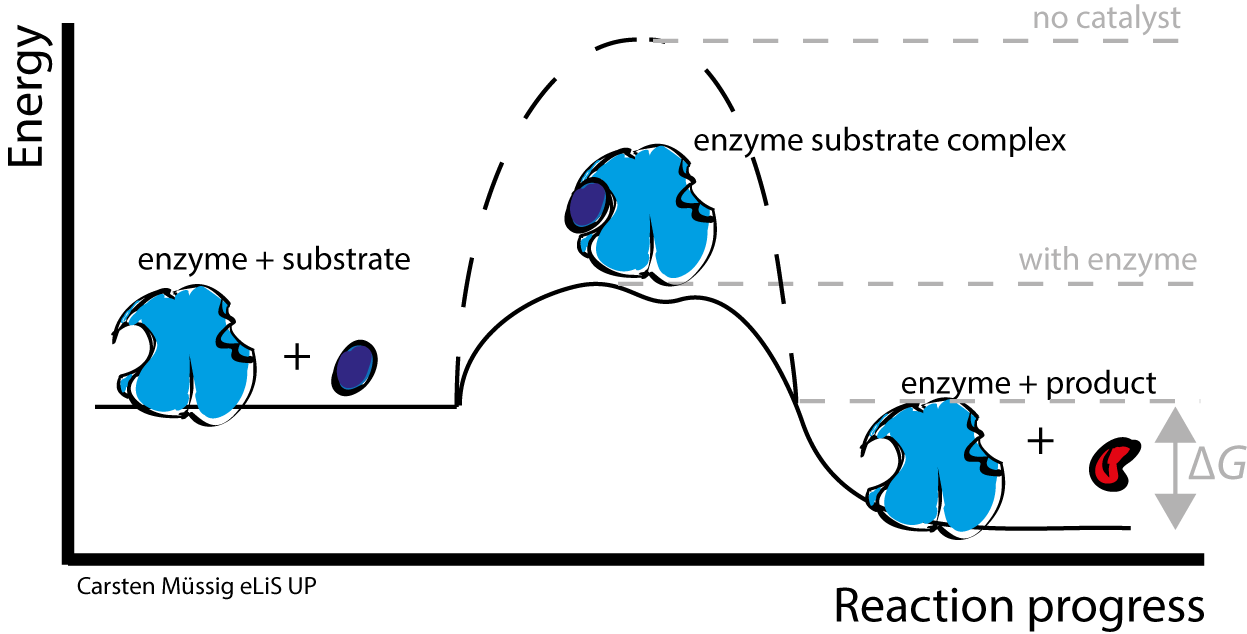
An enzyme speeds up a reaction by
1
lowering the activation energy.
2
raising the activation energy.
3
releasing energy.
4
absorbing energy.
media

Show answer

Auto Play

Slide 1 / 48

SLIDE