

Matter based Mass

Presentation
•
Science
•
4th Grade
•
Medium
+7
Standards-aligned

Jamie Jackson
Used 2+ times
FREE Resource
23 Slides • 5 Questions
1


4th Grade Science
Matter
Lesson 2
Teacher Facing
August 14, 2024
2


MRS Icons
2
3

11
Matter
LO: SWBAT classify and describe matter based on
mass.
DOL: Given scenarios, SW correctly classify and
describe matter based on mass in at least 4 of 5
questions.
SCI.4.6A Classify and describe matter using observable physical properties, including temperature, mass, magnetism, relative density
(the ability to sink or float in water), and physical state (solid, liquid, gas).
SEPs 4.3A, 4.3B,
RTCs 4.5A
4

9
Possible Student Misconceptions
●When calculating mass students often forget to add all of the measurements from the triple beam balance beam together.
●Students may have a problem with calculating the tenths of grams on a triple beam balance.
●Students may think that larger objects have a greater mass than smaller objects, which is not
always true.
●Students may think that mass and weight are the same.

5
6

12
Essential Understandings &
Guiding Questions
How can we classify and describe matter based
on mass?
How are size and mass connected?
7
Multiple Choice
The amount of matter in something is...
length
volume
The mass
height
8
Multiple Choice
A substance that takes up space and has mass is called
engineering model
really cool!
matter
scientific reasoning
9
Multiple Choice

The amount of space that a substance or object takes up is
property
mass
Volume
length
10
Multiple Choice

What is this lab equipment called?
test tube
graduated cylinder
dropper
spring scale
11
Multiple Choice

What is this tool
triple beam balance
beaker
goggles
Balance beam
12

13
Lesson Vocabulary
physical property
mass
matter
13


14
How do the balls in
the video differ?
How are they the
same?
How can you
arrange the
masses of the
three balls?
14


15
Measuring Mass Stations
STATION 1: TRIPLE BEAM
BALANCE
STATION 2: PAN BALANCE
STATION 3: DIGITAL SCALE
15


24
16


23
17


25
18

16
STATION 1: TRIPLE BEAM BALANCE
1.
Listen and learn how to read a triple beam balance.
2.
Practice measuring the mass of the different objects.
3.
Add the values from all three riders to get the total mass of the object.
4.
Record the mass on the data
sheet.
Object
100s
10s
1s
Total
Mass (g)
1
2
3
4
5
19

17
STATION 2: PAN BALANCE
1.
Choose one of the objects from
the list.
2.
Predict the mass of the object.
3.
Use the weights with the pan
balance to determine the mass
of the objects.
Object
Predicted
Mass (g)
Measured
Mass (g)
Which object was the heaviest?
Which was the lightest?
20

18
STATION 3: DIGITAL SCALE
Object
Predicted
Mass (g)
Measured
Mass (g)
Pencil
Cellphone
Potatoes
Milk jug
Microwave
Socks
Pillow
1.
Choose one of the objects
from the list.
2.
Predict the mass of the
object.
3.
Place the object on the
scale to determine the mass
of the object.
Which object had the greatest mass?
Which object had the least mass?
21


Copyright © Savvas Learning Company LLC. All Rights Reserved. Savvas is not responsible for any modifications made by end users to the content posted in its original format.
How can we describe matter?
We can use physical properties to describe matter. A physical
property is a characteristic of matter that can be observed or
measured.
Photo credit: nodff/Shutterstock
22


Copyright © Savvas Learning Company LLC. All Rights Reserved. Savvas is not responsible for any modifications made by end users to the content posted in its original format.
What are some physical properties?
Mass, temperature, magnetism, and the ability to sink or float in
water are examples of physical properties. Scientists use physical
properties to describe matter.
Photo credit: Air Images/Shutterstock
23

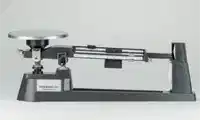
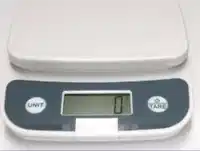

21
Mass is the amount of matter in an object or substance.
Mass is a physical property that can be used to classify matter.
Mass is measured using a balance or a digital scale.
Digital Scale
Pan Balance
Triple Beam
Balance
Mass can be measured in grams.
physical property
24


22
Let’s revisit the phenomenon
1. How can you
arrange the
masses of the
three balls?
2. Arrange the
balls in order from
the least mass to
the greatest mass.
25


Two friends were talking about the mass of a beach ball and a bowling ball that are the
same size.
Alejandro
Children Vectors by Vecteezy.com
I think that both of the balls will be the
same mass because they are the
same size.
Nia
Children Vectors by Vecteezy.com
I think that the beach ball will have less
mass than the bowling ball because the
beach ball is filled with air.
Which student do you agree with? Justify your thinking and explain why you agree
with one students and disagree with the other.
26


27
A student placed a box of crayons on one side of a pan balance and 200g
using gram weights on the other side. The side of the balance with the
crayons inside moved up, and the side of the balance with the gram
weights moved down. Which statement below about the mass of the box
of crayons is true?
A.
The box of crayons has a mass of 200g.
B.
The box of crayons has a mass less than 200g.
C.
The box of crayons has a mass greater than 200g.
D.
The box of crayons cannot be measured using a pan balance.
27

28
DOL: Given
scenarios, SW
correctly classify and
describe matter
based on mass in at
least 4 of 5
questions.
Demonstration of Learning
28

●Some images used in this lesson are taken from Adobe Stock. Adobe Stock
https://stock.adobe.com
●Some images used in this lesson are taken from Great Minds. Great Minds
https://digital.greatminds.org
●Some images used in this lesson are taken from SAVVAS realize. SAVVAS
realize https://www.savvasrealize.com
29
Copyright for Reference
4th Grade Science
Matter
Lesson 2
Teacher Facing
August 14, 2024
Show answer
Auto Play
Slide 1 / 28
SLIDE
Similar Resources on Wayground

25 questions
Energy Conversions
Presentation
•
4th Grade
22 questions
Introduction to Weather
Presentation
•
4th Grade
20 questions
Scientific Method
Presentation
•
4th Grade
20 questions
CONDUCTION, CONVECTION AND RADIATION
Presentation
•
4th Grade
20 questions
Weather Maps Part 1
Presentation
•
4th Grade
20 questions
Behavior of Light
Presentation
•
4th Grade
20 questions
Bones and Muscles
Presentation
•
4th Grade
19 questions
Seasons - Earth's Tilt
Presentation
•
4th Grade
Popular Resources on Wayground
10 questions
Safety Day 2026 – Student Review

Quiz
•
9th Grade
21 questions
Continents and Oceans
Quiz
•
6th Grade
20 questions
Parts of Speech
Quiz
•
5th Grade
16 questions
Subject & Predicate
Quiz
•
5th Grade
25 questions
Multiplication Facts
Quiz
•
5th Grade
12 questions
Map Skills
Quiz
•
3rd Grade
22 questions
Continents and Oceans
Quiz
•
5th Grade
15 questions
Rounding Decimals
Quiz
•
5th Grade
Discover more resources for Science
10 questions
Mixtures and Solutions
Quiz
•
4th Grade
10 questions
Identifying Physical and Chemical Changes

Interactive video
•
1st - 5th Grade
13 questions
Reflect, refract, and absorb
Quiz
•
3rd - 5th Grade
15 questions
Weathering and Erosion
Interactive video
•
4th Grade
14 questions
Scientific Method
Quiz
•
3rd - 5th Grade
11 questions
Force and Motion
Quiz
•
4th Grade
30 questions
Unit 2 Energy Resources
Quiz
•
4th Grade
15 questions
Mixtures and Solutions
Quiz
•
4th Grade