
Characterization

Presentation
•
English
•
6th Grade
•
Practice Problem
•
Medium
+2
Standards-aligned

IRIS RUBY
Used 5+ times
FREE Resource
30 Slides • 6 Questions
1

Characterization 101:
What You Need to Know
2

Indirect
Characterization
Characterization
1
3
2
What is it?
Character
Motivation
Types of
Characterization
4
6
5
Types of
Characters
Character
Traits
click the subtitle
3

the process through which
the writer brings forth the
nature, personality, and
physical appearance of the
characters
1
What is
Characterization?
4

- extremely important in the
story
- helps the reader understand
the character better
More About
Characterization…
5

Types of
Characterization
DIRECT vs. INDIRECT
2
6
Two Ways to Characterize:
DIRECT
directly & straight
up telling the
reader the
character’s actual
physical and
mental traits
ex: Pam is lazy.
INDIRECT
not outright providing the
reader with information;
author will only show how
the character speaks,
thinks, acts, or how other
characters react to him
ex: Pam didn’t like doing
anything but sitting on the
couch, watching television,
and eating snacks.
7

Two Ways to Characterize:
DIRECT
EXPLICIT:
directly stated
-TELLING
ex: Pam is lazy.
INDIRECT
IMPLICIT: not directly
stated - need to figure
it out based on
information provided
-SHOWING
ex: Pam didn’t like doing
anything but sitting on
the couch, watching
television, and eating
snacks.
8

Two Ways to Characterize:
DIRECT
1.Jonas was
uncomfortable.
2.
Lily was upset.
3.
Jonas was
excited.
INDIRECT
1.He shifted in his
chair, frowning.
2.
She held up a
clenched fist.
3.
Jonas watched and
cheered as Lily
marched proudly to
the stage.
9
Multiple Choice
Identify the type of characterization:
She was rich.
DIRECT
INDIRECT
10
Multiple Choice
Identify the type of characterization:
All Sally does when people are around is say weird things that nobody understands.
DIRECT
INDIRECT
11
Multiple Choice
Identify the type of characterization:
No matter what he read, every time Dylan opened a book, he'd be snoring in five minutes.
DIRECT
INDIRECT
12
Multiple Choice
Identify the type of characterization:
Joe was happy and having fun at the party.
DIRECT
INDIRECT
13
Multiple Choice
Identify the type of characterization:
Dee thinks that she is better than everyone else.
DIRECT
INDIRECT
14
Multiple Choice
Identify the type of characterization:
She wore a ten carat diamond necklace everywhere she went and made sure to mention it to everyone.
DIRECT
INDIRECT
15

Indirect
Characterization
- IMPLICIT: not directly stated
- need to figure it out based
on information provided
- SHOWING
3
16
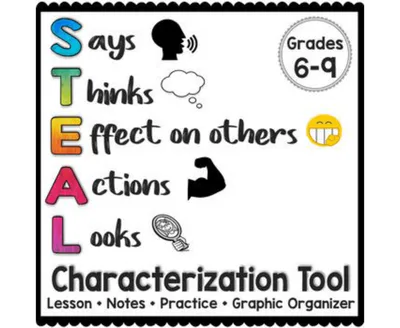
STEAL
what the
character SAYS
how the
character ACTS
what the
character THINKS
what the character
LOOKS like
what EFFECT the
character has on others
17

18
CharacterTraitsvsCharacterEmotionsAdjectiveLists.pdf - Google Drive
You can open this webpage in a new tab.
19
Types of
Characters
STATIC vs. DYNAMIC
4
20

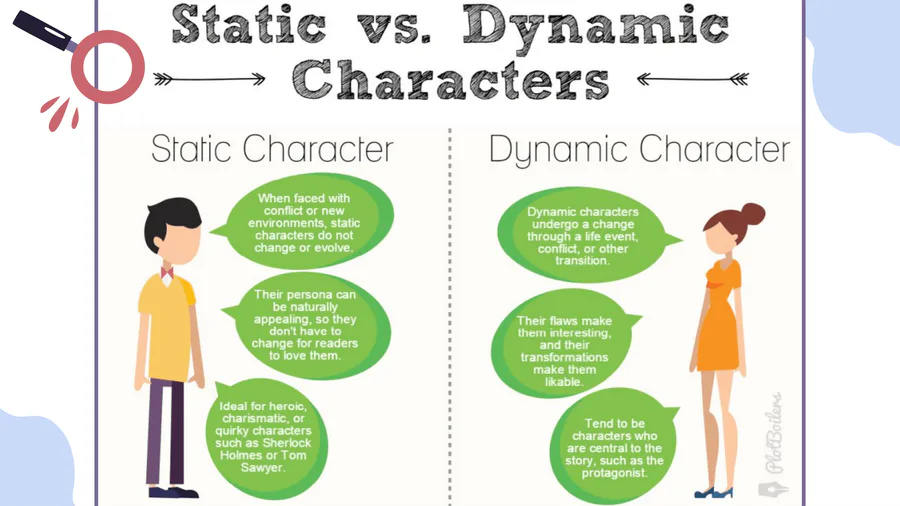
undergoes a
significant change in
character, personality,
or perspective
Dynamic Character
21

Some changes could be...
major life
transition
coming-of-age
experience
trials &
tribulations
maturity
change of
heart
develop more
likeable qualities
22


Think DYNAMITE!!!
Dynamic Character
23

example: Ebenezer Scrooge
- starts as a mean miser who is
miserable and mean to his
employees
- ends as a nice, generous man who
starts appreciating his employees
and begins treating them well
Dynamic Character
24

does not undergo a
significant change in
character, personality,
or perspective
Static Character
(pretty much) the
same person
throughout the
story
goes through some
changes, but as a
person, doesn’t really
change
25
stays the same
Static Character
26
27

CHARACTER
TRAITS
Aspects of a person’s
behavior
5
28

- words that describe
character's personality or
qualities that make them who
they are
- how you would describe that
character to someone else
CHARACTER TRAITS
29

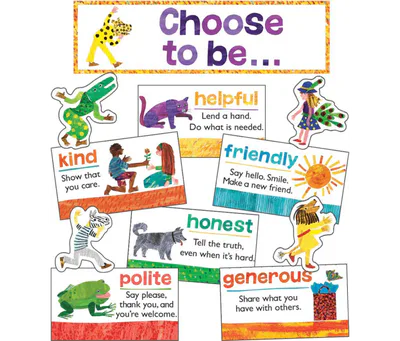
30
Character Traits
What are they?
- represent the way in which we
behave on a consistent basis
- core feature of our underlying values,
beliefs, and identity
- reveals who you are on the INSIDE
- may possess positive and negative
character traits
31
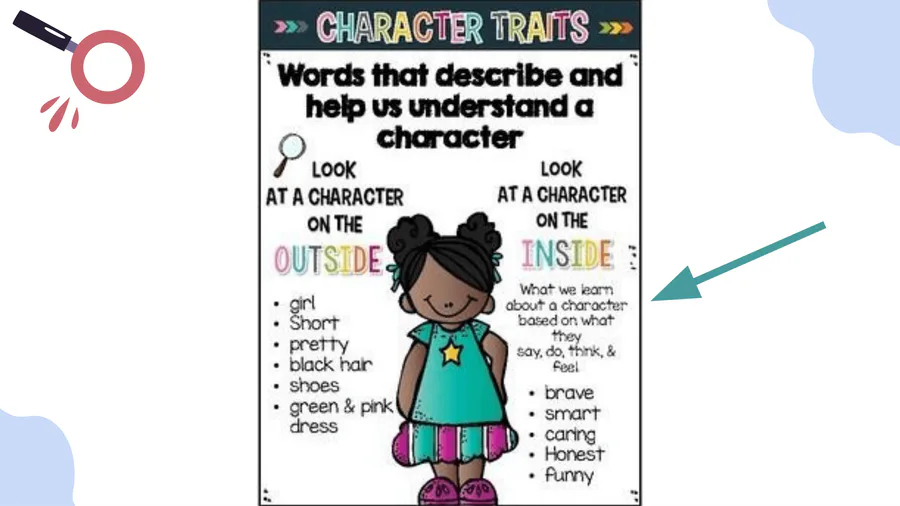
How to
Identify
Character
Traits
32
CharacterTraitsvsCharacterEmotionsAdjectiveLists.pdf - Google Drive
You can open this webpage in a new tab.
33

CHARACTER
MOTIVATION
the reason behind a character’s
actions or behaviors
EXTRINSIC vs. INTRINSIC
6
34

Motivation:
EXTRINSIC
motivated to
earn a reward
or avoid a
punishment
example: plays a
sport because they
want a first-place
trophy
INTRINSIC
motivated because
the character
enjoys it & wants
to do it (personal
reward)
example: plays a sport
because they
genuinely love playing
it
35
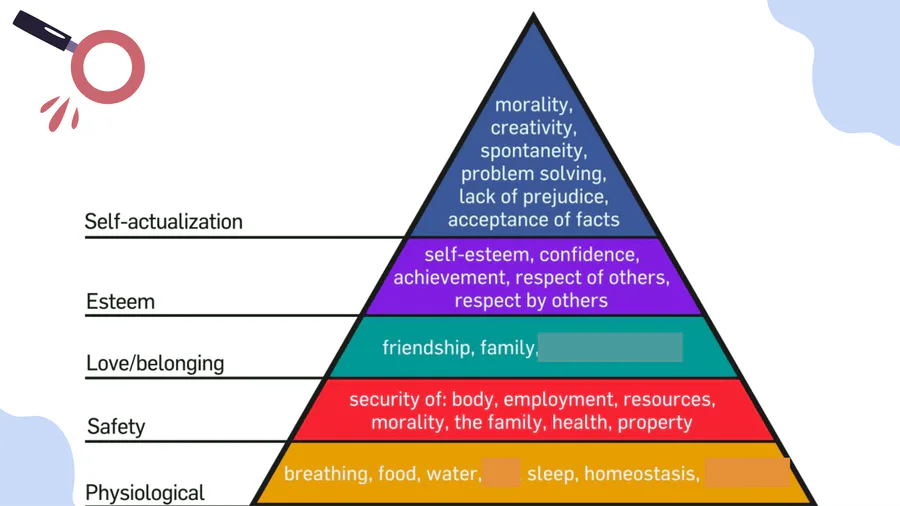
Motivation:
36

CREDITS: This presentation template was created by
Slidesgo, including icons by Flaticon, and
infographics & images by Freepik
Thanks!
Questions?
Comments?
Concerns?
Please keep this slide for attribution
Characterization 101:
What You Need to Know
Show answer
Auto Play
Slide 1 / 36
SLIDE
Similar Resources on Wayground

31 questions
Key Signatures - Order of Sharps and Flats
Presentation
•
6th Grade
27 questions
Active and Passive Voice Revision
Presentation
•
6th Grade
31 questions
Inferencing, Main Ideas, Author's Purpose & Context Clues
Presentation
•
6th Grade
27 questions
January 11, 2021 Singular, Plural, and Possessive Nouns
Presentation
•
6th Grade
26 questions
Nouns as Subjects and Subject Complements
Presentation
•
6th Grade
26 questions
editing and revising
Presentation
•
6th Grade
25 questions
Perseus
Presentation
•
6th Grade
29 questions
Reviewing Pronouns 6th Grade Standards Jan.2021
Presentation
•
6th Grade
Popular Resources on Wayground
10 questions
How much do you know about our Portrait of an Eagle?

Quiz
•
10th Grade
10 questions
Fast Food Slogans
Quiz
•
6th - 8th Grade
21 questions
Continents and Oceans
Quiz
•
6th Grade
20 questions
Parts of Speech
Quiz
•
5th Grade
16 questions
Subject & Predicate
Quiz
•
5th Grade
25 questions
Multiplication Facts
Quiz
•
5th Grade
12 questions
Map Skills
Quiz
•
3rd Grade
22 questions
Continents and Oceans
Quiz
•
5th Grade
Discover more resources for English
20 questions
Context Clues
Quiz
•
6th Grade
20 questions
Types of sentences
Quiz
•
6th Grade
25 questions
Making Inferences
Quiz
•
6th - 8th Grade
20 questions
Figurative Language Review
Quiz
•
6th Grade
15 questions
Plot Elements
Quiz
•
6th Grade
18 questions
Main Idea
Quiz
•
4th - 6th Grade
10 questions
Main Idea and Supporting Details
Quiz
•
3rd - 6th Grade
20 questions
Theme vs. Main Idea
Quiz
•
6th Grade