
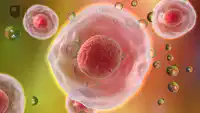
Cells

Presentation
•
Biology
•
8th Grade
•
Practice Problem
•
Easy

Library Asatidzah FIWA
Used 3+ times
FREE Resource
8 Slides • 6 Questions
1
Cell Theory

Foundations of Modern Biology: Understanding the Building Blocks of Life
2
Discovery of the basic unit of life
Do you know what all living things are made of? For most of human
history, we did not know the answer to this question. It was not until 1665 that people realized that all living things are made up of tiny cells, and that cells perform all of the functions that keep organisms alive. Below is a picture of one such cell that constitutes most of your blood. What do you know about cells? How big do you think they are? How many do you think are in the human body?
3
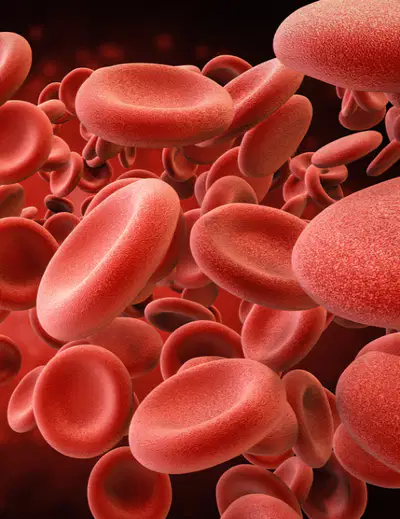
These are human red blood cells shown under a powerful microscope. What other types of cells are
found in humans and how do they differ from red blood cells?
Red Blood Cells
4
The discovery of cells was made when Robert Hooke looked through his microscope at the bark of a cork tree. He saw the spaces created by the cells of the cork tree’s bark and began to form a theory. Without this amazing discovery, many scientific breakthroughs would not have been possible. For example, we would not be able to treat most diseases such as cancer effectively. People would not understand heredity and genetics. The discovery of cells has been the basis for much of what we know about life science today.
5
6
By building upon the work of Robert Hooke, German scientists Theodor Schwann, Matthias Schleiden, and Rudolf Virchow developed the cell theory. This theory is one of the fundamental principles of biology. But what exactly is the cell theory and why is it important to understand the structure and function of organisms? In this concept, you will learn about the importance of cells and the cell theory.
7
Open Ended
As time progressed and technology improved, microscopes were able to give clearer images of extremely tiny objects. How did this development advance the cell theory?
8
Open Ended
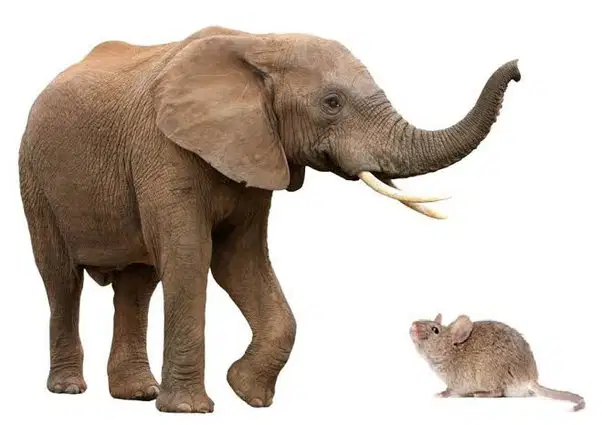
An Elephant and a Mouse both are made up of cells. Compare the sizes of the cells found in an elephant to those found in a mouse. Why is an elephant so much larger than a mouse? Use scientific reasoning to support your claims.
9
The Introduction to Cell Structure
10
Draw
Draw a diagram of a cell that shows:
- Cell membrane
- Cytoplasm
- Nucleus.
Label each part.
You may ask AI to find information.
11
Hotspot
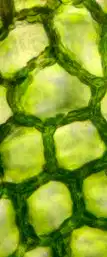
Which one is a plant cell?
12
Open Ended
Find information about Prokaryotic cells and Eukaryotic cells. Write down what you get!
13
Categorize
cell wall contain peptidoglican
have a nucleus
have membrane-bound organelles
contain cytoplasm
contain DNS
are produced by division of another cell
Virus
Living cells are classed as either prokaryotic or eukaryotic. Identify the following as characteristics of prokaryotic cells, eukaryotic cells, or both. Drag each characteristic into the correct column.
You may use AI to find information.
14
...
...
...
...
...
Animal cells
...
...
...
...
...
Plant cells
Plant and Animal Cell
Cell Theory
Foundations of Modern Biology: Understanding the Building Blocks of Life
Show answer
Auto Play
Slide 1 / 14
SLIDE
Similar Resources on Wayground

11 questions
Articles of Confederation
Presentation
•
8th Grade
11 questions
Ecosystems (interrelationships)
Presentation
•
8th Grade
12 questions
Prokaryote and Eukaryote Review
Presentation
•
9th Grade
11 questions
Biodiversity and Human Impacts
Presentation
•
9th Grade
10 questions
Simple Interest
Presentation
•
8th Grade
10 questions
Multiplying and Dividing with Scientific Notation
Presentation
•
8th Grade
10 questions
Common and Proper Nouns
Presentation
•
8th Grade
11 questions
Solving Equations Review
Presentation
•
8th Grade
Popular Resources on Wayground
6 questions
PRIDE Always and Everywhere
Presentation
•
12th Grade
20 questions
Lab Safety Quiz

Quiz
•
6th Grade
26 questions
KOR Review Kahoot Questions
Quiz
•
8th Grade
21 questions
Continents and Oceans
Quiz
•
6th Grade
12 questions
Unit Zero lesson 2 cafeteria
Presentation
•
9th - 12th Grade
20 questions
Parts of Speech
Quiz
•
5th Grade
10 questions
Riddles Riddles fun Riddles
Quiz
•
6th - 12th Grade
16 questions
Subject & Predicate
Quiz
•
5th Grade
Discover more resources for Biology
20 questions
Characteristics of Life
Quiz
•
7th - 10th Grade
10 questions
Comparing Prokaryotic and Eukaryotic Cells

Interactive video
•
6th - 10th Grade
20 questions
Food Chains and Food Webs
Quiz
•
7th - 12th Grade
10 questions
Cell Structure and Function Concepts
Interactive video
•
6th - 10th Grade
10 questions
Exploring Cell Types and Organelles
Interactive video
•
6th - 10th Grade
15 questions
Atoms and Periodic Table
Quiz
•
8th Grade
15 questions
Variables, Questions, Graphs
Quiz
•
7th - 10th Grade
10 questions
Exploring the Unique Properties of Water
Interactive video
•
6th - 10th Grade