

Pacific Civilization

Presentation
•
History
•
8th Grade
•
Practice Problem
•
Medium

Karl Marqueza
Used 30+ times
FREE Resource
21 Slides • 11 Questions
1

Sir Karl Brian T. Marqueza
k.marqueza@usls.edu.ph
2


3
Match
Match the following according to its era
Mesopotamia
Egyptian
Chinese
Indus River Valley
Mesoamerican
3500-2300 BCE
3100 BCE
3000 BCE
2500 BCE
1500 BCE
3500-2300 BCE
3100 BCE
3000 BCE
2500 BCE
1500 BCE
4

5

6


1.I can name the three main groups
of civilizations that thrived in the
Pacific Ocean.
2.I can name pieces of evidence on
how the Pacific people depend,
modified, and adapted to their
environment.
Today’s Objectives
7

In our last lesson, we will discuss the Pacific Islands
as a civilization. They too
have their cities, recording
systems, technology,
specialized works, and
institutions.
8

The Pacific Ocean or Mare Pacificum, meaning “peaceful sea,” was dubbed so by Portuguese explorer Ferdinand Magellan in 1520 after his treacherous journey to find the “Spice Islands”, now known as the Maluku Islands in eastern Indonesia. They were known as the “Spice Islands” because of their nutmeg and clove trees.
9
Multiple Choice
HOW DO PACIFIC ISLANDER TRAVEL?
BY WALKING
BY BRIDGES
BY THE SEA
BY HORSES
10

I. Migration by Sea
11
12


� The earliest surviving trace of
human occupation in these
islands is about 420 BC in
Tonga and 200 BC in Samoa.
� Anthropologists agree that
Pacific Islanders came from
Southeast Asia and traveled
gradually through the high
seas westward.
13
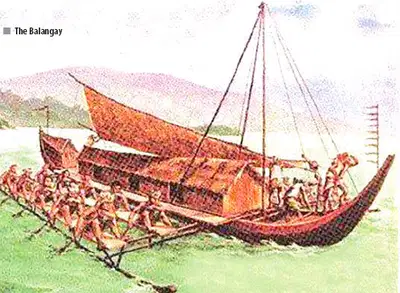
The Balangay was the boat used by early settlers to migrate and travel in groups. These groups eventually became the Barangay, which is now the basic unit of community and governance in the Philippines. Thus, Barangay originated from Balangay, both in name and in concept.
14

15

II. Three Main Ethnic Groups
16


Palau
Guam
Papua New
Guinea
Fiji
New
Zealand
Hawaii
Easter
Island

17



18

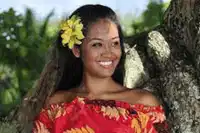
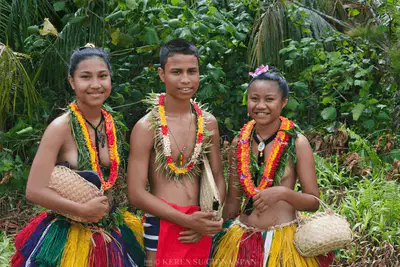
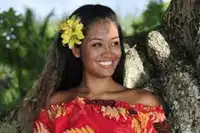
� Polynesians -
tall
brown-skinne
d peoples
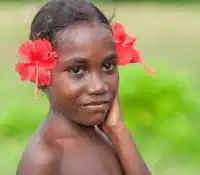
� Melanesians - are
dark-skinned
� Papuans (a name
coming from a Malay
word meaning “frizzly
haired”) or “little
Negroes.”
� Micronesians -
they have become
strongly mixed in
modern days with
Filipino and Spanish
strains.
19
Fill in the Blanks
WHAT IS THE MEANING OF THE MALAY WORD "PAPUANAS" WHICH IS ONE OF THE FEATURES OF MELANISIAN?
Type answer...
20
Multiple Choice
IDENTIFY THE FEATURES OF POLYNESIANS
DARK-SKINNED
FRIZZLY-HAIRED
MIXED OF FILIPINO AND SPANISH
TALL BROWN-SKINNED PEOPLE
21
Multiple Choice
IDENTIFY THE FEATURES OF MICRONESIANS
DARK-SKINNED
AND PAPUANAS
TALL AND BROWN-SKINNED
SPANISH AND FILIPINO COMBO
BROWN-SKINNED
FILIPINO SPANISH MIX
22

III. Pacific Life
23
24


Worship of the gods involved sacrifices (including humans). They also practice polytheism.
Religion
chants and recitations, feasting (often with great prodigality)
Culture
a profound emblem of cultural identity and heritage, encapsulating Polynesian societies' history, spirituality, and social structures.
Tattoo
25
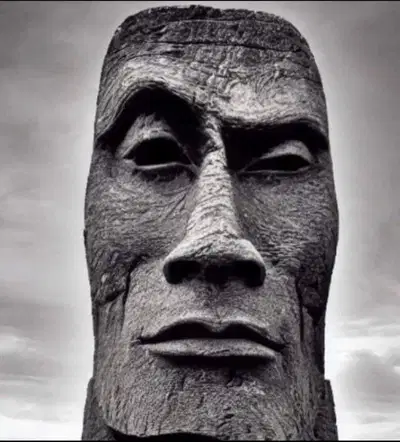
The statues were carved by the Polynesian colonizers of the island, mostly between 1250 and 1500. It represents the spirits of ancestors, chiefs, or other high-ranking males who held important historical positions.
Moai or the
Easter Island statues
26
Multiple Choice
Where can we find the Micronesians?
Palau and Guam
Papua New Guinea and Fiji
Hawaii and Fiji
New Zealand and Easter Island
27
Fill in the Blanks
what is the meaning of the word "Pacificum"?
Type answer...
28
Fill in the Blanks
what group is believed to be strongly mixed in modern days with Filipino and Spanish strains?
Type answer...
29
Multiple Choice
What do Pacific Islanders use when they are travelling?
big vessels
double-huddle canoe
traders' ship
Single-huddle canoe
30
Fill in the Blanks

What do we call the statue created by early Pacific Islanders to commemorate their ancestors
Type answer...
31
Match
Match the following
Micronesia
Polynesians
Melanesia
Palau & Guam
Tall brown-skinned
Papua New Guinea
Palau & Guam
Tall brown-skinned
Papua New Guinea
32

Sir Karl Brian T. Marqueza
k.marqueza@usls.edu.ph
Sir Karl Brian T. Marqueza
k.marqueza@usls.edu.ph
Show answer
Auto Play
Slide 1 / 32
SLIDE
Similar Resources on Wayground

25 questions
Explicit vs. Implicit Evidence
Presentation
•
8th Grade
26 questions
9.2 Lesson "A System of Transportation"
Presentation
•
8th Grade
26 questions
Scatterplots Lesson and Quiz
Presentation
•
8th Grade
23 questions
Coded Spirtiuals
Presentation
•
8th Grade
25 questions
The Reformation
Presentation
•
9th Grade
24 questions
Causes of the Texas Revolution (Part 1)
Presentation
•
7th Grade
28 questions
Exploration & Settlement in GA
Presentation
•
8th Grade
24 questions
City Government
Presentation
•
8th Grade
Popular Resources on Wayground
10 questions
Safety Day 2026 – Student Review

Quiz
•
9th Grade
21 questions
Continents and Oceans
Quiz
•
6th Grade
20 questions
Parts of Speech
Quiz
•
5th Grade
16 questions
Subject & Predicate
Quiz
•
5th Grade
25 questions
Multiplication Facts
Quiz
•
5th Grade
12 questions
Map Skills
Quiz
•
3rd Grade
22 questions
Continents and Oceans
Quiz
•
5th Grade
15 questions
Rounding Decimals
Quiz
•
5th Grade
Discover more resources for History
15 questions
Unit 3 - Part 1 Road to Revolution
Quiz
•
8th Grade
25 questions
WWII Assessment
Quiz
•
8th Grade
25 questions
The American Revolution
Quiz
•
7th - 10th Grade
15 questions
The Bill of Rights
Quiz
•
8th - 12th Grade
18 questions
American Revolution Review
Quiz
•
8th Grade
14 questions
Weekly Wrap Up #3: CE.1a/e -Fundamental Principles
Quiz
•
8th Grade
15 questions
Ancient Rome
Quiz
•
7th - 10th Grade
16 questions
Students of Civics Unit 2: The Constitution
Quiz
•
7th - 11th Grade