Search Header Logo
Thermal Energy Transfer

Thermal Energy Transfer

Assessment

Presentation

Chemistry

7th Grade

Medium

NGSS
MS-PS1-4, MS-PS3-3, MS-ESS2-6

+8

Standards-aligned

Created by

Tiffany Emick [HMS]

Used 113+ times

FREE Resource

18 Slides • 32 Questions

1

media
media
media

Therma l
Energy

2

media
media
media

What Will Happen?

If you leave a hot
drink on the table

and wait for a while,
does the drink heat

up or cool off?

If you leave a cold
drink on the same
table and wait for a
while, does the drink
heat up or cool off?

​Warm-up: Answer in Notebook

3

Poll

Question image

If you put a hot drink on the table and left it for some time- would it heat up or cool down?

heat up

cool down

4

Poll

Question image

If you put an iced drink on the table, after some time would it get colder or would it get warm (ice melt)?

get colder

get warmer/ice melt

5

media
media

Thermal Energy

The atoms inside of EVERYTHING are always jiggling and

bouncing around. They have kinetic energy.

A thermometer can measure this kinetic energy and tell us

the temperature of something.

The more movement, the higher the temperature.

cold water hot water

media

6

media
media
media

TEMPERATURE

What is Temperature?

THE MEASURE OF

THE AVERAGE
SPEED OF ALL

PARTICLES IN THE

OBJECT

THE TOTAL

ENERGY OF ALL
PARTICLES IN AN

OBJECT

THERMAL ENERGY

​Thermal energy refers to the energy associated with the movement of atoms and molecules within a substance, which is essentially "heat."

7

Multiple Choice

What is defined as a measure of the average kinetic energy of the particles in a sample of matter?

1

Temperature

2

Heat

3

Specific Heat

4

Mechanical Energy

8

media
media

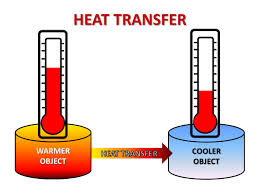
Heat always flows from hot to cold!

HOT coffee

COLD room air

Thermal Equilibrium

9

media

​Thermal Equilibrium... from hot to cold until balanced/equal.

10

media

Thermal Equilibrium Example

You are holding an ice cream cone in room temperature air.

How does heat flow between the ice cream, hand and air?

room air

media

11

media
media

Thermal EquilibriumExample

Water is boiled on the stove in a teapot.

How does heat flow in this picture?

room air

A methane flame is off the

charts at 1,000 °C

room temperature

ºC

ºF

25ºC

77ºF

100ºC

212ºF

water boils

Heat transfer, considering the flame, kettle and air.

Answer: Heat flow is from flame to air, from kettle to air, and from flame to kettle.

Heat ALWAYS flows from hot to cold (the more accurate, though less easy to chant mantra is from higher to lower temperature).


12

media

Heat Transfer

What does it mean to “transfer” something?

Three forms of heat transfer:

• Conduction
• Convection
• Radiation

No matter what type of heat transfer, it always flows from
HOT to COLD

media

13

Multiple Choice

Which of the following are kinds of heat transfer.
1
Conduction
2
Convection
3
Radiation
4
All of the above

14

media
media

Conduction

Conduction is heat transfer within or between solid objects

through contact.

15

​Examples of Conduction:

​-touching a hot stove and feeling the heat transfer to your hand
- a metal spoon heating up when placed in hot soup
-heat transferring from a hot iron to clothes while ironing
-the warmth from a cup of hot cocoa transferring to your hands when you hold it
-a lizard warming itself on a hot rock by direct contact with the surface
Essentially, any situation where heat is transferred through direct contact between objects with different temperatures

media
media

16

Multiple Choice

Question image
The heat from a hot burner to a pot is transferred by ______.
1
convection
2
insulation
3
radiation
4
conduction

17

Multiple Choice

What type of heat transfer takes place in solids?
1
Conduction
2
Convection
3
Radiation

18

Multiple Choice

Conduction is heat transfer by -
1
Touch
2
Circles
3
Waves

19

media
media
media

Convection

Convection is heat transfer based on the density of a liquid

or gas.

20

​Convection takes place within FLUIDS (liquids and gases). Convection happens because of the uneven heating of matter. When a material becomes warmer, it becomes less dense. Cooler materials are more dense. The cooler materials sink because they are more dense which are heavier, forcing the less dense material (warmer) to rise. As the material gets cooler, it will become more dense and sink again. This cycle creates a convection current.

media

21

Multiple Choice

Question image
Warm air rises and the cool air sinks demonstrates this type of heat transfer. 
1
conduction
2
convection
3
radiation
4
Insolation 

22

Multiple Choice

What type of heat transfer takes place in liquids and gasses?

1

Conduction

2

Convection

3

Radiation

4

Thermal Equilibrium

23

Multiple Choice

Which example below is an example of convection?
1
Standing on a hot metal bridge
2
The attic is warmer than the basement
3
The Sun heating the Earth
4
Touching hot sand with your feet

24

​Examples of Convection:

  • Heaters in homes - Puts warm air out at the top and draws in cooler air at the bottom.

  • Currents in the mantle under the Earth's crust

  • Steaming cup of hot tea - The steam is showing heat being transfered into the air.

  • Ice melting - Heat moves to the ice from the air.

  • boiling water in a pot (hot water rises, cooler water sinks to the bottom of pot)

  • Hot air balloon
    Essentially, any situation where heat is transferred through the movement of a fluid (like air or water) is an example of convection

media
media
media

25

media
media

Radiation

Radiation is heat transfer through electromagnetic waves.

26

media
media

​We RADIATE heat! Have you stood close to someone and felt their body heat? That was from radiation.

​The majority of heat coming from your body is considered radiation as your body continuously emits infrared radiation.

27


-heat from a stove/burner
-feeling the warmth from the sun on your skin
-heat from a fireplace directly reaching you
-the heat emitted from a glowing light bulb
-a microwave oven heating food
-the Earth being warmed by the sun's rays

​Examples of Radiation:

media
media
media

28

Multiple Choice

Radiation is a method of thermal energy transfer that moves -
1
through empty space.
2
when objects touch.
3
only through solids.
4
in the motion of fluids.

29

Multiple Choice

What happens to particles as they heat up?
1
They slow down
2
Nothing
3
They don't move
4
They speed up

30

media

Recap: Heat Transfer

media

31

Multiple Choice

Which example below is an example of radiation?
1
Standing on a hot metal bridge
2
The attic is warmer than the basement
3
The Sun heating the Earth
4
Touching hot sand with your feet

32

Multiple Choice

Question image
What would be the effect on the particles if more heat is supplied to the system?
1
They would slow down
2
They would stop moving
3
They would speed up
4
There would be no effect

33

Multiple Choice

_____________ is the form of energy that is transferred between systems or objects with different temperatures.

1

Temerature

2

Heat

3

Specific Heat

4

Mechanical Energy

34

Multiple Choice

How does heat energy reach the Earth from the Sun

1

Convection

2

Radiation

3

Conduction

4

Insulation

35

Multiple Choice

What is the definition of CONDUCTION?
1
When heat is transferred from objects like rays of light or electromagnetically.
2
a  hot liquid or air that  expands, becomes less dense, and rises or becomes more dense, and sinks.
3
When heat transfers from objects that are touching.
4
When heat transfers through the heater or AC in your house.

36

Multiple Choice

Question image
Heat transfers from an area of ____temperature to an area of ___ temperature.
1
high to low
2
low to high
3
high to high
4
It can travel high to low and low to high. 

37

Multiple Choice

Question image
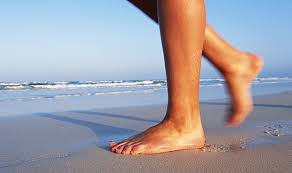
Walking on the warm sand sand with your bare feet demonstrates this type of heat transfer. 
1
conduction
2
convection
3
radiation

38

Multiple Choice

_________________ is the transfer of energy through or by electromagnetic waves.

1

Conduction

2

Convection

3

Radiation

39

Multiple Choice

Movements of water in a pot, molten mantle in the earth's crust and hot air rising in the atmosphere are examples of

1

Sublimation

2

Convection

3

Conduction

4

Radiation

40

Multiple Choice

Question image
When the 2nd story of a house is warmer than the 1st floor of a house is heat transfer through 
1
conduction
2
convection
3
radiation
4
thermal equilibrium

41

Multiple Choice

Question image
The sun warming your skin is an example of heat transfer through 
1
conduction
2
convection
3
radiation
4
thermal electricity

42

Multiple Choice

What happens to particles as they cool down?
1
They slow down
2
Nothing
3
They don't move
4
They speed up

43

Multiple Choice

Conduction, Convection and Radiation are three types of...
1
Electrical energy
2
Thermal Energy
3
Chemical Energy
4
Sound Energy

44

Multiple Choice

A student places a metal spoon at room temperature in a cup of hot cocoa. Which is the best prediction for what happens to the temperature of the spoon and how energy is transferred?

1

The spoon will get colder because thermal energy will be transferred from the spoon to the hot cocoa through conduction when particles collide.

2

The spoon will get colder because thermal energy will be transferred from the spoon to the hot cocoa through convection when particles move.

3

The spoon will heat up because thermal energy will be transferred from the hot cocoa to the spoon through conduction when particles collide.

4

The spoon will heat up because thermal energy will be transferred between the hot cocoa and the spoon as radiation.

45

Multiple Choice

Marta wants to investigate how energy is transferred in the oceans. She has a tub filled with cold water and adds thermal energy to the bottom on one side. In order to determine how energy is transferred, she should measure the _______ of the water at different locations in the tub because thermal energy is transferred through ________. Which of the following terms best complete the paragraph?

1

mass; radiation

2

temperature; convection

3

volume; conduction

4

weight; radiation

46

Multiple Choice

Question image

A student performed an investigation using a container of water with a heat source underneath. He measured the temperature of the water at various locations and created the model in the picture based on his results.

Look at the image of their model. What do the arrows show?


1

Convection currents. The particles in the liquid move freely, so when the liquid is heated, it rises, cools, and begins to sink again. This results in thermal energy transfer.

2

Convection currents. The particles in the liquid touch other particles and cause thermal energy to be transferred without particle movement.

3

Radiation. The particles in the liquid absorb energy and then release this energy in all directions.

4

Conduction. The particles in the liquid move freely, so when it is heated they rise and then drop as they cool. This results in thermal energy transfer.

47

Multiple Choice

José is investigating how color affects the transfer of thermal energy.  He took three containers that were identical except for their color, and he put a thermometer inside each container. Then, he placed each container in front of a heat lamp. After 30 minutes, José checked the thermometers and found that each container had reached a different temperature. What do these results indicate about the way energy was transferred in each container?

1

The different colors absorb the same amount of energy that is conducted from the heat lamp to the materials.

2

The different colors absorb the same amount of radiation from the heat lamp.

3

The different colors absorb different amounts of energy that is conducted from the heat lamp to the materials.

4

The different colors absorb different amounts of radiation from the heat lamp.

48

Multiple Choice

Question image

Solutions Review: A student wants to make rock candy. To do this, they mix sugar and water together in an open container. They leave the mixture untouched for two days and then observe the mixture. Which of the following would most likely happen to the mixture?

1

The mixture evaporates into the air.

2

The sugar evaporates, leaving the water behind.

3

A portion of the sugar evaporates, leaving a less sugary mixture.

4

The water evaporates leaving the sugar behind.

49

Multiple Choice

Question image

Solutions Review: Jolie measures the concentration of a solution of water and salt to use in an experiment. She finds that the concentration is too low. What can Jolie do to increase the concentration of the solution?

1

Stir the solution vigorously.

2

Add more salt (solute) to the solution.

3

Add more water (solvent) to the solution.

4

All of the above.

50

Multiple Select

Question image

Solutions Review: Jenny filled four 150 mL beakers with water. 

She added a different material to each beaker and

 stirred it 10 times. Which 

substances will NOT dissolve in the beaker?


Select TWO answers

1

Sugar

2

Cooking Oil

3

Sand

4

Salt

5

Drinking Powder Mix

media
media
media

Therma l
Energy

Show answer

Auto Play

Slide 1 / 50

SLIDE