

Resistors

Presentation
•
Engineering
•
Vocational training
•
Practice Problem
•
Medium

Louise Shepherdson
Used 6+ times
FREE Resource
25 Slides • 5 Questions
1
Resistors & Resistance
2
3

Looking at the top resistor the first band is green,
4
Looking at the top resistor the first band is green,
If we look at the first band column we can see green = 5
5
Looking at the top resistor the first band is green,
If we look at the first band column we can see green = 5
the second band is blue and blue = 6 so we now have 56
6
Looking at the top resistor the first band is green,
If we look at the first band column we can see green = 5
the second band is blue and blue = 6 so we now have 56
as this is a 4 band resistor there is no 3rd band instead we move to the multiplier band
7
8
9
10
11
If we look at the bottom resistor it is a 5 band resistor so we will use the 3rd column
12
If we look at the bottom resistor it is a 5 band resistor so we will use the 3rd column
Red = 2 Orange = 3 Violet = 7 the multiplier is black x1 or black is zero so there are NO zeros after the number
13
If we look at the bottom resistor it is a 5 band resistor so we will use the 3rd column
Red = 2 Orange = 3 Violet = 7 the multiplier is black x1 or black is zero so there are NO zeros after the number
so it's 237Ohms
14
If we look at the bottom resistor it is a 5 band resistor so we will use the 3rd column
Red = 2 Orange = 3 Violet = 7 the multiplier is black x1 or black is zero so there are NO zeros after the number
so it's 237Ohms
The last band on both resistors is the tolerance band
15
The tolerance band tells us how accurate the resistor is
16
The tolerance band tells us how accurate the resistor is
the band on the top resistor is GOLD = +/- 5%
17
The tolerance band tells us how accurate the resistor is
the band on the top resistor is GOLD = +/- 5%
meaning a 100Ohm Resistor could measure between 95 - 105 Ohms
18
Fill in the Blanks

19
Fill in the Blanks

20
Multiple Choice

What is the tolerance of this resistor
10%
5%
1%
0.5%
21
Multiple Choice

What Colours would a 1.2MOhm resistor have? (1200000 Ohms)
Brown, blue, yellow
Brown, black, red
Brown, red, green,
Red, Yellow, Pink
22
Resistors In Series
23

When Resistors are in series the electrons have to pass through all the resistors in the circuit,
each resistor adds more resistance as the electrons travel through, we can calculate the total resistance like this...
24
In this example 3K, 10K and 5K add up to 18K Ohms, with this calculation we can unlock more information.
Total Resistance
We can see the circuit is powered by 9 Volts. We can now use ohms law to find the current.
Total Current
With our current we can now use Ohms law to find out the Voltage Drop across each resistance
Voltage Drop
Your 3 voltage drops Will add up to your supply voltage, circuits always drop their supply voltage across their components.
Kirchhoff's Law

25
26
27
Multiple Choice

Under Kirchhoff's Voltage Law what is the missing Voltage Drop?
0V = 24V - 12Vd1 - ??Vd2 - 7Vd3
8Vd2
12Vd2
7Vd2
24Vd2
28
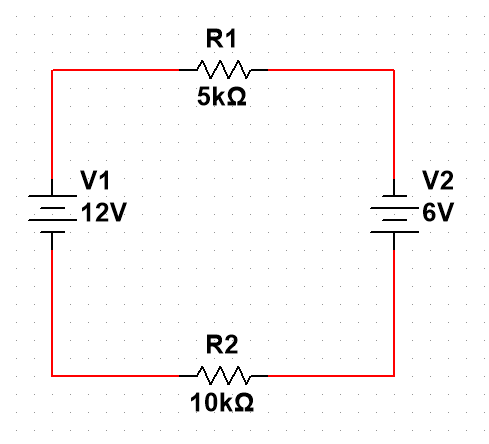
29
With our Current of 0.0012A or 1.2mA we can now calculate our voltage drops...
0.0012A x 5000 Ohms = 6Vd1
0.0012A x 10000 Ohms = 12Vd2
So while the resistors drop voltage the Batteries gain Voltage and looks like this...
0=12V1 - 6Vd1 + 6V2 - 12Vd2
All component drops and gains equate to Zero.
30

Resistors & Resistance
Show answer
Auto Play
Slide 1 / 30
SLIDE
Similar Resources on Wayground

24 questions
Animals and Their Babies
Presentation
•
KG
24 questions
Mrs Eni
Presentation
•
KG
21 questions
PE 3 M1
Presentation
•
Professional Development
24 questions
I05- Grammar review
Presentation
•
KG
23 questions
Auxiliaries
Presentation
•
KG
24 questions
Vowel Sound Part 2
Presentation
•
4th Grade
23 questions
ENGLISH MIDDLE SOUND
Presentation
•
KG
23 questions
CKLA Review sound cards
Presentation
•
KG
Popular Resources on Wayground
20 questions
"What is the question asking??" Grades 3-5

Quiz
•
1st - 5th Grade
20 questions
“What is the question asking??” Grades 6-8
Quiz
•
6th - 8th Grade
10 questions
Fire Safety Quiz
Quiz
•
12th Grade
20 questions
Equivalent Fractions
Quiz
•
3rd Grade
34 questions
STAAR Review 6th - 8th grade Reading Part 1
Quiz
•
6th - 8th Grade
20 questions
“What is the question asking??” English I-II
Quiz
•
9th - 12th Grade
20 questions
Main Idea and Details
Quiz
•
5th Grade
47 questions
8th Grade Reading STAAR Ultimate Review!
Quiz
•
8th Grade