

Skara Brae Experience Day

Presentation
•
English
•
2nd Grade
•
Practice Problem
•
Medium

Adam Chapman
Used 1+ times
FREE Resource
16 Slides • 9 Questions
1


We are going to pretend that we are
the owners of Skara Brae way back in
the Neolithic era.
We are going to write a brochure to
persuade hunter-gatherers to come and
stay at our Skara Brae holiday camp.
2

Skara Brae
Skara Brae is a remarkably well preserved Stone Age village built in
the Neolithic period, around 3000 BC.
It was discovered in 1850, after a heavy storm stripped away the earth that had previously been covering what we can see today.
Orkney is off the North coast of
Scotland. Skara Brae can be found
on Mainland, the largest of
the
Orkneys.
3
Multiple Choice
What year was Skara Brae built?
3000 BC
2003 AD
30,000 BC
300 AD
4
Multiple Choice
Where is Skara Brae located?
Cardiff, Wales
Orkney, Scotland
Manchester, England
Belfast, N. Ireland
5

The remains of eight houses stand on the site. They were not all built at the same time, so at some point the original village was
added to. Apart from one building, which stands slightly
separate from the others, the layout of the houses is very similar.
The houses were linked by
covered passageways.
Photo courtesy of wronski and shadowgate (@flickr.com) - granted under creative commons licence - attribution
6
Dropdown
7

The earlier houses had more of a circular shape. There was one
main room with a fire pit in the
middle, and beds built into the
walls at the sides.
Photo courtesy of wronski and shadowgate (@flickr.com) - granted under creative commons licence - attribution
The later houses were slightly
bigger and more rectangular,
although the corners were still
rounded. They still built stone
beds, but not into the walls. The
fire pit and stone shelves
remained.
Each house also
had a set of stone shelves, called a dresser.
8
Multiple Select
What shape were the houses at Skara Brae?
Circular
Hexagonal
Rectangular
Triangular
9
Labelling
Look carefully at this picture of a house in Skara Brae. What do you think each part of the house was used for?
Storage boxes
Firepit (Hearth)
Bed
Dresser
10

Although the doorways
seem very small to us, early
humans were shorter than
we are today.
Lower doorways would
also have helped keep the weather out.
The doors were stone
slabs, and could be bolted shut.
Photo courtesy of wronski and shadowgate (@flickr.com) - granted under creative commons licence - attribution
11

At first glance, house seven is the same as all the others. However,
it’s worth looking a little more closely.
Photo courtesy of wronski and shadowgate (@flickr.com) - granted under creative commons licence - attribution
Some interesting facts about house seven:
• The bodies of two women
were found in a stone grave under a wall. They were buried before the house was built. This could have been part of a ritual.
• The door could only be bolted
from the outside. The people
inside the house would not be able to leave of their own free will.
• Unlike the other passageways,
the passage to house seven went only to house seven.
What could these facts tell us?
What do you think the house might
have been used for?
No. 7
12
Word Cloud
What do you think House 7 was used for?
13

House eight stands alone. It had carved patterns on
the walls and no beds or shelves. It could have been a workshop or
meeting place, or simply built on the site at a later date.
There were no windows, but there
may have been a smoke hole in the roof. There would have been some light from the fire. As wood was scarce on the Orkney Islands, they were more likely to have burnt seaweed, dried animal dung and peat.
No. 8
Some people today who live in small apartments might have the same area of living space.
With straw and heather to make mattresses and animal skins for blankets, it would have been relatively cosy – at least compared to outside!
14
Audio Response
Why did they burn seaweed, dried animal dung and peat at Skara Brae?

15

The walls of the houses were built
against ‘midden’, piles of discarded rubbish that would have protected the walls from the elements as well as provide a layer of insulation.
None of the houses have a roof, so they must have been made from something that has since perished.
A common early roofing material in Orkney was seaweed, fixed with
ropes and stones.
They could also have used straw,
animal skins or turf, laid over a
frame of driftwood or whale bones found on the shore.
Photo courtesy of wronski and shadowgate (@flickr.com) - granted under creative commons licence - attribution
16
Fill in the Blanks
17
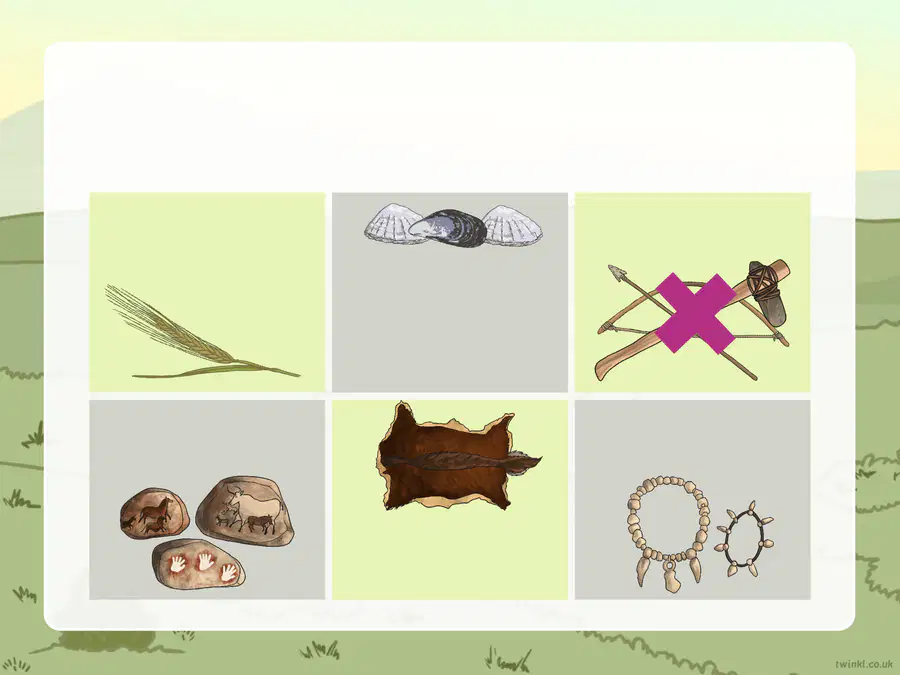
What Else Was Found and What
Does it Teach Us?
Animal bones including
cattle and sheep, and barley and wheat grown
nearby, suggest a farming community.
Plentiful remains of fish and
shellfish indicate they were
also skilled fishermen. Large piles of limpets were found, but these weren’t necessarily part of their diet, they may have been used for bait.
The lack of weapons
found suggest that life
was peaceful.
Richly carved stone
objects might have
been used for religious
rituals.
Bone tools, along with the absence of tools for weaving, indicate that animal skins were used for clothing.
Many examples of jewellery were found
including pendants, pins,
necklaces and beads.
18
Multiple Choice
What evidence is there to show that Skara Brae was a
peaceful place?
There were lots of weapons found at the site.
There were very few weapons found.
19

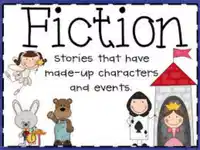
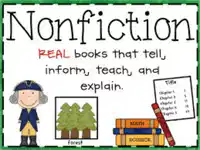
Think, Pair, Share:
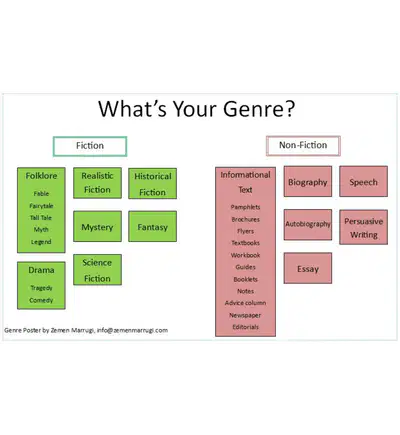
Is this a fiction or non-fiction text?
What makes you think this?
20
21


Think, Pair, Share:
What do you think the purpose of this text is?
Explain how you know?
explain
instruct
inform
persuade
entertain describe
22
23
24
25
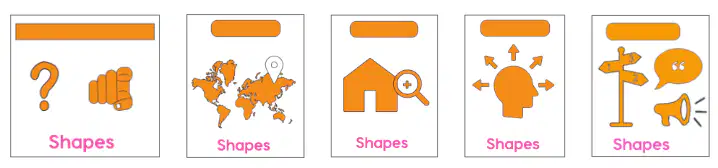
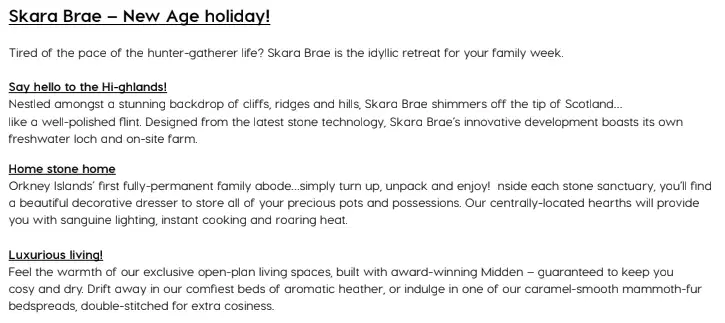
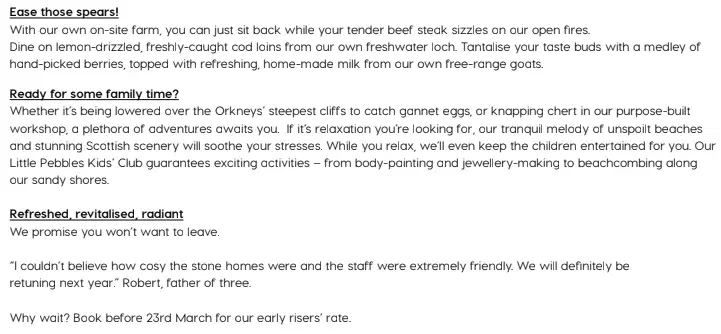
Heading
Question
Direct address
Sub heading
Location
Sub heading
Amenities
Sub heading
Sensory experience
Sub heading
Options
Testimonial
Call to action
We are going to pretend that we are
the owners of Skara Brae way back in
the Neolithic era.
We are going to write a brochure to
persuade hunter-gatherers to come and
stay at our Skara Brae holiday camp.
Show answer
Auto Play
Slide 1 / 25
SLIDE
Similar Resources on Wayground

19 questions
The Last Stop on Market Street
Presentation
•
2nd Grade
20 questions
Metaphor Practice
Presentation
•
3rd Grade
20 questions
Adverbs
Presentation
•
3rd Grade
20 questions
final syllable -le
Presentation
•
2nd Grade
20 questions
There is and There are / Are there? Is there?...
Presentation
•
2nd Grade
20 questions
CKLA Knowledge 4 Review
Presentation
•
2nd Grade
17 questions
Friendly Letter
Presentation
•
2nd Grade
22 questions
Tone and Mood
Presentation
•
KG
Popular Resources on Wayground
24 questions
PBIS-HGMS Day 10

Quiz
•
6th - 8th Grade
10 questions
HCS SCI 03 Summer School Review 3
Quiz
•
3rd Grade
11 questions
Home Scope
Quiz
•
7th - 8th Grade
15 questions
HCS SCI 05 Summer School Assessment 3 Review
Quiz
•
5th Grade
35 questions
Lufkin Road Middle School Student Handbook & Policies Assessment
Quiz
•
7th Grade
18 questions
Geo 11.3 Area of Circles and Sectors
Quiz
•
9th - 11th Grade