Search Header Logo
8.3.2 - Electric Current & Simple Circuits

8.3.2 - Electric Current & Simple Circuits

Assessment

Presentation

Science

8th Grade

Easy

NGSS
MS-ESS1-1, HS-PS2-5, HS-PS3-5

+18

Standards-aligned

Created by

Jessica Freeman

Used 10+ times

FREE Resource

48 Slides • 30 Questions

1

Multiple Choice

What charge does a proton have?
1
negative (-)
2
positive (+)
3
neutral or no charge (0)

2

media

3

media

4

Let's recall last lesson.

  • Static electricity is the buildup of electric charges.

  • Opposite charges attract; like charges repel.

  • Positively charged atoms have more protons

  • negatively charged atoms have more electrons.

5

Multiple Choice

What charge does an electron have?
1
negative (-)
2
positive (+)
3
neutral or no charge (0)

6

Multiple Choice

Static electricity is 
1
The balance of electrical charge on an object
2
The imbalance of electrical charge on an object
3
The discharge of electrical charge
4
The build up of protons in the nucleus of an atom 

7

During a lightning...

  • Electrons in the atmosphere jump down to pair with protons on the ground.


8

media

9

media

10

media

11

media

12

electric currents

media

13

What is an electric current?

The flow of electric charges through a conductor.

14

The difference between static electricity and electric currents.

Electric charges that build up on static electricity do not flow. Instead the charges jump between two objects.


electric currents is a flow of electrons like a stream of water through a conductor like copper or metal.

15

Electric Current

  • When Electric charges are made to flow through a material, they produce an electric current

  • An electric current is the continuous flow of electric charges through a material

  • The amount of charge that passes through a wire at a given period of time is the rate of electric current

  • The unit for the rate of electric current is the Ampere (A)

16

media

17

Multiple Choice

Question image
__________________ is the continuous flow of electric charges through a material.
1
Electric current
2
Resistance
3
Voltage
4
Static Discharge

18

media

19

media

20

media

21

Multiple Choice

What is current measured in?
1
Ω (Ohms)
2
V (Volts)
3
A (Amps)
4
W (Watts)

22

Multiple Choice

Current is...
1
moving protons
2
moving electrons
3
measured in volts
4
measured in ohms

23

media

24

media

25

media

26

media

27

media

28

Multiple Choice

Question image
Metals such as copper and aluminum are good ______________. 
1
insulators
2
conductors
3
circuits
4
charges

29

media

30

Multiple Choice

Question image
______________ are materials such as rubber that do not allow charges to flow.
1
conductors
2
circuits
3
insulators
4
amps

31

media

32

media

33

media

34

Multiple Choice

Electric current is ___________

1
2

35

Electricity moves in currents

  • Current is the flow of electrons from

    one place to another.

  • Measured in amperes (amps)

  • A form of kinetic energy

36

Multiple Choice

Electricity that moves is...

1

potential energy

2

kinetic energy

37

Electricity

Section 2

Electrical Resistance
What causes electrical resistance?

Resistance is caused by internal friction,

which slows the movement of charges
through a conducting material.

resistance: the opposition presented to the current

by a material or device

38

media

39

Multiple Choice

resistance is caused by

1

Gravity

2

Temperature

3

friction

4

Pressure

40

Multiple Choice

What is the unit for Resistance?

1

Ohms

2

Volts (V)

3

amps (A)

41

media

42

Electricity

Voltage and Current

• Current is the rate of charge movement.

– electric current: the rate at which charges pass

through a given point

– The SI unit of current is the ampere, A.

• 1 amp = 1 C/s

43

Multiple Choice

The rate at which a charge passes through given point is

1

Voltage

2

current

3

Resistance

4

Power

44

45

Electricity

Section 2

Voltage and Current


• In a direct current source the charges always move from

one terminal to the other in the same direction.

– example: battery

• Conventional current is the current made of positive

charge that would have the same effect as the actual
motion of charge in the material.

– The direction of current is opposite to the direction

that electrons move.

46

Electricity

Section 2

Electrical Resistance
What causes electrical resistance?

Resistance is caused by internal friction,

which slows the movement of charges
through a conducting material.

resistance: the opposition presented to the current

by a material or device

47

media

48

media

49

Multiple Choice

What is current measured in?
1
Ω (Ohms)
2
V (Volts)
3
A (Amps)
4
W (Watts)

50

media

51

media

52

Multiple Choice

What is voltage measured in?

1

Ω (Ohms)

2

V (Volts)

3

A (Amps)

4

W (Watts)

53

Multiple Choice

If the Voltage is increased and the resistance stays the same, Current will
1
Increase
2
Decrease
3
Stay the same
4
X

54

media

55

Multiple Choice

Electricity that flows in a closed path is called a
1
path
2
current
3
circuit
4
light

56

Multiple Choice

To complete a circuit the switch must be
1
unattached
2
open
3
closed
4
It depends

57

media

58

media

59

media

60

Multiple Choice

What is Resistance?
1
The flow of electrons
2
Electric potential difference
3
A battery
4
The ability to reduce the flow of electrons

61

Multiple Choice

What is resistance measured in?
1
Ω (Ohms)
2
V (Volts)
3
A (Amps)
4
W (Watts)

62

Multiple Choice

If the Voltage stays the same and Resistance is increased, Current will 
1
Increase
2
Decrease
3
Stay the same
4
X

63

media

64

media

65

media

66

media

67

Multiple Choice

The mathematical relationship among Voltage, Current, and Resistance
1
Faraday's Law
2
Tesla's Law
3
Edison's Law
4
Ohm's Law

68

Multiple Choice

Current times Resistance equals what?

(I X R)

1

Power

2

Voltage

3

Amperage

4

Ohm

69

Multiple Choice

Voltage divided by Resistance equals?

(V / R)

1

Current

2

Power

3

Ohms

4

Watts

70

Multiple Choice

What size resistor would produce a 3 Amp current flow with a 12 Volt battery
1
1 Ohm
2
3 Ohms
3
4 Ohms
4
12 Ohms

71

Multiple Choice

What is the Voltage of a circuit that has a resistance of 5 Ω and a current of 2 A?
1
25 V
2
10 V
3
2.5 V
4
0.4 V

72

Multiple Choice

How many Volts would we need to produce a current flow of 8 Amps through a 6 Ohm resistor
1
12 volts
2
24 volts
3
1.3333
4
48 volts

73

Multiple Choice

Question image
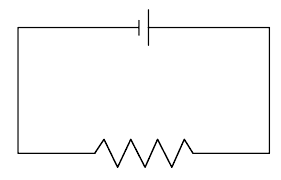
This circuit has a 24 volt battery and the resistor is 8 ohms. How many amps are running through the circuit?
1
3 Amps
2
192 Amps
3
2 Amps
4
4 Amps

74

Multiple Choice

What size resistor would produce a 3 Amp current flow with a 12 Volt battery
1
1 Ohm
2
3 Ohms
3
4 Ohms
4
12 Ohms

75

Multiple Choice

What would the circuit resistance be if a 7.5 Amp draw was present with the engine running and the charging system producing 15 Volts
1
15 Ohms
2
4 Ohms
3
0.3333 Ohms
4
2 Ohms

76

media

77

media

78

media
What charge does a proton have?
1
negative (-)
2
positive (+)
3
neutral or no charge (0)

Show answer

Auto Play

Slide 1 / 78

MULTIPLE CHOICE