Search Header Logo
Unfinished science

Unfinished science

Assessment

Presentation

Social Studies

2nd Grade

Easy

Created by

Gia Santelices

Used 2+ times

FREE Resource

2 Slides • 70 Questions

1

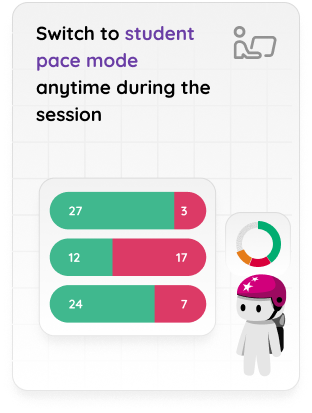
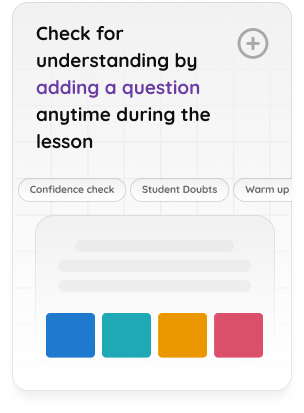
Discover new features in Lessons!
Finish all phases of “I-do ; We-do ; You-do” with Quizizz

media
media
media
media

​You can also create lessons directly on Google Slides using “Quizizz Extension”.
Read more about it here

2

Multiple Choice

What is the smallest LIVING unit of LIVING THINGS?

1

a cell

2

a mitochondria

3

a brick

4

a protein

3

Multiple Choice

What is the difference between multi-celled and single-celled’s organisms?

1

Single-celled organisms are “simple” and multi-celled organisms are “crazy.”

2

Single-celled organisms are “super” and multi-celled organisms are “complex.”

3

Single-celled organisms are “simple” and multi-celled organisms are “complex.”

4

Multiple Choice

True or False:


Single-celled organisms are able to live as one cell, and multi-celled organisms need many cells to live because each cell has specialized job.

1

True

2

False

5

Fill in the Blanks

6

Fill in the Blanks

7

Fill in the Blanks

8

Multiple Choice

Question image

Letter B is which organelle?

1

Nucleus

2

Cytoplasm

3

Vacuole

4

Mitochondria

9

Multiple Choice

Question image

Letter A is which organelle?

1

Nucleus

2

Cell Membrane

3

Mitochondria

4

Vacuole

10

Multiple Choice

Question image

Letter C is which organelle?

1

Vacuole

2

Mitochondria

3

Nucleus

4

Cytoplasm

11

Multiple Choice

Question image

Letter D is which organelle?

1

Cytoplasm

2

Vacuole

3

Nucleus

4

Mitochondria

12

Multiple Choice

Question image

Letter E is which organelle?

1

Cytoplasm

2

Nucleus

3

Vacuole

4

Cell Membrane

13

Multiple Choice

All living things...

1

Reproduce and Excrete Waste

2

Move and Show Sensitivity

3

Grow, Respire, and take in Nutrition

4

All of the above

14

Multiple Choice

Your body is made of trillions of cells.

1

True

2

False

15

Multiple Choice

A living thing can be made of one cell or many cells.

1

True

2

False

16

Multiple Choice

Each day, many cells in your body die. Lucky for you, exactly the same amount of cells are also created.

1

True

2

False

17

Multiple Choice

Cells reproduce by...

1

Magic

2

Having baby cells

3

Dividing themselves in half

18

Multiple Choice

Mitochondria...

1

Make energy for the cell

2

Control all the cell's activities

3

Are the gel inside the cell

4

Store food, water and waste

19

Multiple Choice

The cytoplasm...

1

Makes energy for the cell

2

Stores food, water and waste

3

Is the gel inside the cell

4

The control center of the cell

20

Multiple Choice

The nucleus is...

1

The gel inside the cell

2

The control center of the cell

3

A place where food, water and waste is stored

4

Where energy is created

21

Multiple Choice

The vacuole...

1

Provides energy for the cell

2

Is the control center for the cell

3

Stores food, water and waste

4

Is the fence around the cell

22

Multiple Choice

The cell membrane...

1

Is the thin, outside layer around the cell

2

Controls what goes in and out of the cell

3

Neither of the above

4

Both of the above

23

Multiple Choice

If 4 cells divide/reproduce, how many cells will there be?

1

4

2

8

3

6

4

12

24

Multiple Choice

A cell is...

1

The basic unit of life

2

A nonliving part of our body

3

Made of different types of cells

4

Able to be seen without a microscope

25

Multiple Choice

Question image

This organelle is called the "powerhouse" of a cell because it breaks down food and converts it to energy.

1

Endoplasmic Reticulum

2

Mitochondria

3

Nucleus

26

Multiple Choice

What is the cell membrane?

1

Power House

2

Its the outer layer of a cell

3

Large sac that holds food, water, and waste

27

Multiple Choice

Question image

This organelles stores water, nutrients, and waste products

1

Vacuole

2

Mitochondria

3

Ribosomes

28

Multiple Choice

Question image

Where are proteins made?

1

Ribosomes

2

Mitoichondria

3

Chromosomes

29

Multiple Choice

The "Post office" of the cell that packages proteins and fats and gets them ready for delivery.

1

Rough ER

2

Smooth ER

3

Golgi Bodies

30

Multiple Choice

What shape are most animal cells?

1

round

2

rectangular

31

Multiple Choice

A _________________ is an instrument needed to be able to see the parts of a cell.

1

magnifying glass

2

microscope

3

telescope

4

scientist

32

Multiple Choice

The vacuole stores _________________.

1

energy

2

chloroplasts.

3

watery gel

4

food, water and waste

33

Multiple Choice

Plant cell structures that turn energy from sunlight into food.
1
Cell Wall
2
Mitochondria
3
Chloroplast
4
Cytoplasm

34

Multiple Choice

Additional layer around the outside of plant cells that protect and give shape

1

Cell Wall

2

Chloroplast

3

Cell Membrane

4

Golgi Complex

35

Multiple Choice

Package and transport proteins from the cell
1
Golgi Complex (body)
2
Endoplasmic Reticulum
3
Ribosome
4
Mitochondria

36

Multiple Select

Compare animal and plant cells.

1

They both have cytoplasm, nucleus, and a cell membrane.

2

They both have different types of organelles that have jobs to do.

3

They both have chloroplast and make their own food.

4

They both have a cell wall to help protect the cell.

37

Multiple Select

Explain why animal cells do NOT have a cell wall.

1

Animal cells have muscles and nerves.

2

Animal cells hunt or find their own food.

3

Animal cells take on different shapes.

4

Animal cells do not have cell wall which allows them to move from place to place.

38

Multiple Choice

Which 3 parts are only found in a plant cell?

1

nucleus, cell membrane, cytoplasm

2

nucleus, cell wall, cytoplasm

3

chloroplast, cytoplasm, cell wall

4

chloroplast , cell wall, vacuole

39

Multiple Choice

Which are 3 parts of an animal cell?

1

nucleus, cell membrane, cytoplasm

2

nucleus, cell wall, cytoplasm

3

chloroplast, cytoplasm, cell wall

4

chloroplast , cell wall, vacuole

40

Multiple Choice

Plant cell structures that turn energy from sunlight into food.
1
Cell Wall
2
Mitochondria
3
Chloroplast
4
Cytoplasm

41

Fill in the Blanks

42

Fill in the Blanks

43

Kingdom

Kingdoms are grouped by internal form and structure. Scientists classify organism into structure by comparing their cells, tissues, organs and organ system.

44

Fill in the Blanks

45

Fill in the Blanks

Type answer...

46

Multiple Choice

Animals are divided into vertebrates and invertebrates
1
True
2
False

47

Multiple Choice

Animals can make their own foods
1
True
2
False

48

Multiple Choice

What group of animals have no backbone?

1

Vertebrates

2

Invertebrates

49

Multiple Choice

True or False: All vertebrate have a backbone

1

True

2

False

50

Multiple Select

Select the two types of plants

1

Vestibule

2

Vascular

3

Nonvascular

4

Nonvestibule

51

Multiple Choice

Question image
Mushrooms are...
1
fungus
2
protozoa
3
bacteria
4
plant

52

Multiple Choice

What's yeast?

1

It's a living thing that belongs to the fungi kingdom.

2

It's a living thing that belongs to the monera kingdom.

3

It's a living thing that belongs to the protist kingdom.

4

It's not a living thing.

53

Multiple Choice

Question image

The living things of the picture belongs to the ...

1

Monera kingdom

2

Fungi kingdom

3

Animal kingdom

4

Plant kingdom

54

Fill in the Blanks

55

Multiple Choice

Vertebrates don't have a backbone
1
True
2
False

56

Multiple Choice

Angiosperms are the largest group in the plant kingdom.
1
True
2
False

57

Multiple Choice

Animals that have hair or fur are...
1
Mammals
2
Birds
3
Fishes
4
Reptiles 

58

Multiple Choice

_______________ is a vascular flowering plant.
1
gymnosperm
2
angiosperm
3
all of the above

59

Multiple Choice

Question image
Octopus is...
1
Vertebrate
2
Invertebrate

60

Multiple Choice

Spruce pines and evergreens are examples of:
1
angiosperms
2
non-vascular plants because they stay green year round
3
gymnosperms
4
None of these

61

Multiple Choice

All vertebrates have
1
4 legs
2
wings
3
lungs
4
a backbone

62

Multiple Choice

The_____________________absorbs nutrients from the ground.

1

Leaves

2

Roots

3

Stem

63

Multiple Choice

Question image
It is a
1
Fish
2
Mammal
3
Bird
4
Molluscs

64

Multiple Choice

Question image

Identify the parts of the plant in this picture:

1

a. stem b. root c. leaf d. flower

2

a. root b. stem c. flower d. leaf

3

a. stem b. root c. flower d. leaf

4

a. flower b. root c. leaf f. stem

65

Multiple Choice

Question image
Cows are...
1
Vertebrate
2
Invertebrate

66

Multiple Choice

During the Photosynthesis, the plant releases...

1

Energy

2

Nutrient

3

Oxygen

67

Multiple Choice

Question image
The snake is classified into...
1
Mammals
2
Reptiles
3
Amphibians
4
Birds

68

Multiple Choice

The stem provides support to the plant. Which of the following is another function of the stem?

1

It provides shade to the plant.

2

It produces seeds for the plant.

3

It transports food to all parts of the plant.

4

It purifies the water absorbed by the roots

69

Multiple Choice

The animal kingdom is divided into

1

1 group

2

2 groups

3

3 groups

4

10 groups

70

Fill in the Blanks

Type answer...

71

Multiple Choice

Which animal belongs in the mammal kingdom?
1
frog
2
fish
3
camel
4
tortoise

72

Multiple Choice

Plants that have tube-like structures for water and nutrients to travel up and down from roots to leaves are called

1

coniferous plants

2

non-vascular plants

3

vascular plants

4

carnivorous plants

Discover new features in Lessons!
Finish all phases of “I-do ; We-do ; You-do” with Quizizz

media
media
media
media

​You can also create lessons directly on Google Slides using “Quizizz Extension”.
Read more about it here

Show answer

Auto Play

Slide 1 / 72

SLIDE