

Ecology Experts

Presentation
•
Science
•
1st - 5th Grade
•
Practice Problem
•
Medium
+7
Standards-aligned

Taryn LakeMyraES
Used 6+ times
FREE Resource
21 Slides • 13 Questions
1
Ecosystems and Biomes

2
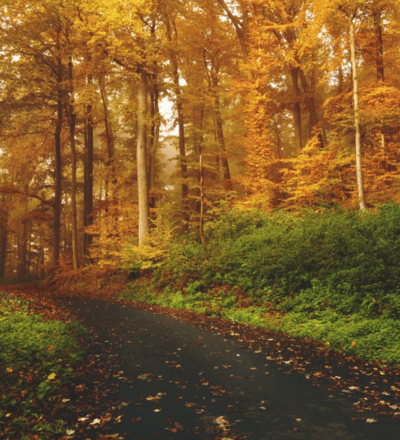
An ecosystem is a community of living organisms and their environment.
It includes plants, animals, and microorganisms.
Ecosystems can be large (like a forest) or small (like a pond).
What is an Ecosystem?
3

A biome is a large area characterized by its climate and ecosystems.
There are many types of biomes around the world.
Deserts, grasslands, and forests are three common biomes.
What is a biome?
4

A habitat is the natural environment where an organism, like a plant or animal, lives and grows.
It provides the organism with food, water, shelter, and space to survive.
Habitats can be found in almost every place on Earth, from deserts to ice packs
What is a habitat?
5
Multiple Choice
A _________ is a natural environment where an organism, like a plant or animal, lives and grows.
Ecosystem
Habitat
Biome
Neighborhood
6
Multiple Choice
A large area of Earth with a similar climate, landscape, and types of plants and animals is known as a __________.
Ecosystem
Habitat
Biome
Neighborhood
7
Multiple Choice
An ____________ is a community of living organisms and their environment. It includes plants, animals, and microorganisms.
Ecosystem
Habitat
Biome
Neighborhood
8
What Biomes do you need to know?
Deserts: Coastal, Hot & Dry (Arid), Semiarid
Grasslands: Savanna & Temperate
Forest: Temperate, Tropical & Taiga

9
Multiple Choice
Coastal deserts can be primarily found by ________________
subtropics, between the Tropic of Cancer and the Tropic of Capricorn,
western coasts of continents, particularly between 20° and 30° latitude
regions of North America, Europe, Asia, and parts of Africa and Australia, often located around the fringes of subtropical deserts,
on every continent except Antarctica
10


Deserts are a land area with very little precipitation.
Deserts can be hot or cold.
3 Types of Deserts: Coastal, Hot & Dry (Arid), and Semiarid.
Desert ecosystems are characterized by extremely dry environments with minimal vegetation
harsh temperatures, and very little precipitation, often featuring hot and dry conditions
but also including cold desert variations, where the primary defining factor is the lack of moisture
11


deserts located near the coast with mild temperatures.
Example: Atacama Desert in Chile.
Unique features: influenced by ocean currents and fog.
Receive more precipitation than other deserts, mainly from fog.
Support unique plant life like cacti and shrubs.
Have cooler temperatures compared to arid deserts.
12


Hot & Dry (Arid) deserts are extremely dry deserts with very low rainfall.
Example: Sahara Desert in Africa.
Known for high temperatures and vast sand dunes.
Have Very little vegetation due to lack of water.
Temperature extremes: hot during the day and cold at night.
Wildlife adapted to survive harsh conditions.
13


Semiarid Deserts receive more rainfall than arid deserts but still have dry conditions.
Example: Great Basin Desert in the United States.
Transitional environment between arid deserts and more humid areas.
Have More vegetation than arid deserts, including grasses and shrubs.
Generally milder temperatures with seasonal variations.
Home to various animals, including small mammals and birds.
14
Multiple Choice

What are the temperature extremes for the hot & dry (arid) desert?
milder temperatures with seasonal variations
often featuring hot and dry conditions
hot during the day and cold at night.
15
Multiple Choice

Which of the following is not a type of desert?
Coastal
Hot & Dry (Arid)
Taiga
Semiarid
16
Multiple Choice

What kind of vegetation can be found in a semiarid desert?
More than arid deserts: Grasses and Shrubs
Very little vegetation: cacti & succulents
Unique plant life: cacti and shrubs
17

Definition: A large area covered with grass, with few trees.
Sample Sentence: The grassland is home to many animals like bison and prairie dogs.
Two Types of Grasslands: Savannah & Temperate
Grasslands
18


Savannas are grassy areas with scattered trees.
Found in regions with warm temperatures and seasonal rainfall.
Support a variety of wildlife including large herbivores and predators.
Savanna
Savannas have a tropical climate with a wet and dry season.
Average annual rainfall is between 20-50 inches.
Temperature remains warm throughout the year.
19


Dominated by grasses, with few trees and shrubs.
Common plants include acacia and baobab trees.
Adapted to survive in dry conditions, often with deep roots.
Savanna
Home to animals like elephants, lions, and zebras.
Many animals migrate in search of food and water.
Adaptations help them survive, such as camouflage and speed.
20


Temperate grasslands are found in cooler regions with moderate rainfall.
Known for their rich soil, making them ideal for farming.
Characterized by grasses with few trees due to limited rainfall.
Temperate Grassland
Experience all four seasons, with cold winters and warm summers.
Average rainfall is between 10-30 inches per year.
Influenced by nearby mountains and deserts.
21


Dominated by various species of grasses and wildflowers.
Few trees, primarily found near rivers or streams.
Deep-rooted plants help retain moisture in the soil.
Temperate Grassland
Home to animals like bison, prairie dogs, and various bird species.
Animals have adaptations for living in open spaces, like speed and burrowing.
Important for biodiversity and ecosystems.
22
Multiple Select

Which are the 2 types of grasslands?
Temperate
Subtropical
Savanna
Rainforest
23
Multiple Select

What is an example of an adaptation Savanna animals could use to protect themselves from predators?
Heavy Coat of Fur
Camouflage
Dorsal Fins
Sharp Teeth
24
Multiple Select

A grassland is a biome dominant in what type of vegetation?
Palm Trees
Grasses
Water
Evergreen Trees
25

Forests are one type of biome, characterized by a high density of trees.
There are different types of forest biomes around the world.
There are three main types: tropical, temperate, and Taiga (boreal) forests.
Forest Biomes
26

Found near the equator with high rainfall.
Home to many species of plants and animals, including monkeys and parrots.
Canopy layers allow different species to thrive at various heights.
Tropical Forest
27


Tropical forests are warm, wet environments.
They are found near the equator.
They receive a lot of rainfall, typically over 80 inches a year.
Seasons are not defined by temperature but by wet and dry periods.
There are four main layers: emergent, canopy, understory, and forest floor.
Each layer has different plants and animals.
The canopy is home to many birds and insects.
Home to unique animals such as monkeys, sloths, and colorful birds.
Many animals are adapted for life in trees (arboreal).
Some species are endangered due to habitat loss.
28
Multiple Choice

Where are tropical forest found?
Near the North Pole
Near the Equator
In South America only
In Texas
29

Found in colder climates, mainly in Canada and Russia.
Dominated by coniferous trees like pines and spruces.
Provides habitat for animals like bears, moose, and wolves.
Taiga (Boreal)
30


Found in a broad belt of Eurasia and North America, with the majority in Russia, Canada, and the United States.
Boreal forests are threatened by climate change, logging, mining, and oil extraction.
major source of clean water and carbon storage.
Boreal forests have short, moist summers and long, cold, dry winters. Temperatures are very low, and precipitation is mostly snow.
The boreal forest is dominated by coniferous trees like spruce, fir, and pine, with some broadleaf species like birch and poplar. The needles of these trees are narrow and have a thick waxy coating to reduce water loss.
The boreal forest is home to many animals, including moose, bears, lynx, wolverines, beavers, and Siberian tigers.
Birds native to the taiga often migrate south for the winter.
31
Multiple Choice

Boreal Forest are also called what?
Tropical
Taiga
Deciduous
Rainforest
32

Located in areas with moderate climates, like North America and Europe.
Trees lose their leaves in fall (deciduous trees).
Supports wildlife such as deer, foxes, and numerous bird species.
Temperate Forest
33


Temperate deciduous forests are found in mid-latitude regions of the world, including eastern North America, Europe, eastern Asia, and parts of South America.
The temperate deciduous forest is a biome that is always changing. It has four distinct seasons: winter, spring, summer and fall. Winters are cold and summers are warm.
Temperate deciduous forests are dominated by broadleaf trees, such as oaks, maples, beeches, hickories, and chestnuts.
Temperate deciduous forests also include plants like mountain laurel, azaleas, and mosses.
Temperate deciduous forests have fertile soil, which is good for building.
Home to a variety of animals, including white-tail deer, gray squirrels, chipmunks, raccoons, opossums, skunks, black bears, coyotes, woodpeckers, chickadees, and blue jays.
34
Multiple Choice

Temperate Deciduous Forests are well known for changing seasons and for their large amount of broad leafed ___________ trees
Deciduous
Palm
Cacti
Shrubs and grasses
Ecosystems and Biomes
Show answer
Auto Play
Slide 1 / 34
SLIDE
Similar Resources on Wayground

29 questions
Space Club 12 - History of Astronomy
Presentation
•
1st - 5th Grade
29 questions
Fossils
Presentation
•
1st - 5th Grade
30 questions
The Four Seasons
Presentation
•
KG
25 questions
4.12 Digital Waves Lesson
Presentation
•
1st - 5th Grade
30 questions
Heat Transfer (Conduction)
Presentation
•
1st - 5th Grade
26 questions
PEMELIHARAAN & PEMULIHARAAN HAIWAN DAN TUMBUHAN
Presentation
•
1st - 6th Grade
31 questions
3.3 Gravity Lesson Planets to Galaxy
Presentation
•
1st - 5th Grade
28 questions
Conservation of Matter
Presentation
•
2nd - 5th Grade
Popular Resources on Wayground
10 questions
Safety Day 2026 – Student Review

Quiz
•
9th Grade
21 questions
Continents and Oceans
Quiz
•
6th Grade
20 questions
Parts of Speech
Quiz
•
5th Grade
16 questions
Subject & Predicate
Quiz
•
5th Grade
25 questions
Multiplication Facts
Quiz
•
5th Grade
12 questions
Map Skills
Quiz
•
3rd Grade
22 questions
Continents and Oceans
Quiz
•
5th Grade
15 questions
Rounding Decimals
Quiz
•
5th Grade
Discover more resources for Science
20 questions
Mixtures and Solutions Practice
Quiz
•
5th Grade
10 questions
Mixtures and Solutions
Quiz
•
4th Grade
20 questions
Food Chains and Food Webs Review
Quiz
•
5th Grade
20 questions
GC Interim #1 Review 2026
Quiz
•
5th Grade
10 questions
Severe Weather Around Us
Quiz
•
2nd Grade
20 questions
5.3 Force and Motion Study Guide Review
Quiz
•
5th Grade
15 questions
Force and Motion
Presentation
•
5th Grade
19 questions
3rd Grade CUA #1 Review GC
Quiz
•
3rd Grade