

Civil Rights Lesson

Presentation
•
Social Studies
•
9th Grade
•
Hard

John Martin
FREE Resource
8 Slides • 8 Questions
1
Civil Rights Movement
By Chris Bond
1954 - Brown v
Board of Education
1957 - Montgomery
Bus Boycott
Rosa Parks & MLK
1963- "March on Washington - "I have a dream speech
1964 - Civil Rights Act
1965 - Voting Rights Act
2
The Civil Rights Movement
1954-1965
Traditional narratives argue that the Civil Rights movement began in 1954 with the Brown V. Board of Education case which ended the courts tradition of supporting a "Separate but Equal" system of institutional justice. In 1965 that same traditional narrative ended when the Congress followed up the Civil Rights Act of 1964 with the Vioting Rights Act of 1965.
Is this the way you have learned (if you have) about civil rights?
3
New Emerging Historiography
Developing Trends
Today historians point out that the civil right's movement oversimplifies the nature of the Civil Rights Movement - especially the many historical figures and grass roots figures who made it happen as well as from a timeline perspective
Check this argument out - Click here
How is this timeline different - Click here to Timeline
4
Poll
How have you learned about the Civil Rights Movement
I have not learned at all about the Civil Rights Movement
I learned the traditional narrative - 1954-1965 (MLK and civil rights law)
I have learned to question the traditional narrative but have not been taught how
I have learned to question the traditional narrative and have examples of how.
5
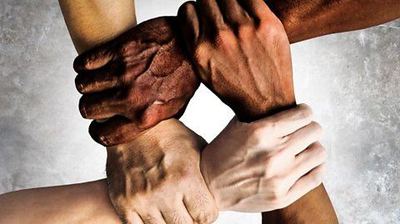
However we have learned - we must remember that race and racism are at the crux of our civil rights dilemma. If you think that certain racial groups are superior or inferior simply because of race - this is what contributes to persistent systemic inequality.
Please watch the video linked to better understand the systemic nature of racial discrimination in America.
What's important to remember?
6
Multiple Choice
What is Systemic Racism?
Racism that is intentional and individual-based.
Racism that is built into institutions and systems.
Racism that only exists in the United States.
Racism that is caused by individuals' personal beliefs.
7
Multiple Choice
Which of the following is an example of systemic racism?
An individual racist person refusing to hire someone based on the color of their skin.
A company only recruiting from predominately white communities.
A person making a racist joke to their friend at work.
An individual expressing a racist idea on social media.
8
Multiple Select
The reason why Systemic Racism is so hard to deal with in a way that would lessen it's effects is because of which of the following: (There may be more than one write answer)
Implicit Bias
Explicit Bias
Too many really racist people.
Too many people who just can't stop making race an issue - systemic racism would go away if people stopped making race a big thing.
9

Do the legal remedies created at the end of the civil rights movement deal with the underlying problem?
Why is Anti-Racism so important but also controversial?
Does Malcolm X make a good point?
10
Please review the beginning of the John Green video which cover's the context of 1950s America. The overview of what is revealed is noted to the right for you.
The 1950s
From 1950 to 1960 the greatest rise in working class affluence occurred as America took advantage of post World War II demand for modern conveniences. By 1960 almost 60% of America was classified as Middle Class.
Fear of Communism
Rise of American Affluence
1950s - Consensus Culture
In the 1950's many people became fearful of questioning American Exceptionalism because they might be labeled a communist.
11
Multiple Choice
John Green argues that the 1950's was a time where most American's came to view America as an exceptional place and drew stark comparison's between us and the rest of the world - especially communist nations. This is called what?
American Consensus Culture
Americanization
The roaring 50s
The Age of American Joy
12

Listen to John Green extend the context of the 1950s. Then take a close look at these criticisms.
C. Wright Mills - who was he and what did he stand for?
The Dark side of the early 1950s - McCarthyism
Critics of 1950s - Video
The 1950s - Consensus vs Criticism
13
Open Ended

John Green also points out that this Consensus Culture is most widely accepted by what type of American historian or citizen?
14
Open Ended
What have you learned so far concerning the 1950s and the civil right's movement? Why is this CONTEXT important to understand as we seek to extend the traditional view of the Civil Rights movement?
15
Looking closely at modern day depictions of the 1950s can help us better understand what consensus culture was and how it helped to create many of our modern day views of what makes America work and prosper.
Starting with a model

16
Video Response
On your own or with one or two others, please talk about how the video by CBS Sunday Morning help to outline why some American's view the 1950s as being a time "When America was Great". Is there view accurate or is it based on a media generated myth? How does this help you better understand some American's reluctance to discuss and unpack issues of systemic racism?

Civil Rights Movement
By Chris Bond
1954 - Brown v
Board of Education
1957 - Montgomery
Bus Boycott
Rosa Parks & MLK
1963- "March on Washington - "I have a dream speech
1964 - Civil Rights Act
1965 - Voting Rights Act
Show answer
Auto Play
Slide 1 / 16
SLIDE
Similar Resources on Wayground

10 questions
non- mendelian inheritance
Lesson
•
9th Grade
12 questions
Electricity and Magnetism
Lesson
•
9th Grade
11 questions
Christianity in the Roman Empire
Lesson
•
9th Grade
10 questions
Roman Catholic Church Middle Ages
Lesson
•
9th Grade
12 questions
Manifest Destiny
Lesson
•
8th Grade
11 questions
Lesson: Solve Systems by Graphing
Lesson
•
9th Grade
11 questions
Realidades 2A Reflexive Verbs
Lesson
•
9th Grade
10 questions
Atomic Structure
Lesson
•
9th Grade
Popular Resources on Wayground
15 questions
Fractions on a Number Line

Quiz
•
3rd Grade
14 questions
Boundaries & Healthy Relationships
Lesson
•
6th - 8th Grade
13 questions
SMS Cafeteria Expectations Quiz
Quiz
•
6th - 8th Grade
20 questions
Equivalent Fractions
Quiz
•
3rd Grade
25 questions
Multiplication Facts
Quiz
•
5th Grade
12 questions
SMS Restroom Expectations Quiz
Quiz
•
6th - 8th Grade
20 questions
Main Idea and Details
Quiz
•
5th Grade
10 questions
Pi Day Trivia!
Quiz
•
6th - 9th Grade
Discover more resources for Social Studies
48 questions
Asia: Countries Map Test
Quiz
•
9th - 12th Grade
9 questions
Mod 22 Lessons 1 & 2 Vocab
Quiz
•
9th Grade
15 questions
Debt/Credit Assessment
Quiz
•
9th - 12th Grade
5 questions
8a- Qualifications for Congress
Lesson
•
9th - 12th Grade
10 questions
Food Desert Formative
Quiz
•
9th Grade
16 questions
The Holocaust
Quiz
•
7th - 12th Grade
10 questions
Antebellum Reform Movements Edpuzzle

Interactive video
•
9th Grade
6 questions
The Bill of Rights-The Constitution
Lesson
•
5th - 12th Grade