

Abeles_Intro to the stock market

Presentation
•
Education
•
9th - 12th Grade
•
Practice Problem
•
Hard

MELISSA ABELES
FREE Resource
13 Slides • 0 Questions
1



Stock
• Def. A portion of ownership in a
corporation. It is a way for a corporation to
raise money. Also known as shares or
equities.
2


Why should I buy stock?
Stockowners can earn a profit in two ways:
1. Dividends: portions of a corporation’s
profit. They are paid out to stockholders
of many corporations every quarter (3
months). The higher the corporate profit,
the higher the dividend. If a corporation
makes no profit, there is no dividend.
3

How to make a lot of money in the
Stock Market
The second way stockholders earn money:
2. Capital Gain: When a stock holder sells
stock for more than he or she paid for it.
Ex. I buy a share of Kodak stock for $20.
The value of the stock increases to $21,
and I sell it for a profit of $1.
When a stock holder sells stock for less
than he or she paid, it is a capital loss.
4


Stock goes up and down
Stock value increases and decreases
according to the company’s performance
and how people think the company will do
in the future.
Stock value goes up when a company has
good sales or invented a new product.
Stock value goes down if a company has to
lay off people, doesn’t sell much or does
not make a profit.
5

Making and losing money
Can you lose everything in the market?
• If you are foolish, yes. If you invest more
than you can afford to lose, and the stock
loses value, you are in trouble.
• But, if you invest only what you can afford,
and diversify your investments (buy stock
of many different companies), you can do
very well. If you diversify, even if one
investment loses money, the others will
still be okay. And, stock prices go up and
down a lot. If you lose money today, the stock can still
go up tomorrow. You only lose if you sell!
6

So how do I make money?
• The smart stock strategy is to invest over
the long term. Diversify your portfolio (buy
a lot of different stock) and let the stock
price increase over time. Even if stocks go
down, it is okay- just wait until they go
back up. The market as a whole always
goes back up.
• Some people play the market like a
casino; they gamble on quick money. They
may get lucky, but it is VERY RISKY! One
bad move, and you lose all you invest.
7

Types of Stock
• Income Stock: stock that pays dividends at
regular times in a year
• Growth Stock: pays few to no dividends.
All profits are reinvested in the business.
Owners of growth stock are interested in
making money through capital gains.
• The company determines what stock it
offers.
8

Ownership of a Company
Stockholders are part owners of the
company, and as such have a say in
decisions the company makes. But, since
most companies have thousands of
shareholders with millions of shares, most
stockholders have little say in the
company.
• Controlling Share: Owning 50% of a
company’s stock. This person controls the
company.
9

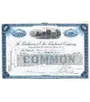
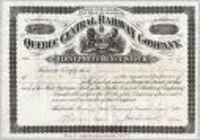
Making ownership decisions
Common Stock: stockholders are voting
owners of the company.
But, most people own such a small percent
of a company’s shares, they do not wish to
vote on company decisions.
Preferred Stock: stockholders do not vote in
company decisions, but receive dividends
before owners of common stock.
10


Where are stocks traded?
• Stock Exchanges: markets where
businesses buy and sell stock. Most
industrialized nations have one. The U.S.
has several.
• In the U.S. the two largest are The New
York Stock Exchange (aka. Wall Street),
which represents the oldest and largest
corps. in the country. The NASDAQ in
Chicago represents newer companies.
11
How are stocks traded?
• Stockbroker: licensed intermediary
between buyers and sellers of stock
• Brokerage Firms: businesses which
specialize in trading stock.
• Daytrader: stockbrokers who buy and sell
large amounts of stock very quickly to turn
a profit in one day’s trading. (get it?)
12

Bull and Bear Markets
• Economists describe the stock market
activity as being a:
–Bull Market: steadily rising stock market
over time
–Bear Market: steadily falling stock
market over time
13

Stock Performance Indexes
• With thousands of publicly owned
corporations, selling billions of shares of
stock, it is impossible to keep track of how
the market is doing as a whole. Stock
Performance Indexes are used to look at
parts of the stock market to make a
generalization about the market as a
whole.
Stock
• Def. A portion of ownership in a
corporation. It is a way for a corporation to
raise money. Also known as shares or
equities.
Show answer
Auto Play
Slide 1 / 13
SLIDE
Similar Resources on Wayground

10 questions
Genetics Dihybrid Crosses
Presentation
•
9th - 12th Grade
10 questions
Synthetic Division
Presentation
•
9th - 12th Grade
10 questions
1B Adjectives
Presentation
•
9th - 12th Grade
9 questions
College Need to knows
Presentation
•
9th - 12th Grade
11 questions
Adaptations
Presentation
•
9th - 12th Grade
11 questions
Pythagorean Theorem
Presentation
•
9th - 12th Grade
11 questions
Intermolecular Forces
Presentation
•
9th - 12th Grade
10 questions
Grammar 4A - ir + a + infinitive
Presentation
•
9th - 12th Grade
Popular Resources on Wayground
10 questions
Main Idea and Supporting Details

Quiz
•
3rd - 6th Grade
20 questions
Math Review
Quiz
•
3rd Grade
14 questions
25-26 SY 8th Grade EOY Benchmark
Quiz
•
8th Grade
15 questions
Fast food
Quiz
•
7th Grade
20 questions
Math Review
Quiz
•
6th Grade
20 questions
Context Clues
Quiz
•
6th Grade
21 questions
EOY Grade 6 Benchmark Assessment - Content Skills
Quiz
•
6th Grade
20 questions
Inferences
Quiz
•
4th Grade
Discover more resources for Education
8 questions
Writing Equations from Verbal Descriptions
Quiz
•
9th - 12th Grade
60 questions
FLACS Checkpoint A Review
Quiz
•
7th - 9th Grade
25 questions
Biology Regents Review
Quiz
•
9th Grade
15 questions
Cal High Campus Tour Quizizz
Quiz
•
9th Grade
50 questions
US History Regents Practice Exam
Quiz
•
11th Grade
30 questions
US History Regents Review #3
Quiz
•
11th Grade
20 questions
Algebra 1 Review
Quiz
•
9th Grade
30 questions
Biology Final Exam Vocabulary
Quiz
•
9th Grade