

Fuels

Presentation
•
Chemistry
•
9th - 12th Grade
•
Medium

Tots Koķis
Used 1+ times
FREE Resource
14 Slides • 11 Questions
1
2
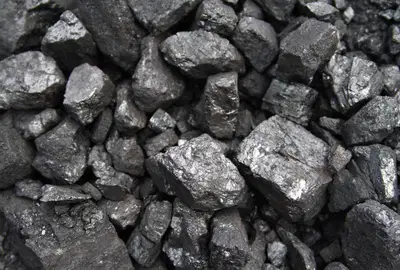
A combustion reaction involves two important reactants: fuel (a combustible substance) oxygen gas.(oxidizer)
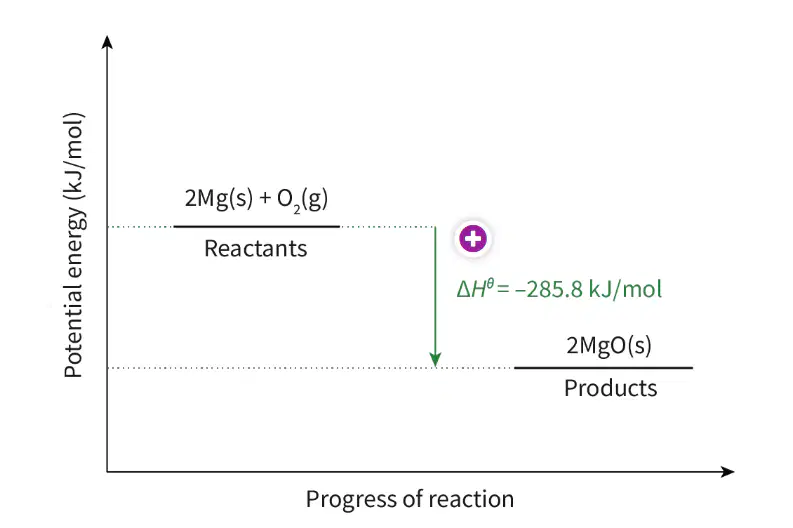
! In all cases, the combustible material reacts with oxygen, and produces metallic or non-metallic oxides. These reactions are highly exothermic since the molecules produced are energetically more stable than the reactant fuel and oxygen gas.
3
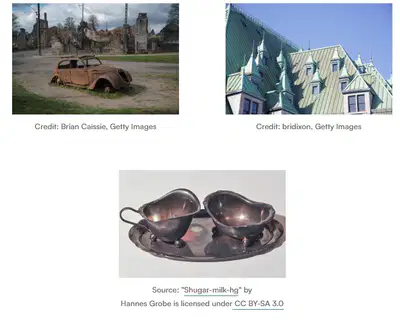
Nearly all metals react with oxygen to form metallic oxides.
2Mg(s) + O2(g) → 2MgO(s) ΔH is negative
4
Less reactive metals also combine with oxygen. For example, iron, copper, and silver react with oxygen to form their own metallic oxides.
4Ag(s) + O2(g) → 2Ag2O(s) ΔH is negative (praktiski notiek ļoti lēni)
5
6
Multiple Choice
Which of the following metals is most reactive in combustion?
A. Gold
B. Magnesium
C. Copper
D. Silver
A
B
C
D
7
Multiple Choice
What type of energy is released during the combustion of metals?
Light and heat
electrical
kinetic
Nuclear energy
8
Multiple Choice
What is the term used to describe the slow oxidation of metals like iron?
A. Rusting
B. Tarnishing
C. Corrosion
D. All of the above
A
B
C
D
9
Multiple Choice
What's the product of the combustion reaction of lithium?
10
Combustion of non-metals
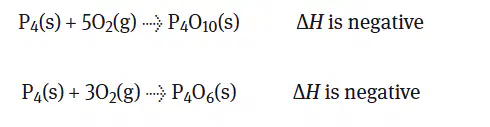
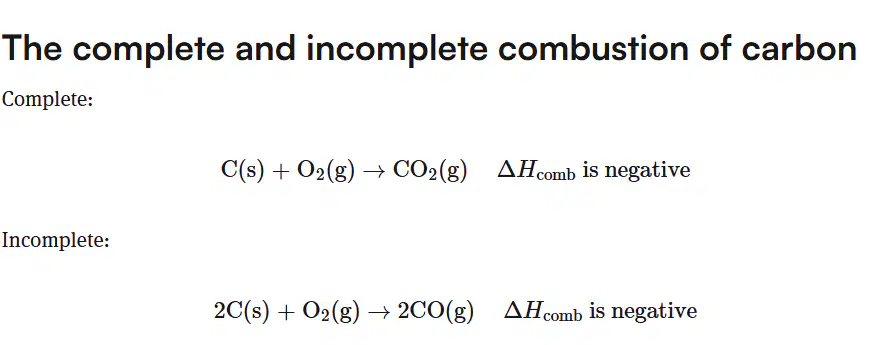
onversely, many non-metals react with oxygen to form non-metallic oxides. These oxides do not have fixed ratios, so these combustion reactions can produce several different product oxides for the same non-metal fuel.
11
Multiple Choice
What is a common environmental issue caused by the combustion of non-metals like sulfur?
A. Global warming
B. Acid rain
C. Ozone layer depletion
D. Soil erosion
A
B
C
D
12
13
Multiple Choice
Which of the following is a product of the combustion of carbon in sufficient oxygen?
14
Combustion of organic compounds In the complete combustion of methane gas, seen below, both the carbon and hydrogen atoms in the reactant molecules experience a gain in oxygen, and are fully oxidised.
CH4(g) + O2(g) → CO2(g) + H2O(g) ∆H is negative
All organic compounds, especially those that contain only hydrogen and carbon (hydrocarbons), as well as alcohols, easily undergo complete combustion reactions that produce only carbon dioxide and water.
Combustion of organic compounds
15
CH3CH2OH(l) + 3O2(g) → 2CO2(g) + 3H2O(g) ∆H is negative
https://youtu.be/UfXXQRAvLi0
16
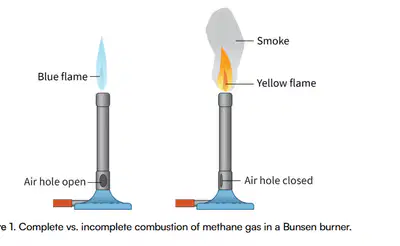
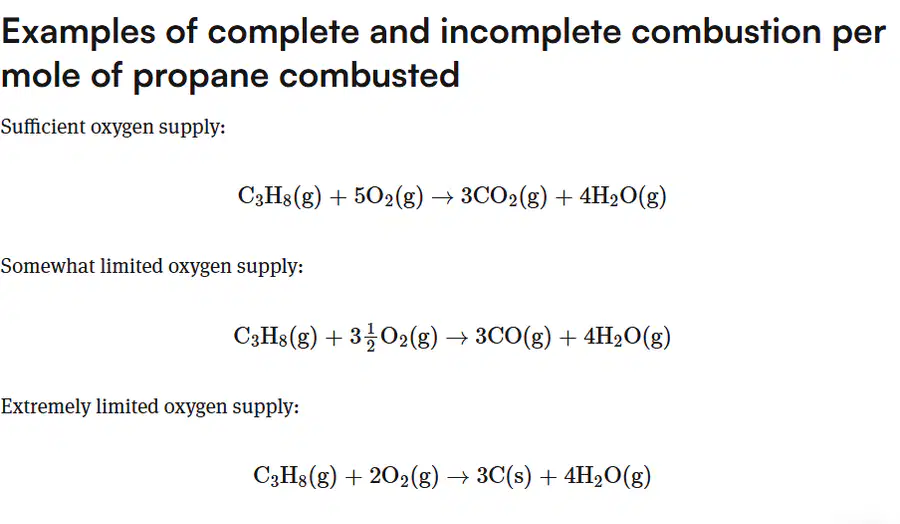
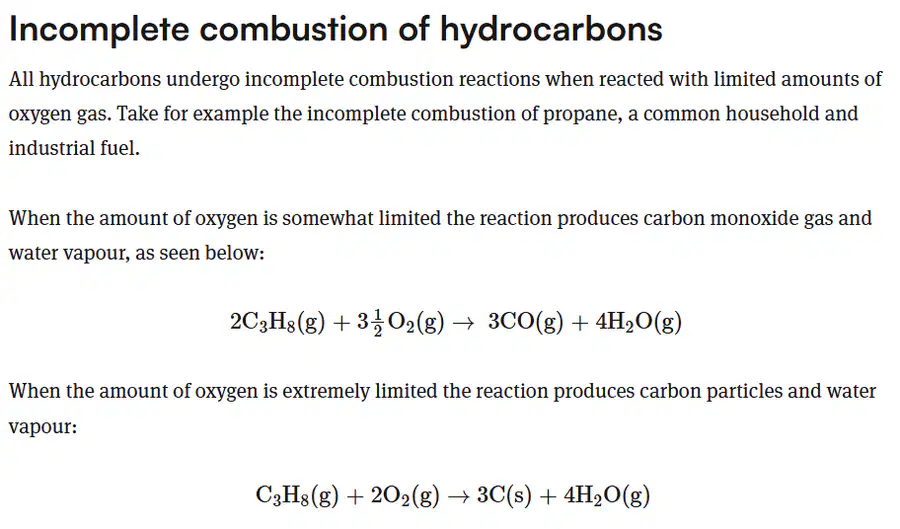
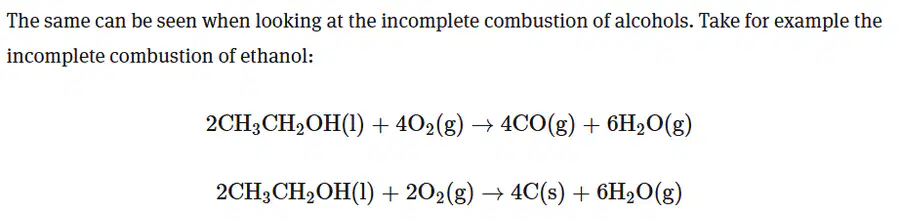
Incomplete combustion of organic compounds
17
18
19
Multiple Choice
2C + O2 --> 2CO is
incomplete combustion
complete combustion
20
21
Multiple Select
products of incoplete combustion of CxHy
H2O
C
CO
CO2
22
23
Multiple Select
incomplete combustion of alcohols can produce:
CO
C
H2O
CO2
24
Multiple Choice
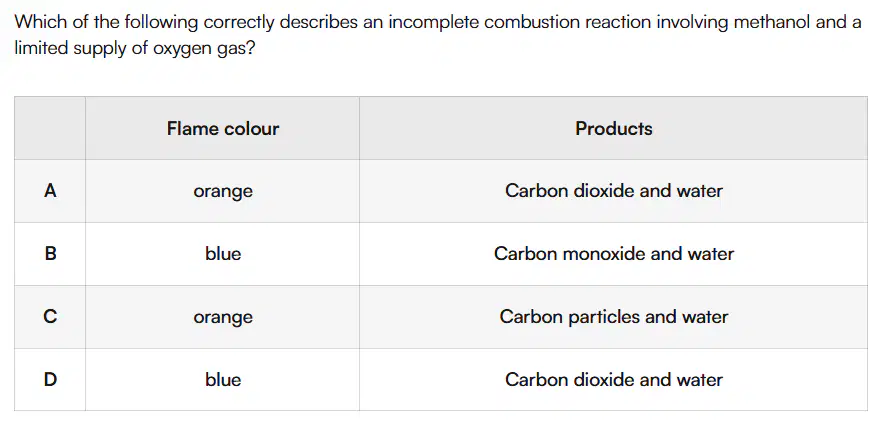
Which of the following correctly describes an incomplete combustion reaction involving methanol and a limited supply of oxygen gas?
A
B
C
D
25
Multiple Choice
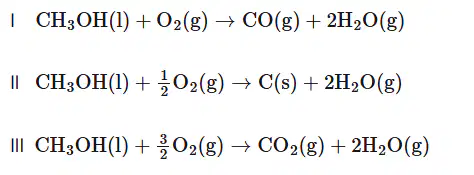
Which equation(s) correctly show the incomplete combustion reactions of methanol?
I and II
I
II and III
I, II, III
Show answer
Auto Play
Slide 1 / 25
SLIDE
Similar Resources on Wayground

20 questions
Interval Notation
Presentation
•
9th - 12th Grade
20 questions
Stem-changers
Presentation
•
9th - 12th Grade
20 questions
Marketing Plan
Presentation
•
9th - 12th Grade
20 questions
Independent & Dependent Clauses
Presentation
•
9th - 12th Grade
20 questions
Electron Configuration
Presentation
•
9th - 12th Grade
19 questions
Structure of Atom
Presentation
•
9th - 12th Grade
17 questions
Percent Composition
Presentation
•
9th - 12th Grade
21 questions
Le Chatlier's Principle
Presentation
•
10th - 12th Grade
Popular Resources on Wayground
10 questions
Safety Day 2026 – Student Review

Quiz
•
9th Grade
21 questions
Continents and Oceans
Quiz
•
6th Grade
20 questions
Parts of Speech
Quiz
•
5th Grade
16 questions
Subject & Predicate
Quiz
•
5th Grade
25 questions
Multiplication Facts
Quiz
•
5th Grade
12 questions
Map Skills
Quiz
•
3rd Grade
22 questions
Continents and Oceans
Quiz
•
5th Grade
15 questions
Rounding Decimals
Quiz
•
5th Grade
Discover more resources for Chemistry
20 questions
electron configurations and orbital notation
Quiz
•
9th - 12th Grade
20 questions
Periodic Table Trends
Quiz
•
11th Grade
25 questions
Writing and Naming Binary Ionic compounds
Quiz
•
10th Grade
20 questions
COUNTING ATOMS
Quiz
•
10th Grade
50 questions
Unit 3: Atomic Assault Summative Review
Quiz
•
11th Grade
20 questions
Physical or Chemical Change/Phases
Quiz
•
8th Grade - University
15 questions
Periodicity Module Exam Practice Quiz
Quiz
•
9th - 12th Grade
20 questions
Naming Ionic Compounds
Quiz
•
10th Grade