
TUESDAY_01.28._ClassifyFossils

Presentation
•
Science
•
4th Grade
•
Practice Problem
•
Hard

Jamie Jackson
FREE Resource
25 Slides • 0 Questions
1

1
Do Now
1. A flowchart shows arrows pointing from the Sun to
plants, from plants to herbivores, and from herbivores
to carnivores.
What role do plants play in this energy flow model?
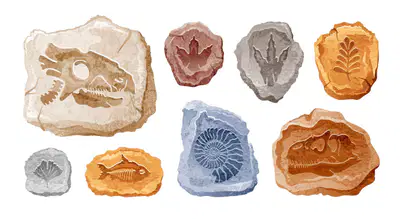
A.
Producers that convert sunlight into energy.
B.
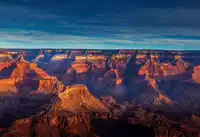
Consumers that eat herbivores for energy.
C.
Decomposers that recycle nutrients into the soil.
D.
Predators that control herbivore populations.
2. In a flowchart, decomposers like fungi and bacteria
are shown with arrows pointing to both producers and
consumers.
What does this indicate about the role of decomposers
in the energy flow of an ecosystem?
A.
Decomposers produce energy directly from the
Sun.
B.
Decomposers transfer energy back to plants and
consumers by recycling nutrients.
C.
Decomposers consume producers and provide
energy to carnivores.
D.
Decomposers store energy for future use in the
ecosystem.
2


2
Interactions in Ecosystems
LO: SWBAT observe and classify
fossils based on their structures
and use these fossils to describe
past environments.
DOL: Given scenarios, SW correctly observe and
classify fossils based on their structures and use these
fossils to describe past environments in at least 4 of 5
questions.
SCI.4.12C Identify and describe past environments based on fossil evidence, including common Texas fossils.
SEPs 4.3A
RTCs 4.5A, 4.5B
3

3
Lesson Vocabulary
fossil
imprint
paleontologist
4


4
Tree Roots
5


5
Fern
6

6
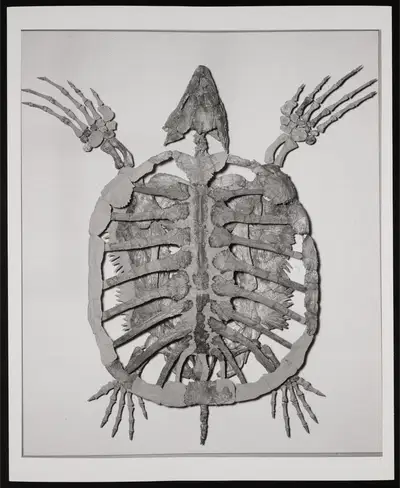
Turtle
7


7
Lizard
8


8
Perch
9


9
Sea
Cucumber
10

10
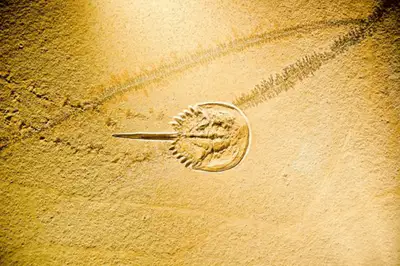
Fossil
The remains of an
organism, plant, or
animal, that lived long
ago
Image by TheUjulala from Pixabay
11


11
Imprint
A mark made by
pressing on a surface
12

12
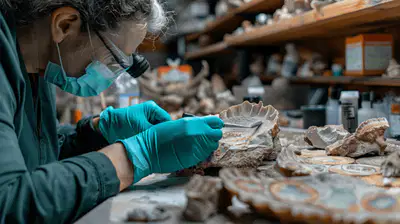
Paleontologist
A scientists who
studies fossils to learn
about the history of life
on Earth
13


4th Grade Science
Interactions in Ecosystems
Lesson 8
January 27, 2025
14

14
Essential Understandings &
Guiding Questions
What do fossils tell us about past living organisms and the
nature of the environments where they lived?
15


15
What do you notice or wonder about the image?
16

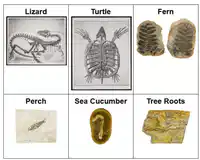
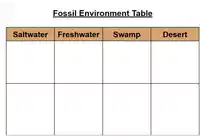

16
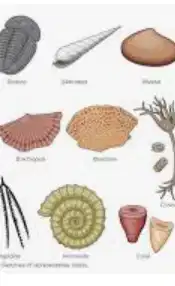
Fossil’s Environment
Observe the fossil pictures.
Read about the various
environments.
Saltwater
Freshwater
Swamp
Desert
Identify which fossil could
have been found in each
environment.
17
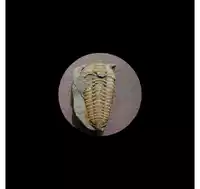


17
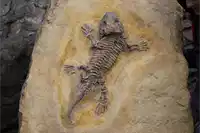
What are Fossils?
Fossils are the remains or traces of
animals and plants that lived on Earth
millions of years ago.
As animals and plants die, they are buried in
layers of sediments, and with time and pressure,
they are preserved as remains or traces.
Image by kkorvin from Pixabay
Image by Petr Beneš from Pixabay
18

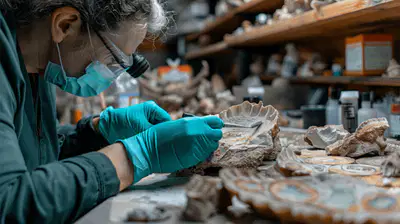


18
What is a paleontologist?
Scientists study fossils to gain a deeper
understanding of what different ancient
environments were like.
By studying fossils, scientists can tell several things
about the environment:
●If there were any major disasters in the area
●If drought killed the animals and plants
●If any other factors caused changes to the
ecosystem of the area
A scientist who studies fossils to learn about the history of life on Earth
19

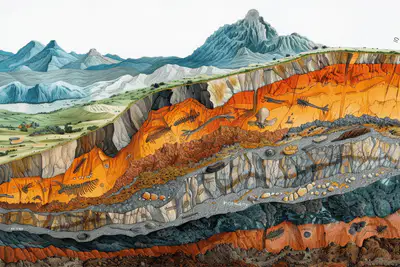


19
Fossils
Fossils can also tell if the landforms changed over time. For example, when scientists
find sea fossils in dry desert areas, what can they conclude?
They can conclude that the
area used to be covered with
______________.
ocean water
20



20
Fossils
What are
paleontologists
able to find out
about the
creatures in
fossils?
21


21
What do fossils tell us about past living organisms and the nature of the
environments where they lived?
Let’s revisit the phenomenon.
22

22
Fossils
By examining fossils, scientists think that—
A.
plants have changed over time, but animals have not
B.
animals have changed over time, but plants have not
C.
many changes have occurred to plants and animals
D.
it is not possible to determine the past from fossils
23

23
Fossils
Scientists claim that the area around the Grand Canyon was once
covered by an ocean. What evidence would support their claim?
A.
Dinosaur footprints were found near the Grand Canyon.
B.
Fish were found living in the rivers of the Grand Canyon.
C.
Fossils of ocean animals were found at the Grand Canyon.
D.
Bones from desert animals were found at the Grand Canyon.
24

24
DOL: Given
scenarios, SW
correctly observe and
classify fossils based
on their structures
and use these fossils
to describe past
environments in at
least 4 of 5
questions.
Demonstration of Learning
25

●Some images used in this lesson are taken from Adobe Stock. Adobe Stock
https://stock.adobe.com
●Some images used in this lesson are taken from Great Minds. Great Minds
https://digital.greatminds.org
●Some images used in this lesson are taken from SAVVAS realize. SAVVAS
realize https://www.savvasrealize.com
25
Copyright for Reference
1
Do Now
1. A flowchart shows arrows pointing from the Sun to
plants, from plants to herbivores, and from herbivores
to carnivores.
What role do plants play in this energy flow model?
A.
Producers that convert sunlight into energy.
B.
Consumers that eat herbivores for energy.
C.
Decomposers that recycle nutrients into the soil.
D.
Predators that control herbivore populations.
2. In a flowchart, decomposers like fungi and bacteria
are shown with arrows pointing to both producers and
consumers.
What does this indicate about the role of decomposers
in the energy flow of an ecosystem?
A.
Decomposers produce energy directly from the
Sun.
B.
Decomposers transfer energy back to plants and
consumers by recycling nutrients.
C.
Decomposers consume producers and provide
energy to carnivores.
D.
Decomposers store energy for future use in the
ecosystem.
Show answer
Auto Play
Slide 1 / 25
SLIDE
Similar Resources on Wayground

17 questions
Oceans Lesson 4: Ocean Floor
Presentation
•
4th Grade
17 questions
Ocean Floor
Presentation
•
4th Grade
19 questions
The Sun: Center of the Universe
Presentation
•
3rd - 4th Grade
22 questions
Interactions in an Ecosystem
Presentation
•
4th Grade
19 questions
Natural Resources and Conservation
Presentation
•
4th Grade
18 questions
Processes and Impacts of Natural Hazards
Presentation
•
4th Grade
21 questions
Light
Presentation
•
4th Grade
19 questions
Hoover Dam - The Pros and Cons
Presentation
•
4th Grade
Popular Resources on Wayground
10 questions
Safety Day 2026 – Student Review

Quiz
•
9th Grade
21 questions
Continents and Oceans
Quiz
•
6th Grade
20 questions
Parts of Speech
Quiz
•
5th Grade
16 questions
Subject & Predicate
Quiz
•
5th Grade
25 questions
Multiplication Facts
Quiz
•
5th Grade
12 questions
Map Skills
Quiz
•
3rd Grade
22 questions
Continents and Oceans
Quiz
•
5th Grade
15 questions
Rounding Decimals
Quiz
•
5th Grade
Discover more resources for Science
10 questions
Mixtures and Solutions
Quiz
•
4th Grade
10 questions
Identifying Physical and Chemical Changes

Interactive video
•
1st - 5th Grade
13 questions
Reflect, refract, and absorb
Quiz
•
3rd - 5th Grade
15 questions
Weathering and Erosion
Interactive video
•
4th Grade
14 questions
Scientific Method
Quiz
•
3rd - 5th Grade
11 questions
Force and Motion
Quiz
•
4th Grade
30 questions
Unit 2 Energy Resources
Quiz
•
4th Grade
15 questions
Mixtures and Solutions
Quiz
•
4th Grade