

Cultural Tensions of Russia and the Eurasian Republics

Presentation
•
Social Studies
•
6th - 8th Grade
•
Easy

Melissa Davis
Used 9+ times
FREE Resource
12 Slides • 3 Questions
1

Identify the different cultural groups that live within Russia and the Eurasian republics
Describe the tensions that have existed between cultural groups in Russia and the Eurasian republics
Interpret data about cultural groups in Russia and the Eurasian republics
Annex
Bolsheviks
Cold War
Communism
Cultural Tension
Peasants
Russification
Serf
Essential Question: How have cultural tensions impacted people living in Russia and the Eurasian Republics?
Disintegration
Irredentism
Proxy War
Socialism
Quota
2
Open Ended
Where in the World is Comet?
(specific place name, city, and country)
Clue 1: The country is the largest country in the world by land size.
Clue 2: This capital city is located on the Moskva River.
Clue 3: At this location, you can see the Kremlin, St. Basil's Cathedral, and other important places.
Clue 4. This location is a cube-shaped building located in Clue 3.
Clue 5: This location is very important to former Russian leader, Vladimir Lenin.
Where in the World is Comet?
3

16 Century Russia had a social structure known as a Serfdom
Harsh social structure
Powerful remain powerful
Poor remained poor
Russian Social Structure
Serfdom: a social structure that controlled 16th-century Russia
Peasants: people of low economic class who worked on the land for wealthy landlords
Could leave the land once they had paid their debts
Serfs: people who were not free to leave the land they worked on
Had few rights
Little education
Treated harshly


4

Russia expanded its land through battle and conquest
Russification: a policy created by the Russian government that encouraged non-Russian people to give up their culture and language in favor of Russian traditions and language
Why?
Create a Russian identity and loyalty to the country
Cultural Tensions: a type of conflict that occurs when different cultural values and beliefs clash
Punishments for refusing to change
Jews

5

Czar Alexander 11 freed all serfs in 1861
A united Russia was not the reality
Peasants were frustrated
Government oppression (cruel and unjust treatment)
Economic Hardships - poor working conditions, rising prices and food shortages
Did not want Russia to be a part of World War 1 (mostly peasants and poor fought - the wealthy could pay to get out of the war)
Socialism: the belief that there should be public ownership of resources, including land and wealth
It was believed that socialism would create a more equal country
Russian peasants began to strike
Czar Nicholas II was forced to give up power
The Russian social structure created tension from the 1700s to the 1900s because the peasant class felt like they had no power.


6
Multiple Choice

How did Russian social structure create tensions from the 1700s to the 1900s?
The peasant class felt like they had no power.
The upper class wanted to become the czars.
The serfs were able to be promoted to the upper class.
The ruling class had political but not economic power.Russian
7

New Type of Government
Communism: the idea that the government should own and oversee everything, providing equally for all people
Bolsheviks: the political group that created Communism and the Union of Soviet Socialist Republics (USSR or the Soviet Union
Lead by Vladimir Lenin
John Lenin
Centralized the power of the government
New Economic Policy: the central government controlled trade, heavy industry, transportation, and banking
Peasants farmed the land and paid taxes
The Red Terror
Secret Police would kill anyone that disagreed (40,000 to 60,000 people)
1924 - Lenin dies and Joseph Stalin becomes the leader


8

Agricultural Collectivization: a policy that allowed the Russian government to own all farms
Peasants were grouped on farms
Farms became mechanized and produced more
Issued production quotas that could not be achieved
Provided very little food to peasants
Against Cultural Diversity
Limited freedom of religion
Promoted atheism (the absence of religion)
Prohibited Religious ceremonies
Limited cultural traditions and festivals
Implemented Soviet-approved celebrations
Gulags: forced labor camps and prisons
Ukraine


9
Cold War: 1940's - 1990's Cultural Tensions with Countries
Two superpowers (USSR and United States)
Disagreed over economic systems (capitalism vs. communism)
Nuclear weapons
"Cold War" - the United States and USSR never directly fought each other but supported wars in places such as Afghanistan, Korea, and Vietnam
These places were chosen because of their strategic locations
Cold War Ended
Soviet Union broke apart
15 different countries were created


10
Clash of Cultures - Countries based on Ethnic lines
Lithuania
First to declare independence
Nationalism created a country with a high (85%) population - Mainly one ethnicity, language, and religion (Roman Catholic)
Azerbaijan
Formed in the Caucasus regions
Rich in oil resources
90% of the population are Azeris
Currently fighting Armenia (region with Armenians are asking to be independent)
Kyrgyz and the Uzbeks
Fighting over border and enforcement of the border


11
Clash of Cultures - 200 Different Cultural Groups in Russia
Chechnya
Currently controlled by Russia but rebellions occur
Goal: to create their own country
Major Religion: Islam
Different language
Different Culture
Located near the Caspian Sea and Caucasus Mountains
Rich in Resources: oil and natural gas
Russia has given some political freedoms
Russia does not want to give independence, as they fear other regions will want their independence


12
Major Religions of this Region (Russian Eastern Orthodoxy, Judaism, Islam, etc.
Caucasus Region
Orthodox Christianity and Islam - violence and instability
Central Asia
Sunni and Shia Muslims
Strict Religious Practices vs. Spiritual Practice
Kazakhstan
predominantly Muslim country that practices religious tolerance


13
The major language of the region: Russian and Multiple other languages
Cultural Erosion: the loss of culture/language and identity loss
Language can create conflict: Russia vs. Ukraine
some parts of Ukraine speak Russian and some speak Ukrainian
Irredentism: when a country feels culturally and ethically connected to a land area that is outside the formal boundary of their country
People in these regions want another part of the region to belong to them
Economic Gaps
Minorities often have less economic advantages

14
Nationalism, Loyalty to a Nation, Separation of Ethnic groups, political Rivalries, Fighting over Territory, Resources and Power
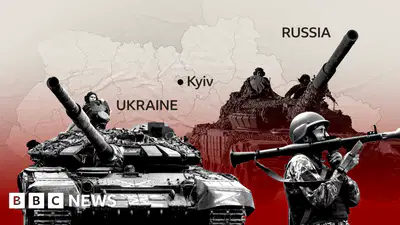
2022 - Russian President Vladimir Putin sent troops into Ukraine
Ukrainian people are fighting back
Ukrainian people are becoming refugees
United States is supporting the Ukrainians
North Korea is supporting Russia


15
Open Ended

What is one example, from this lesson, of Tensions in this region?
Identify the different cultural groups that live within Russia and the Eurasian republics
Describe the tensions that have existed between cultural groups in Russia and the Eurasian republics
Interpret data about cultural groups in Russia and the Eurasian republics
Annex
Bolsheviks
Cold War
Communism
Cultural Tension
Peasants
Russification
Serf
Essential Question: How have cultural tensions impacted people living in Russia and the Eurasian Republics?
Disintegration
Irredentism
Proxy War
Socialism
Quota
Show answer
Auto Play
Slide 1 / 15
SLIDE
Similar Resources on Wayground

12 questions
Africa Religions & Ethnic Groups
Presentation
•
7th Grade
10 questions
Adding Rational Numbers
Presentation
•
6th - 8th Grade
11 questions
Percent- Finding the Discount
Presentation
•
6th - 8th Grade
11 questions
The Renaissance
Presentation
•
6th - 8th Grade
11 questions
Sentence Structures
Presentation
•
6th - 8th Grade
11 questions
Subatomic Particles
Presentation
•
6th - 8th Grade
10 questions
Canada Today 2: Canada's Role in the World
Presentation
•
6th - 8th Grade
10 questions
Regions and Relative Location of Asia
Presentation
•
7th Grade
Popular Resources on Wayground
10 questions
Safety Day 2026 – Student Review

Quiz
•
9th Grade
21 questions
Continents and Oceans
Quiz
•
6th Grade
20 questions
Parts of Speech
Quiz
•
5th Grade
16 questions
Subject & Predicate
Quiz
•
5th Grade
25 questions
Multiplication Facts
Quiz
•
5th Grade
12 questions
Map Skills
Quiz
•
3rd Grade
22 questions
Continents and Oceans
Quiz
•
5th Grade
15 questions
Rounding Decimals
Quiz
•
5th Grade
Discover more resources for Social Studies
19 questions
Foundations of America
Quiz
•
6th - 8th Grade
5 questions
Mesopotamia Video Quiz

Interactive video
•
6th Grade
10 questions
Exploring the Age of Exploration: Key Events and Figures
Interactive video
•
6th - 10th Grade
20 questions
Articles of Confederation
Quiz
•
8th Grade
15 questions
Middle Ages of the Middle East Vocab List (CFA #2)
Quiz
•
6th - 8th Grade
13 questions
Ancient Egypt
Interactive video
•
6th Grade
10 questions
13 Colonies: Comparing Regions
Quiz
•
7th Grade
26 questions
SW Asia History
Quiz
•
7th Grade