Search Header Logo
FID DAYS GEN BIO

FID DAYS GEN BIO

Assessment

Presentation

•

Biology

•

9th - 12th Grade

•

Hard

•
NGSS
HS-LS1-7, HS-LS1-6, HS-LS2-5

+11

Standards-aligned

Created by

Rachel Martin

FREE Resource

4 Slides • 57 Questions

1

FID DAYS 1-3
THESE WILL ALSO BE POSTED ON CLASSROOM IF YOU WANT TO COMPLETE THEM THERE.

2

FID Day 1

3

Multiple Choice

Question image
Which process involves the movement of molecules from an area of high concentration to an area of low concentration without using energy?
1
a. Osmosis
2
b. Active transport
3
c. Passive transport
4
d. Endocytosis

4

Multiple Choice

What is the process by which living organisms maintain a stable internal environment?
1
a. Photosynthesis
2
b. Homeostasis
3
c. Fermentation
4
d. Aerobic respiration

5

Multiple Choice

Which statement best compares eukaryotic cells and prokaryotic cells?

1

Eukaryotic cells are smaller than prokaryotic cells

2

Prokaryotic cells are more complex than eukaryotic cells

3

Prokaryotic cells contain a distinct central organelle, and eukaryotic cells do not

4

Eukaryotic cells contain membrane-bound organelles, and prokaryotic cells do not

6

Multiple Choice

Lungs and capillaries both have porous linings that allow certain substances to move into or out of the structures. Which function do these porous linings most likely serve in living organisms?

1

heat release

2

gas exchange

3

carbohydrate absorption

4

osmotic pressure regulation

7

Multiple Choice

Which characteristics is shared by both prokaryotes and eukaryotes?

1

have organ systems

2

make their own food

3

contain genetic material

4

need oxygen gas to breathe

8

Multiple Choice

Which property of water is most responsible for plants being able to transport water from their roots to their leaves?

1

the attraction between molecules

2

a capacity to dissolve many substances

3

the ability to form a low-density crystalline structure when frozen

4

a capacity to absorb large amounts of energy as temperature increases

9

Multiple Choice

The element carbon has multiple bonding patterns, Which bonding pattern cannot be formed by carbon?

1

C-C

2

C-C-C

3

C=C=C

4

C≡C≡C

10

Multiple Choice

Which process best describes the assembly of proteins and amino acids?

1

Atoms are linked to form a compound

2

Monomers are linked to form a polymer

3

Atoms are added to a monomer until it becomes a polymer

4

Molecules are added to a compound until it becomes a monomer

11

Multiple Choice

Which statement best compares a carbohydrate and a nucleic acid?

1

The sequence of monomers in a carbohydrate stores genetic information, and the bonds in a nucleic acid store energy

2

The bonds in a carbohydrate store energy, and the sequence of nucleotides in a nucleic acid stores genetic information

3

A carbohydrate has a unique structure to assist diffusion across a plasma membrane, and a nucleic acid has a unique structure to assist chemical reactions

4

A carbohydrate has a unique structure to assist chemical reactions, and a nucleic acid has a unique structure to assist diffusion across a plasma membrane

12

Multiple Choice

Each cell in the human body contains thousands of different enzymes responsible for regulating reactions within the cell. Which statement explains why a single enzyme is unable to regulate a variety of reactions?

1

The binding of a product and an enzyme is specific

2

The binding of a substrate and an enzyme is specific

3

The enzyme is consumed by the products of the reactions

4

The enzyme is consumed by the substrates of the reactions

13

Multiple Choice

Carbon can combine with many different elements but frequently combines with oxygen, hydrogen, and nitrogen to form organic molecules. Which statement best explains why carbon is able to form a large number of different molecules.

1

Carbon forms only ionic bonds

2

Carbon can form only ring structures

3

Carbon can form four covalent bonds

4

Carbon forms small, simple structures

14

Multiple Choice

Which statement correctly describes how a protein is formed?

1

A monosaccharide bonded to a side chain is broken apart

2

Amino acids are bonded together in a long chain to form a new molecule

3

A molecule containing glycerol bonded to three fatty acids is broken apart

4

A nitrogenous base, a sugar, and a phosphate group combine to form a new molecule

15

Multiple Choice

Question image

Which biological molecules are most likely represented by molecules 1 and 2

1

molecule 1: lipid

molecule 2: nucleic acid

2

molecule 1: lipid

molecule 2: protein

3

molecule 1: carbohydrate

molecule 2: nucleic acid

4

molecule 1: carbohydrate

molecule 2: protein

16

Multiple Choice

Which action must occur for an enzyme to catalyze a chemical reaction?

1

A competitive inhibitor must first bind to an active site

2

A substrate must bind to an active site of the enzyme

3

A substrate must bind to an allosteric site of the enzyme

4

A noncompetitive inhibitor must first bind to an active site

17

Multiple Choice

Lipase is an enzyme that breaks down lipids in the digestive system of humans. It functions best at a pH range of 4.0 and 5.0. When a person takes an antacid tablet to relieve heartburn, the antacid increases the pH to around 7 in certain areas of the digestive system. Which initial effect would most likely be caused by a change in pH?

1

More lipids would be digested

2

Fewer lipids would be digested

3

The production of lipase molecules would increase

4

The production of lipase molecules would deacrease

18

Multiple Choice

Question image

Which statement best describes a direct role of ATP in a paramecium?

1

ATP provides the energy to cilia

2

ATP stores the genetic code for replication

3

ATP signals the presence of other nearby organisms

4

ATP senses changes in the surrounding aquatic environment

19

Multiple Choice

Question image

A student made lists of structures observed in cells from two different organisms. Which statement describes the most likely difference in the way that organisms 1 and organisms 2 obtain energy?

1

Only organism 1 uses solar energy to make energy-rich compounds

2

Only organism 1 stores solar energy until it is needed for its life processes

3

Only organism 2 produces molecules for long-term energy storage

4

Only organism 2 transforms food energy into ATP during cellular respiration

20

Multiple Choice

A cell in the leaf of a green plant performs both photosynthesis and cellular respiration, often at the same time. Which statement best describes how these processes are related to each other?

1

Both processes produce carbon dioxide

2

Both processes require energy directly from the sun

3

Products of one processes are used as some of the reactants for the other processes

4

Thermal energy from one process is used as the energy source for the other process

21

Multiple Choice

A scientist observed that during the course of a chemical reaction the number of ATP molecules was reduced. What did the scientist most likely learn from the observation?

1

The reaction produced water

2

The reaction consumed water

3

The reaction caused an output of energy

4

The reaction required an input of energy

22

Multiple Choice

Which statement best describes a function of the proteins embedded in the plasma membrane of cells?

1

They provide instructions for the processes in the cell

2

They selectively allow certain particles into and out of the cell

3

They attract charges in the cell's environment to give the cell a net charge

4

They store the energy required by the rest of the membrane to perform its functions

23

Multiple Choice

How does a mitochondrion facilitate the movement of some materials between cells?

1

IT supplies the energy needed for moving molecules through membranes

2

It manufactures the proteins needed to form channels in cell membranes

3

It supplies digestive substances that break large molecules into smaller units

4

It produces fibers that attach to molecules and move them through the cytoplasm

24

Multiple Choice

Question image

Which cell process is best modeled by the diagram?

1

osmosis

2

exocytosis

3

passive transport

4

facilitated diffusion

25

Multiple Choice

Question image

Plants are dependent on water. In most plants, water is absorbed by the roots and then moves up the stem of the plant and into the leaves by capillary action. Which properties of water are most responsible for the capillary action in plants?

1

adhesion and cohesion

2

low density and adhesion

3

polarity and high specific heat

4

high specific heat and cohesion

26

FID Day 2

27

Multiple Choice

Which statement best explains why cellular respiration in plants and other organisms is dependent on photosynthesis? 
1
Photosynthesis is one of the final steps in cellular respiration.
2
Photosynthesis provides the materials that fuel cellular respiration. 
3
Photosynthesis absorbs excess energy produced by cellular respiration. 
4
Photosynthesis absorbs materials that are catalyzed during cellular respiration. 

28

Multiple Choice

Question image
The indicated protein is part of a cell membrane. What is the most likely purpose of this protein? 
1
It allows passage of particles into and out of the cell. 
2
It manufactures phospholipids to repair membrane damage. 
3
It releases stored chemical energy in membrane carbohydrates. 
4
It attracts unbalanced electrical charges in the cell’s environment. 

29

Multiple Choice

Which statement best describes how active transport differs from passive transport? 
1
Only active transport requires ATP. 
2
Only active transport moves small particles. 
3
Only active transport relies on a plasma membrane. 
4
Only active transport allows substances to leave a cell. 

30

Multiple Choice

All living organisms must maintain homeostasis in order to survive. Which statement best describes one way humans maintain homeostasis? 
1
Temperature is regulated by giving off carbon dioxide. 
2
Water content is regulated by giving off carbon dioxide. 
3
Temperature is regulated by sweating. 
4
Water content is regulated by sweating. 

31

Multiple Choice

Molecules Needed for Protein Synthesis
      mRNA
      tRNA
      amino acids
      ATP molecules
A plant cell uses the molecules in the list to synthesize a protein. What role do the ATP molecules play in the protein synthesis process? 
1
They provide energy. 
2
They increase activation energy. 
3
They convert energy into hereditary information. 
4
They absorb excess energy to prevent overheating 

32

Multiple Choice

Question image
Bacteria are single-celled microorganisms. The cell walls of these microorganisms serve as barriers to chemicals that might affect the processes that occur within a bacterial cell. Antibiotics are a type of substance used to stop bacterial growth. Some antibiotics cause the bacterial cell wall to rupture. The function of which human organ is most like the cell walls of bacteria? 
1
heart
2
liver
3
pancreas
4
skin

33

Multiple Choice

Adipose cells (fat cells) are specialized for energy storage.  How does the structure of adipose cells suit their function?
1
They contain vacuoles to accommodate large lipids.
2
They contain large nuclei to direct the cells' activities.
3
The contain lysosomes to quickly digest waste matter.
4
They contain cilia to move them to areas that require energy.

34

Multiple Choice

Question image
This beaker has three membranes. Each is permeable to water but not to calcium (Ca) ions. A researcher pours four concentrations of calcium ions in water into the chambers. In which chamber will the water level be highest when equilibrium is reached?
1
chamber 1
2
chamber 2
3
chamber 3
4
chamber 4

35

Multiple Choice

Which of these is present in both prokaryotic cells and eukaryotic cells?
1
nucleus
2
ribosome
3
chloroplast
4
mitochondrion

36

Multiple Choice

Migrating birds often travel great distances without feeding.  Which macromolecules would migrating birds most likely use as energy sources?
1
lipids
2
proteins
3
nucleic acids
4
carbohydrates

37

Multiple Choice

What structural quality of proteins distinguishes them from other macromolecules?
1
They are characterized by the presence of phosphorous atoms.
2
They have a 1:2:1 ratio of carbon, hydrogen, and oxygen atoms.
3
They are composed of monomers joined by dehydration synthesis.
4
They have three dimensional shapes determined by their arrangements of amino acids.

38

Multiple Choice

Which characteristic is shared by all organisms?
1
ability to reproduce
2
use of specialized cells
3
ability to convert light into energy
4
use of nuclei to direct cell activities

39

Multiple Choice

Which two substances are products of photosynthesis and reactants of cellular respiration?
1. water
2. oxygen
3. glucose
4. carbon dioxide
1
substances 1 and 2
2
substances 1 and 4
3
substances 2 and 3
4
substances 3 and 4

40

Multiple Choice

Which is the best example of an organism maintaining homeostasis?
1
a dog panting to release excess body heat
2
a vine growing toward sunlight to obtain energy
3
a bird competing for a mate in order to reproduce
4
an octopus changing color to hide from a predator

41

Multiple Choice

Which statement describes how organelles aid in transporting proteins in eukaryotic cells?
1
Mitochondria transport ribosomes to the endoplasmic reticulum.
2
Lysosomes attach free-floating amino acids to mRNA molecules
3
The golgi apparatus joins free-floating phosphates to ADP molecules.
4
Membrane-enclosed proteins leave the ER and merge with the Golgi apparatus.

42

Multiple Choice

Which statement correctly describes one difference between the processes of photosynthesis and cellular respiration?
1
Photosynthesis produces oxygen, and cellular respiration uses oxygen.
2
Photosynthesis takes place in eukaryotes, and cellular respiration takes place in prokaryotes.
3
Photosynthesis produces more ATP than it uses, and cellular respiration uses more ATP than it produces.
4
Photosynthesis changes chemical energy to light energy, and cellular respiration changes light energy to chemical energy.

43

Multiple Choice

Which statement describes one reason for carbon's central role in macromolecules?
1
It bonds only with other noncarbon atoms.
2
It can form single, double, and triple bonds.
3
It shares four electrons with every atom it bonds to.
4
It forms macromolecules in rings rather than in chains.

44

Multiple Choice

To bond together, a glycerol molecule loses three oxygen and three hydrogen atoms, and three fatty acids each lose a hydrogen atom.  Which term describes this process?
1
transcription
2
recombination
3
protein synthesis
4
dehydration synthesis

45

Multiple Choice

Question image
Maltose is formed from two glucose molecules.  Which of these will be another product of the reaction?
1
ATP
2
water
3
oxygen gas
4
carbon dioxide

46

FID DAY 3

47

Multiple Choice

Question image
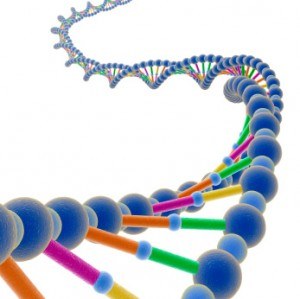
Which of the following best describes a DNA molecule?
1
double helix
2
contains ribose
3
made of amino acids
4
contains Uracil

48

Multiple Choice

Which 2 molecules form the sides (backbone) of the DNA ladder?
1
deoxyribose sugar and adenine
2
deoxyribose sugar and a hydrogen bond
3
deoxyribose sugar and the nucleus
4
deoxyribose sugar and phosphate

49

Multiple Choice

Question image
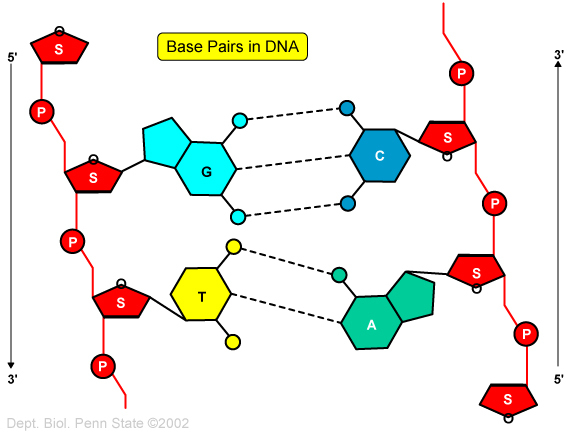
Nitrogenous bases are joined by which type of bond?
1
polar bonds
2
ionic bonds
3
covalent bonds
4
hydrogen bonds

50

Multiple Choice

What does DNA stand for?
1
Deoxyribonucleic acid
2
Denitrogenous acid
3
Deribonucleic acid
4
Diribonucleic acid

51

Multiple Choice

Cytosine always pairs with
1
Adenine
2
Thymine
3
Uracil
4
Guanine

52

Multiple Choice

Guanine bonds with ______________.
1
Adenine
2
Guanine
3
Cytosine
4
Thymine

53

Multiple Choice

Which of the following units are repeatedly joined together to form a strand of DNA? (This is the MONOMER of DNA.) 
1
amino acids
2
nucleotides
3
fatty acids
4
polysaccharides

54

Multiple Choice

Adenine bonds with ______________.
1
Guanine
2
Thymine
3
Cytosine
4
Adenine

55

Multiple Choice

What are the 4 nitrogen bases?
1
adenine, thymine, cytoplasm, and guanine
2
adenine, thymine cytosine, and guanine
3
adenine, thymine, cytosine, and gylcerol
4
adenine, thymine, cytosine, and glucose

56

Multiple Choice

Which sequence of DNA bases would pair with this partial strand
ATG TGA CAG
1
ATG TGA CAG
2
TAC ACT GTC
3
GTA AGT GAC
4
CAT TCA CTG

57

Multiple Choice

The sugar in DNA is ?
1
sucrose
2
glucose
3
deoxyribose
4
fructose

58

Multiple Choice

DNA replication results in two DNA molecules,
1
each one with two original strands
2
each one with two new strands
3
each one with one new strand and one original strand
4
one with two new strands and the other with two original strands

59

Multiple Choice

Question image
order of replication
1
3, 4, 2, 1
2
3, 1, 4, 2
3
2, 1, 4, 3
4
3, 4, 1, 2

60

Multiple Choice

A process in which DNA has the unique ability to make an exact copy of itself.
1
Replication
2
Translation
3
Transcription

61

Multiple Choice

The enzyme that unwinds the DNA to prepare for replication
1
helicase
2
replicase
3
polymerase
4
synthase
pattern-tertiary
FID DAYS 1-3
THESE WILL ALSO BE POSTED ON CLASSROOM IF YOU WANT TO COMPLETE THEM THERE.

Show answer

Auto Play

Slide 1 / 61

SLIDE