

L2 Structure and Support

Presentation
•
Science
•
6th Grade
•
Practice Problem
•
Easy

Rahma Khalid
Used 40+ times
FREE Resource
58 Slides • 22 Questions
1

2

3

4

5

6

7
Vocabulary
Muscle
Joint
Ligament
Ball and socket
Hinge
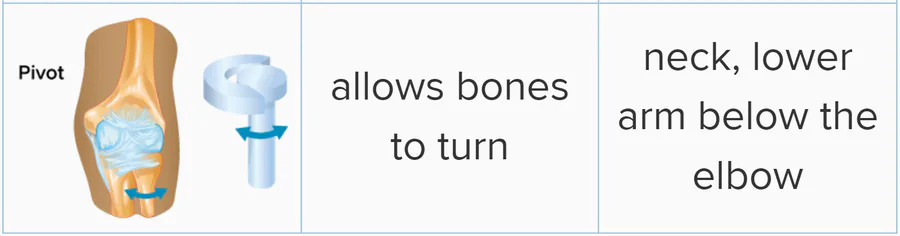
Pivot
8

9

When muscles contract, they become shorter and cause bones to move.
How Muscles Move?
10
Match
Match the following
Muscle
Contract
Relax
Strong tissue that can contract
Become shorter
Become longer
Strong tissue that can contract
Become shorter
Become longer
11
Match
Match the following
Muscle tissue
Contracted muscle
Relaxed muscle
Muscle tissue
Contracted muscle
Relaxed muscle
12
Multiple Choice
What is the organelle that produces energy (ATP) for the cell?
nucleus
chloroplast
mitochondria
lysosome
13

14

Page 80
15

2 minutes Page 80

16
Multiple Choice

The muscular system works WITHOUT the skeletal system to move your body.
True
False
17


18
Match
Match the following
Muscle
Joint
Ligament
Strong tissue that can contract
Place where 2 or more bones meet
Tissue that connects bones together
Strong tissue that can contract
Place where 2 or more bones meet
Tissue that connects bones together
19
Match
Match the following
Muscle
Joint
Ligament
Muscle
Joint
Ligament
20

21


22
23
Match
Match the following
Ball and socket
Hinge
Pivot
all directions
single direction
turn
all directions
single direction
turn
24
Match
Match the following
Ball and socket
Hinge
Pivot
Ball and socket
Hinge
Pivot
25
Match
Match the following
Ball and socket
Hinge
Pivot
Hips and shoulder
Fingers, elbows and knees
Neck, lower arm below the elbow
Hips and shoulder
Fingers, elbows and knees
Neck, lower arm below the elbow
26

Functions of Skeletal System
Support the body; sit up, stand, move.
Protect brain, spinal cord, heart and lungs.
Produce red blood cells.
Store fat and calcium.
Page 83
27

Page 83
28

3 minutes Page 83
29
Exit Ticket - Pair Work

30
Exit Ticket - Peer Assessment

31
Learning Objective
Identify how animals are supported and provided with structure.
32
Vocabulary
Skeleton
Hydrostatic Skeleton
Exoskeleton

33
Match
Revision 1 - Match the following
Muscle
Contract
Relax
Strong tissue that can contract
Become shorter
Become longer
Strong tissue that can contract
Become shorter
Become longer
34
Match
Revision 2 - Match the following
Muscle
Joint
Ligament
Muscle
Joint
Ligament
35
Match
Revision 3 - Match the following
Ball and socket
Hinge
Pivot
all directions
single direction
turn
all directions
single direction
turn
36


37

Page 85
38

39
Categorize


Organize these options into the right categories
40
Categorize
Fluid surrounded by muscle
Hard outer covering
Moves when muscle push fluid
Protect internal parts
Flatworm
Crab
Sea anemone
Snail
Scorpion
Earthworm
Organize these options into the right categories
41


42

43
Activity - Alef 51

44
Learning Objective
Distinguish between the 3 types of muscles.
45
Vocabulary
Voluntary
Involuntary
Skeletal
Cardiac
Smooth
46
Skeletal Muscle
Attached to bones.
Voluntary muscles.
Their contractions can be quick and powerful; running fast.

Page 89
47

Cardiac Muscle
Found ONLY in the heart.
Involuntary muscle.
Cardiac muscle pump blood when they contract and relax.
Page 89
48
Smooth Muscle
Makes the internal lining of blood vessels, stomach and many organs.
Involuntary muscle.
Named for their smooth appearance.
Page 89

49
Match
Match the following
Voluntary
Involuntary
Skeletal muscle
Cardiac muscle
Smooth muscle
I can control it
I cannot control it
Attached to bones
Found ONLY in heart
Internal lining of many organs
I can control it
I cannot control it
Attached to bones
Found ONLY in heart
Internal lining of many organs
50
Categorize
Skeletal muscle
Cardiac muscle
Smooth muscle
Organize these options into the right categories
51
Match
Match the following
Skeletal muscle
Cardiac muscle
Smooth muscle
Skeletal muscle
Cardiac muscle
Smooth muscle
52
LAB - Micrographs


53

3 Types of Muscles

54
Lab Report

55
Word Bank - Observations

Sheet
inside
outside
net shape + pink
Flat/eye shape + pink
Layers
Topped on each other
inside
Tube shape + pink
56
Word Bank - Analyze
Long + thin
Clustered with central nuclei
Thin + single central nuclei
multiple nuclei
stripes in tissue
57
Plenary - Alef

58
Vocabulary
Taproot
Prop root
Fibrous root
Stem
Herbaceous
Woody
59


page 89
60

page 89
61

Page 90
62

63
Match
Match the following
Taproot
Prop root
Fibrous root
One large main root
Roots above the ground
Many small branching roots
One large main root
Roots above the ground
Many small branching roots
64
Match
Match the following
Taproot
Prop root
Fibrous root
Taproot
Prop root
Fibrous root
65


Page 90
Use ChatGPT to find the answer
What type of root does a date palm have? for grade 6
66
Page 90

67
Page 91


68
Page 91

Tree
Vine
69
Page 91

70

Page 92
71

Page 92
72

73
Plenary - Alef

74
Vocabulary
Muscle
Joint
Ligament
Pivot
Hinge
Cardiac
Skeletal
Hydrostatic
Exoskeleton
Fibrous
Herbaceous
75

76
Multiple Choice
The correct answer is
A
B
C
D
77

78
Multiple Choice
The correct answer is
A
B
C
D
79

80
Multiple Choice
The correct answer is
A
B
C
D
Show answer
Auto Play
Slide 1 / 80
SLIDE
Similar Resources on Wayground

75 questions
G5 Final Exam Review ST
Presentation
•
5th Grade
71 questions
T1 SCI6 - REVIEW 1
Presentation
•
6th Grade
76 questions
7th Introduction to Life ScienceSection 1- Science of Biology
Presentation
•
7th Grade
76 questions
Environmental Science Unit 1 Chapter 1 Lesson 3
Presentation
•
7th Grade
74 questions
Air Masses, Fronts, and Pressure
Presentation
•
6th - 8th Grade
74 questions
Geography 6: Conservation
Presentation
•
6th Grade
71 questions
E6 1st Grading Period Final Assessment Reviewer
Presentation
•
6th Grade
77 questions
Ancient China GRAPES Review
Presentation
•
6th Grade
Popular Resources on Wayground
10 questions
Safety Day 2026 – Student Review

Quiz
•
9th Grade
21 questions
Continents and Oceans
Quiz
•
6th Grade
20 questions
Parts of Speech
Quiz
•
5th Grade
16 questions
Subject & Predicate
Quiz
•
5th Grade
25 questions
Multiplication Facts
Quiz
•
5th Grade
12 questions
Map Skills
Quiz
•
3rd Grade
22 questions
Continents and Oceans
Quiz
•
5th Grade
15 questions
Rounding Decimals
Quiz
•
5th Grade
Discover more resources for Science
20 questions
Elements, compounds, and mixtures
Quiz
•
6th Grade
10 questions
6.6D - Relative Density Review
Quiz
•
6th Grade
10 questions
Exploring Chemical and Physical Changes

Interactive video
•
6th - 10th Grade
20 questions
CONDUCTION,CONVECTION AND RADIATION
Quiz
•
6th Grade
20 questions
Rocks and The Rock Cycle
Quiz
•
6th Grade
19 questions
Describing and Classifying Matter
Presentation
•
6th Grade
21 questions
Waves and Wave Properties
Quiz
•
6th - 8th Grade
20 questions
Phases of the Moon
Quiz
•
6th Grade