Search Header Logo
Transfer of Energy

Transfer of Energy

Assessment

Presentation

Science

6th Grade

Medium

NGSS
MS-PS3-5, MS-PS3-4, MS-ESS1-1

+6

Standards-aligned

Created by

NaaJah Richardson

Used 7+ times

FREE Resource

14 Slides • 12 Questions

1

Transfer of Energy
8.SC.15 Use models to construct an explanation of how energy is transformed but still conserved.

By NaaJah Richardson

2

  • Matter

  • State of Matter

  • Temperature

  • Volume

  • Mechanical Energy

  • Energy Transfer

  • Environment

  • Factors

  • Kinetic Energy

  • Mass


Academic Vocabulary

3

media

Energy is the ability to do work or cause change (moving, heating, or changing the state of matter).

Energy

4

media

Energy cannot be created or destroyed, only transferred or transformed.

  • Example: A roller coaster moving from potential to kinetic energy.

  • Image: Roller coaster energy transformation diagram

Law of Conservation of Energy

5

media

It is the sum of potential energy and kinetic energy of the entire system.
ALL Forms of energy are measured in joules (J).

Mechanical Energy

6

Work

Work is the transfer of energy to an object by a force that makes the object move in the direction of the force.

Ex. You pulled back on the pendulum with a force. So, you did work on the pendulum.

7

Multiple Choice

Question image

At which point is gravitational potential energy at its maximum?

1
W
2
X
3
Y
4
Z

8

Multiple Choice

Question image

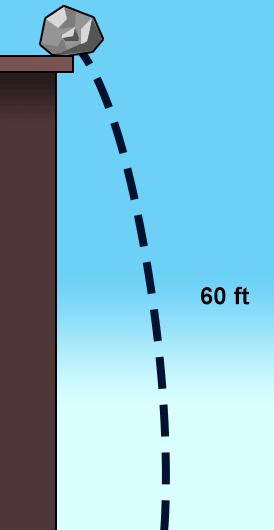
The rock in the picture is pushed over the edge and it begins to fall. Which type of energy conversion is taking place?

1

mechanical to heat

2

sound to mechanical

3

potential to kinetic

4

kinetic to potential

9

Drag and Drop

Question image
The Law of Conservation of ​ ​
states that energy ​
be ​created or ​
Drag these tiles and drop them in the correct blank above
Energy
cannot
destroyed

10

media

​State of Matter: Solids, liquids, and gases transfer energy differently.

  • Amount of Matter: More mass = more energy needed to change temperature.

  • Environment: Heat transfer depends on surroundings.

Factors Affecting Heat Transfer

11

Multiple Choice

Which factor affects the amount of energy needed to change the temperature of a substance?

1

The color of the substance

2

The shape of the container

3

The mass of the substance

4

The presence of oxygen

12

Multiple Choice

Why does a large pot of water take longer to heat than a small one?

1

It absorbs heat faster

2

It reflects heat away

3

It has more mass, requiring more energy transfer

4

It contains less matter

13

Measuring Energy Transfer

  • Temperature is a measure of the average kinetic energy of particles.

  • Heat moves from warmer objects to cooler objects until equilibrium is reached.

  • Example: Ice melting in warm water.

14

Multiple Choice

Question image
As a pendulum swings from its highest to lowest position, what happens to its kinetic and potential energy? 
1
The PE and KE increase and decrease together
2
The PE decreases while the KE increases 
3
Impossible to know without knowing the mass  

15

Multiple Choice

What are the units of energy?

1

Watt

2

Newton

3

Joule

4

Kelvin

16

Multiple Choice

Energy that is stored in a system, ready to be used, is called ____________ energy.

1

Kinetic

2

Potential

3

Conserved

4

Power

17

Multiple Choice

Energy in a system that is moving is called _______________ energy.

1

Kinetic

2

Potential

3

Mechanical

4

Power

18

Multiple Choice

Question image

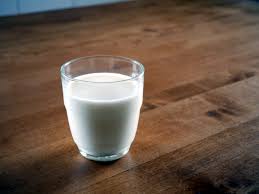
During the summer, Chang takes a glass of milk from the refrigerator and places it on the kitchen counter. Over time, energy as heat is transferred to the milk from the air. Which change would most likely occur?

1

The temperature of the milk will increase.

2

The temperature of the milk will decrease.

3

The milk will change from a liquid to a gas.

4

The milk will change from a liquid to a solid.

19

Multiple Choice

How does temperature relate to kinetic energy?

1

Higher temperature means lower kinetic energy

2

Higher temperature means higher kinetic energy

3

Temperature and kinetic energy are unrelated

4

Kinetic energy remains constant regardless of temperature

20

Multiple Choice

Question image

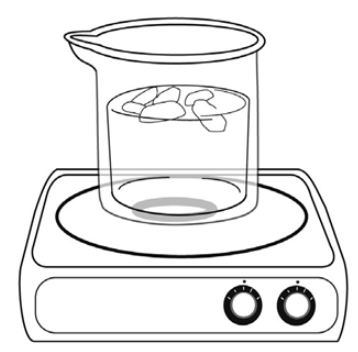
Emerson places a beaker of water on a hotplate and turns the hotplate on. The temperature in the room is 25 ºC. After the water heats to 75 ºC, she adds pieces of ice to the beaker.


Which of the following describes a transfer of heat energy that occurs during this experiment?

1

from the air to the water

2

from the ice to the beaker

3

from the water to the ice

4

from the water to the hotplate

21

Chemical Energy


  • potential energy

  • depends on the kinds of atoms and their arrangement

    • batteries

    • matches

    • breakdown of food

media
media

22

Electrical Energy


  • energy results from position or motion of charged particles

    • how we get light from power lines

media

23

Sound Energy


  • kinetic energy

  • caused by vibration of particles in a medium such as steel, water, or air

media

24

Thermal Energy


  • kinetic energy

  • particles move faster the higher the temperature

media

25

Electromagnetic Energy


  • transmitted through space in the form of electromagnetic waves

    • visible light

    • x-rays

    • microwaves

media

26

Real World Examples

  • Cooking food: Heat transfers from stove to pan to food.

  • Solar panels: Convert light energy to electrical energy.

  • Rubbing hands together: Converts kinetic energy to heat.

Transfer of Energy
8.SC.15 Use models to construct an explanation of how energy is transformed but still conserved.

By NaaJah Richardson

Show answer

Auto Play

Slide 1 / 26

SLIDE