Search Header Logo
Cell Theory

Cell Theory

Assessment

Presentation

Biology

9th - 12th Grade

Hard

Created by

James Gonzalez

FREE Resource

9 Slides • 16 Questions

1

Cell Theory

One of the fundamental theories of biology

media

2

How we first found cells

Two scientists developed their own version of the microscope that they then used to make discoveries in the world around them.

3

Robert Hooke

Developed a microscope and one of the first things he looked at was a slice of cork. He saw square chambers that reminded him of the way that monks' bedrooms were arranged in a monastery. These rooms were referred to as cells. Thus he called these little chamber cells and the name has stuck.

media

4

Anton van Leeuwenhoek

He also developed his own type of microscope and one of the first things he looked at was dental scraping from his own mouth. In the dental scraping, he saw small structures that reminded him of animals. So he called them animalcules, what we now call bacteria. He also looked at many other things and communicated with many other scientists.

media

5

It took 200 years before science started making decisions on cells.

6

All living things are mode of cells

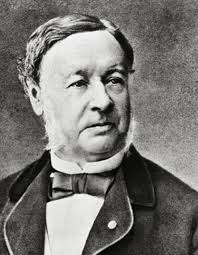
Theodor Schwann, a zoologist (studies animals) had concluded that all animals are made of cells, and Matthias Jakob Schleiden, a botanist (studies plants) had concluded that all plants are made of cells, together they suggested that cells were the basic unit of structure and function of all life.

media

7

All living things are mode of cells

This lead to parts of the cell theory 1) All organisms are made up of one or more cells 2) All life functions of an organism occur within cells

media

8

Rudolf Virchow

This german doctor observed in 1858 that cells divide to produce more cells. He proposed that all cells arise only from other cells. It is rumored that Virchow actually too the research backing up this discovery from Robert Remak.

media

9

These three idea has lead to the cell theory

  • All organisms are made up of one or more cells

  • All life functions of an organism occur within cells

  • all cells come from preexisting cells.

10

Multiple Select

What are the parts of the cell theory? Select all that apply.

1

The cell is the fundamental unit of structure and function in living things.

2

All organisms are made up of one or more cells.

3

Cells arise from other cells through cellular division.

4

Only Animals have cells.

5

Plants are the only living things with cells

11

Multiple Choice

Question image
What is one way in which all living things on Earth are alike?
1
All living things have hair.
2
All living things are made of cells and come from other cells.
3
The cells of all living things have chloroplast.
4
All living things can move. 

12

Multiple Choice

Question image
The invention of the microscope made it possible for people to discover and learn about
1
Plants
2
Skin 
3
Animals 
4
Cells

13

Multiple Choice

Question image
Which of the following statements is not part of the cell theory?
1
Cells are the basic unit of structure and function in all living things.
2
All cells are produced from other cells.
3
Only animal cells are composed of cells.
4
All living things are composed of cells.

14

Multiple Choice

Question image
Which of the following scientists was the first to observe bacteria?
1
Anton van Leuwenhoek
2
Matthais Schleiden
3
Robert Hooke
4
Theodor Schwann

15

Multiple Choice

Question image
Which of the following scientists concluded that all animals are made of cells?
1
Rudolf Virchow
2
Matthais Schleiden
3
Robert Hooke
4
Theodor Schwann

16

Multiple Choice

Question image
Which of the following scientists contributed to the cell theory?
1
Rudolf Virchow, Robert Hooke, Anton van Leuwenhoek
2
Matthais Schleiden, Theodor Schwann, Rudolf Virchow
3
Robert Hooke, Theodor Schwann, Anton von Leuwenhoek
4
Theodor Schwann, Matthais Schleiden, Robert HookeOption 4 (optional)

17

Multiple Choice

Why are microscopes important when studying most cells?
1
Most cells are very large.
2
Most cells are very small.  
3
Most cells move very quickly.
4
Most cells are dead.  

18

Multiple Choice

Question image
What is the name of the structure labeled #10?
1
objective lens
2
ocular lens
3
aperture
4
nosepeice

19

Multiple Choice

A microscope has an ocular magnification of 10 and a high power objective magnification of 50. What is the highest total magnification of the microscope?
1
500x
2
400x
3
50x
4
40x

20

Multiple Choice

When looking at a specimen on your slide, you should always start with the
1

low objective lens (x4)

2
medium objective lens
3
high objective lens
4
super extra high power lens

21

Multiple Choice

Question image

What piece is the platform that supports the microscope slide?

1

Base

2

Diaphragm

3

Stage Clips

4

Stage

22

Multiple Choice

Question image

What piece holds the microscope slide in place ?

1

Base

2

Diaphragm

3

Stage Clips

4

Stage

23

Multiple Choice

An organism made of only one cell is called _____ .

1

Eukaryotic

2

Mutlicellular

3

Monocellular

4

Unicellular

24

Multiple Choice

Question image

In the 1800s two scientists, Theodor Schwann and Matthias Schleiden, studied different types of organisms. After many years of studying a great variety of organisms, they drew similar but independent conclusions about their observations.

What statement was developed most directly from these conclusions and is part of the modern cell theory?

1

The functions of living things occur in cells.

2

Cells exist only in multicellular organisms.

3

Living things are composed of cells.

4

Cells contain hereditary information.

25

Multiple Choice

  Which invention was the most important thing that helped scientists develop the cell theory?

1

compound light microscope

2

petri dish

3

scanning electron microscope

4

dissection tools

Cell Theory

One of the fundamental theories of biology

media

Show answer

Auto Play

Slide 1 / 25

SLIDE