The Water Cycle (and Water Vocabulary review)
Presentation
•
Science
•
9th - 12th Grade
•
Practice Problem
•
Medium
+7
Standards-aligned
Ms. Merrill
Used 8+ times
FREE Resource
10 Slides • 14 Questions
1
Water cycle
and
vocabulary review
2
Open Ended
List as many steps as you can of the water cycle.
3
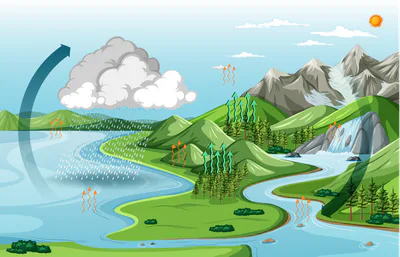
...a pattern of steps that move water throughout the Earth.
-this cycle helps to maintain life on Earth.
-DRIVEN BY THE SUN
The water cycle is...
4
Water goes up in the form of gas.
Evaporation
Water starts to change into liquid form and creates clouds.
Condensation
Water falls from the sky in liquid (and sometimes solid) form.
Precipitation
Water drains down sloped areas toward sea level.
Runoff
5
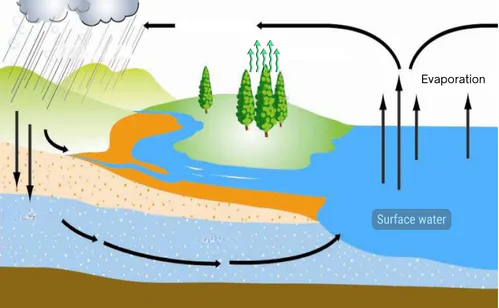
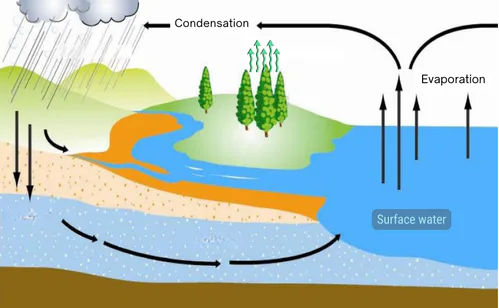
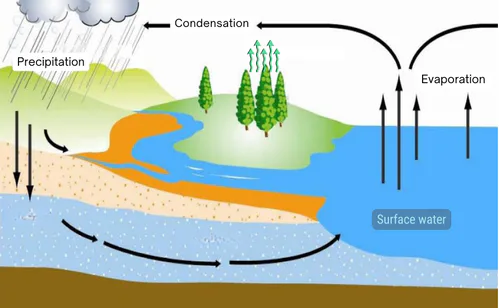
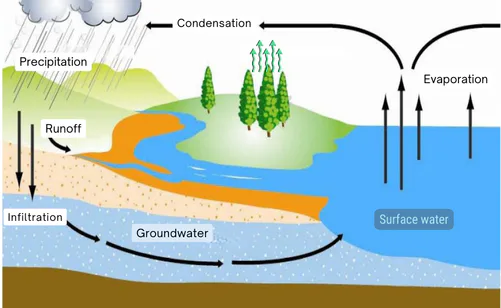
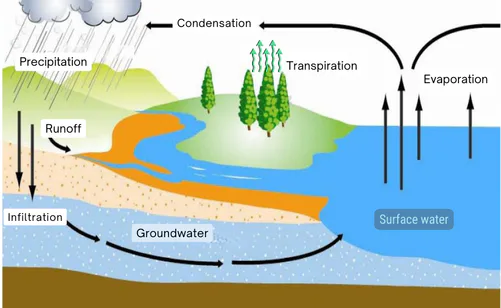
Water found on the surface, such as in oceans, is heated by the sun and turns from a liquid into a gas through the process of EVAPORATION.
6
As water evaporates into the atmosphere, it begins to CONDENSE around dust and other small particles forming clouds.
7
As the clouds get to saturated, the excess water gets heavy enough to fall to the ground through PRECIPITATION.
8
Multiple Choice
What are examples of precipitation?
9
Water within plant life is evaporated.
-"plant sweat"
Transpiration
Water flows downward into pockets of air into soil.
-forms the "zone of saturation"
Infiltration
10
Water is COLLECTED through both runoff and infiltration . RUNOFF is surface water flowing towards the oceans. INFILTRATION is water that is absorbed into the ground filling aquafers and becoming ground water.
11
Multiple Choice
What is runoff?
12
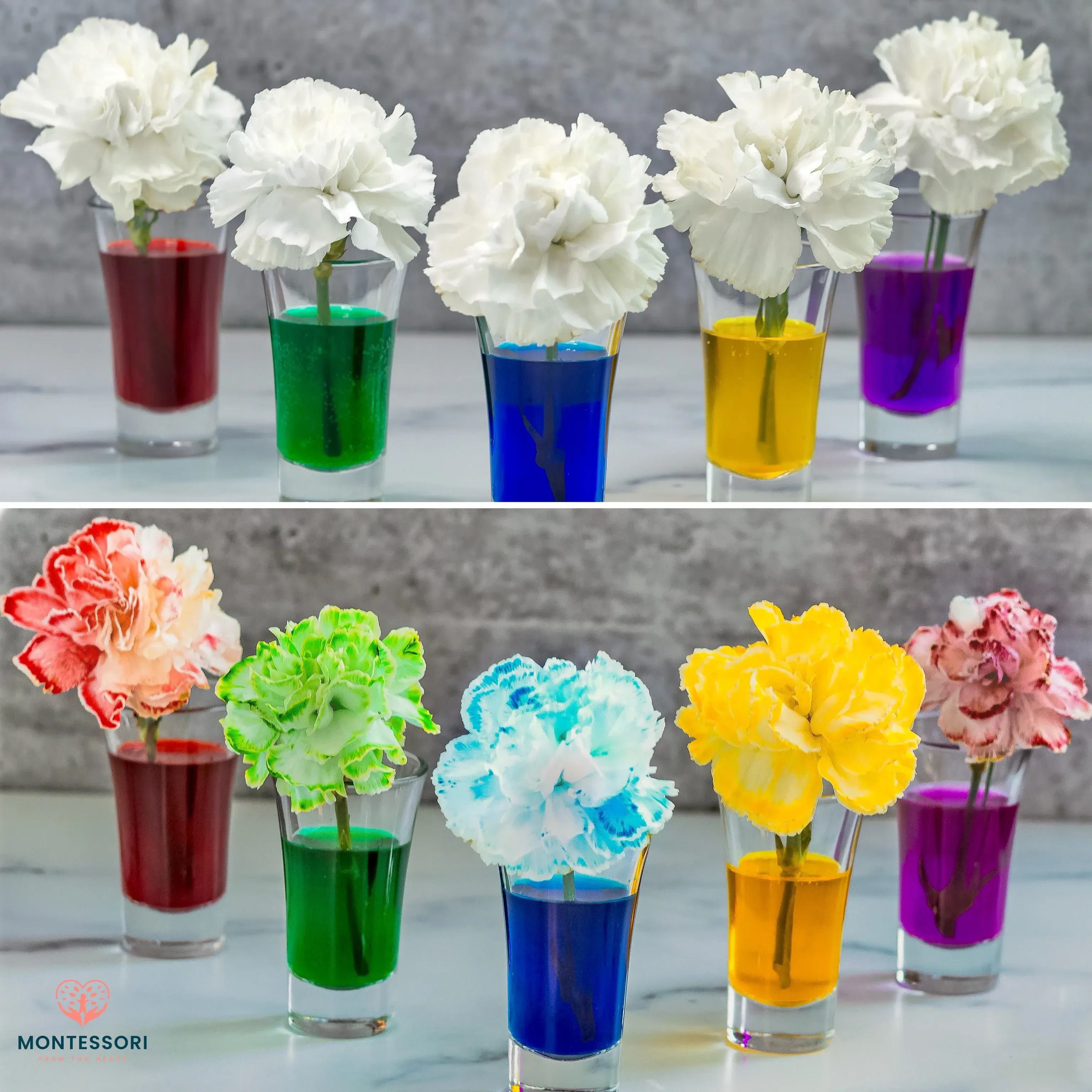
Plants move water through capillary action pulling water from the ground to the surface and pulled into the atmosphere through TRANSPIRATION.
13
Multiple Choice
How are plants able to draw water from the ground and move it up a stem?
Capillary Action
Gravity
Evaporation
Density
14
Dropdown
15
When we add the loss of water from water bodies and the loss of water from plants, we call that evotranspiration.
16
Fill in the Blanks
What part of the water cycle is associated with this?
Type answer...
17
Multiple Choice
Where is evaporation greater than precipitation?
Land
18
Labeling
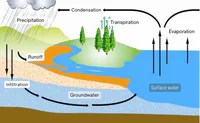
Label the water cycle:
Evaporation
Precipitation
Condensation
Infiltration
Surface Water Runoff
Transpiration
19
Dropdown
20
Multiple Choice
What property of water forms a meniscus in a graduated cylinder?
Surface Tension
Cohesion
Capillary Action
Adhesion
21
Fill in the Blanks
What has been considered the "Universal Solvent" because it can dissolve many substances due to its polarity.
22
Multiple Choice
Water molecules have a slight charge difference between their atoms, making them what type of molecule?
Neutral
Polar
Ionic
Nonpolar
23
Dropdown
24
Multiple Choice
What causes hydrogen bonds to form between water molecules?
Water cycle
and
vocabulary review
Show answer
Auto Play
Slide 1 / 24
SLIDE

Similar Resources on Wayground
16 questions
Life Science: Cells
Presentation
•
9th - 12th Grade
17 questions
Balancing chemical equations
Presentation
•
8th - 12th Grade
21 questions
Active Transport
Presentation
•
9th - 11th Grade
19 questions
PS1-8.2 Fission and Fusion Review
Presentation
•
9th - 12th Grade
20 questions
Fossil Fuels: Coal
Presentation
•
9th - 12th Grade
16 questions
Biodiversity
Presentation
•
9th - 12th Grade
18 questions
Land Biomes Part 2
Presentation
•
9th - 12th Grade
Popular Resources on Wayground
10 questions
How much do you know about our Portrait of an Eagle?
Quiz
•
10th Grade
10 questions
Fast Food Slogans
Quiz
•
6th - 8th Grade
21 questions
Continents and Oceans
Quiz
•
6th Grade
20 questions
Parts of Speech
Quiz
•
5th Grade
16 questions
Subject & Predicate
Quiz
•
5th Grade
25 questions
Multiplication Facts
Quiz
•
5th Grade
12 questions
Map Skills
Quiz
•
3rd Grade
22 questions
Continents and Oceans
Quiz
•
5th Grade
Discover more resources for Science
10 questions
Exploring Chemical and Physical Changes
Interactive video
•
6th - 10th Grade
20 questions
Atomic Structure
Quiz
•
9th Grade
10 questions
Decoding the Periodic Table of Elements
Interactive video
•
6th - 10th Grade
10 questions
Exploring the Periodic Table
Interactive video
•
6th - 10th Grade
14 questions
Physical and Chemical Changes
Quiz
•
10th Grade
22 questions
Periodic Table Review
Quiz
•
9th - 12th Grade
20 questions
Observation vs. Inference
Quiz
•
7th - 9th Grade
14 questions
Periodic Trends
Interactive video
•
11th Grade