

PLC 6

Presentation
•
English
•
University
•
Practice Problem
•
Hard

Melinda Jones
Used 1+ times
FREE Resource
4 Slides • 2 Questions
1
PLC 6
By Melinda Jones
2

-Lantolf (2011) explains that “mediation is the process through which humans deploy culturally constructed artifacts, concepts, and activities to regulate their mental and communicative activity” (p. 24).
-Learning occurs through scaffolding, where a more knowledgeable individual (teacher, peer) provides support that helps a learner progress.
-Zone of Proximal Development comes in to play here. What the student can do independently and what level of assistance they need.
-ELs often rely on material tools (e.g., dictionaries, translation apps) and symbolic tools (e.g., gestures, writing) to aid communication.
Mediation in SLA
3
Open Ended
Do you think our students rely too much on mediation in their language learning? Could this lead to learned helplessness, where they become overly dependent on external support rather than developing independence?
4
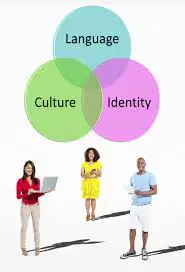
Language and Identity
Norton & McKinney (2011) argue that “when language learners speak, they are not only exchanging information with others—they are constantly organizing and reorganizing
a sense of who they are and how they relate to the social world” (p. 73).
The identity approach states that social status affects access to linguistic tools. Think House Cleaner vs. Research Student.
Investment (shaped by social & economic factors) vs. Motivation (internal desire to learn).
Norton (2011) critiques traditional models of motivation, arguing that investment “extends beyond psychological states and is deeply tied to the learners’ perceived future possibilities” (p. 80).
5
Open Ended
How do you think a person’s motivation to learn a second language changes when they are learning for personal interest versus when they are learning for practical reasons, like work or school?
6
Situational Contexts
Both Lantolf (2011) and Norton & McKinney (2011) reject the idea that language learning is linear, arguing that language learning is fluid, influenced by personal experiences and social contexts.
ELs do not acquire language in a strict order. It is a Non-Linear Process
Lantolf (2011) talks about social participation. The more a language learner has to engage with a native speaker, the more their language skills develop.
Norton & McKinney (2011) talk about how self-perception also plays a role. If the speaker feels excluded, they are less likely to try.
PLC 6
By Melinda Jones
Show answer
Auto Play
Slide 1 / 6
SLIDE
Similar Resources on Wayground

7 questions
English Descriptions
Presentation
•
University
6 questions
File Test 7 Reading
Presentation
•
University
6 questions
Translation
Presentation
•
University
6 questions
Spelling Skills
Presentation
•
University
4 questions
Class 1
Presentation
•
University
4 questions
English
Presentation
•
University
7 questions
File Test 6 Reading
Presentation
•
University
7 questions
LESSON 3 FINANCIAL MATTERS
Presentation
•
University
Popular Resources on Wayground
10 questions
GPA Lesson
Presentation
•
9th - 12th Grade
7 questions
Albert Einstein

Quiz
•
3rd Grade
31 questions
Bridge A Review
Quiz
•
3rd Grade
6 questions
Blue Sue and Red Ruth
Quiz
•
3rd Grade
8 questions
(Day12 HW) Inverse Trig Ratios
Quiz
•
9th Grade
20 questions
Summer Geometry QUIZ (Week3)
Quiz
•
9th Grade
16 questions
Theme Practice
Quiz
•
7th Grade
20 questions
Taxes
Quiz
•
9th - 12th Grade