

Ethos Logos Pathos

Presentation
•
English
•
8th - 10th Grade
•
Hard

Joseph Anderson
FREE Resource
19 Slides • 7 Questions
1
Ethos, Pathos, Logos
2
3
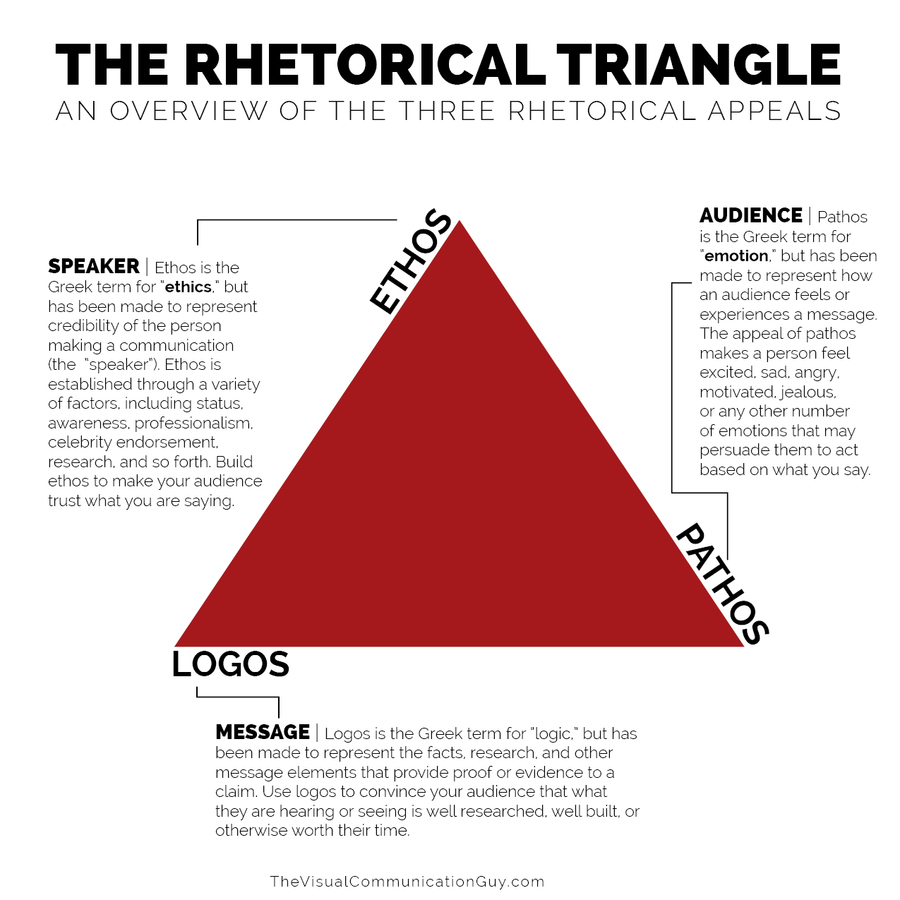
Aristotle's Rhetorical Triangle
4
5
6
7
8
9
10
11
12
13
Multiple Choice
14
15
Open Ended
16
17
Multiple Select
18
19
Multiple Select
20
21
Multiple Choice
22
23
Open Ended
24
25
26
Multiple Choice
Ethos, Pathos, Logos
Show answer
Auto Play
Slide 1 / 26
SLIDE
Similar Resources on Wayground

19 questions
SOAPSTone
Lesson
•
8th - 10th Grade
20 questions
Romeo and Juliet Act 3
Lesson
•
9th - 10th Grade
21 questions
Past Continuous
Lesson
•
9th - 10th Grade
20 questions
The Passive
Lesson
•
8th - 10th Grade
17 questions
APA Style In-text Citation
Lesson
•
8th - 10th Grade
22 questions
Pronoun-Antecedent Agreement
Lesson
•
7th - 10th Grade
18 questions
Participles and Participle Phrases
Lesson
•
9th - 10th Grade
20 questions
fast food
Lesson
•
KG
Popular Resources on Wayground
15 questions
Fractions on a Number Line

Quiz
•
3rd Grade
10 questions
Probability Practice
Quiz
•
4th Grade
15 questions
Probability on Number LIne
Quiz
•
4th Grade
20 questions
Equivalent Fractions
Quiz
•
3rd Grade
25 questions
Multiplication Facts
Quiz
•
5th Grade
22 questions
fractions
Quiz
•
3rd Grade
6 questions
Appropriate Chromebook Usage
Lesson
•
7th Grade
10 questions
Greek Bases tele and phon
Quiz
•
6th - 8th Grade
Discover more resources for English
10 questions
Greek Bases tele and phon
Quiz
•
6th - 8th Grade
15 questions
Making Inferences
Quiz
•
7th - 12th Grade
10 questions
SOL REVIEW 4: Organizational Patterns
Quiz
•
6th - 8th Grade
12 questions
Final Figurative Language Review
Lesson
•
6th - 8th Grade
5 questions
Legends, Leaders, & Changemakers: Barack Obama

Interactive video
•
6th - 8th Grade
25 questions
Making Inferences
Quiz
•
6th - 8th Grade
20 questions
Active and Passive Voice
Quiz
•
6th - 8th Grade
13 questions
Types of Conflict
Quiz
•
6th - 8th Grade