

Atoms Bonding and the Periodic Table

Presentation
•
Science
•
8th Grade
•
Hard

Joseph Anderson
FREE Resource
8 Slides • 10 Questions
1
Atoms and the Periodic Table

2
What is an atom?
An atom is the building block of all matter.
Atoms are very small; smaller than the tip of your pencil.
Atoms are composed of particles called protons, electrons and neutrons.
Atoms can join together to form molecules, which in turn form most of the objects around you.

3
Multiple Choice

What is at the center of every atom?
an electron
only protons
a molecule
a nucleus
4
The Periodic Table of the Elements
display of the chemical elements, which are arranged by atomic number, electron configuration, and recurring chemical properties
The seven rows of the table, called periods, generally have metals on the left and nonmetals on the right.
The columns, called groups, contain elements with similar chemical behaviors.

5
Multiple Choice

What is the Periodic Table?
a chart that lists all the molecules that exist in the universe
a chart that shows all the elements scientists have discovered
a chart that shows all the compounds found in the world
a chart that shows what time periods elements were discovered in
6
Chemical Element
Atomic number- tells the number of protons, electrons and the location of the element on the Periodic Table
Atomic Mass- the sum of the protons and neutrons in the nucleus of the atom
To find the number of neutrons, subtract the atomic number from the atomic mass
APE MAN

7
Multiple Choice
What does an element's atomic number represent?
the element state at room temperature
how metallic an element is
the number of atoms in a compound
the number of protons in an element
8
Electron Shell Rules:
1st shell can hold up to 2 electrons
2nd shell can hold up to 8 electrons
3rd shell can hold up to 18 electrons

9
Multiple Choice
Which of the following is the correct atomic model for Boron?
10
Multiple Choice
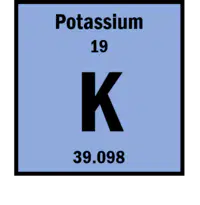
How many neutrons are in Potassium?
*Click the image to make it larger.
19
20
39
58
11
The three basic states of matter

12

13
Multiple Choice
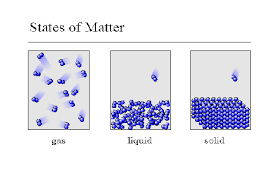
At higher temperatures
particles in an object have less energy
particles in an object move faster
a gas contracts
14
Multiple Choice
How is a gas defined?
no shape, no volume
Definite shape, definite volume
Found in stars
Definite volume, no shape
15
All matter have properties.

16
Multiple Choice
Physical properties are
are properties that can be observed without changing the matter's identity
are properties that can be observed that change the matter into new matter with new properties
17
Multiple Choice
Which of the following is a sign that a chemical reaction has occurred?
change in shape
melting
formation of a gas
dissolving
18
Poll
How would you rate your understanding of atoms and the Periodic Table?
Atoms and the Periodic Table
Show answer
Auto Play
Slide 1 / 18
SLIDE
Similar Resources on Wayground

16 questions
The Theory of Evolution
Presentation
•
8th Grade
14 questions
Balanced and Unbalanced Forces
Presentation
•
8th Grade
12 questions
KSSM Science Form 2 Chapter 10
Presentation
•
8th Grade
15 questions
Physical/Chemical Changes
Presentation
•
8th Grade
15 questions
Microbiology Review Lesson
Presentation
•
8th Grade
16 questions
Mars
Presentation
•
KG - 8th Grade
16 questions
Introduction to Plate Tectonics
Presentation
•
8th Grade
13 questions
Eclipses
Presentation
•
8th Grade
Popular Resources on Wayground
6 questions
PRIDE Always and Everywhere
Presentation
•
12th Grade
20 questions
Lab Safety Quiz

Quiz
•
6th Grade
26 questions
KOR Review Kahoot Questions
Quiz
•
8th Grade
21 questions
Continents and Oceans
Quiz
•
6th Grade
12 questions
Unit Zero lesson 2 cafeteria
Presentation
•
9th - 12th Grade
20 questions
Parts of Speech
Quiz
•
5th Grade
10 questions
Riddles Riddles fun Riddles
Quiz
•
6th - 12th Grade
16 questions
Subject & Predicate
Quiz
•
5th Grade
Discover more resources for Science
20 questions
Lab Safety
Quiz
•
5th - 8th Grade
20 questions
Scientific Method and Variables
Quiz
•
8th Grade
20 questions
Scientific method and variables
Quiz
•
8th Grade
27 questions
Counting Atoms - Subscripts
Quiz
•
8th Grade
22 questions
Scientific Method and Variables
Quiz
•
8th Grade
18 questions
Counting Atoms
Quiz
•
7th - 8th Grade
10 questions
Exploring Chemical and Physical Changes

Interactive video
•
6th - 10th Grade
18 questions
Elements, Compounds, and Mixtures
Quiz
•
8th Grade