

Drawing Bohr Models

Presentation
•
Chemistry
•
8th - 11th Grade
•
Hard

Joseph Anderson
FREE Resource
9 Slides • 11 Questions
1
2
current atomic model recap
electron shells/configuration
drawing bohr models
ions and ion formation
3
Protons + neutrons = nucleus
Electrons = in orbital shells
These are the shells we will be learning about, and the distribution of the electrons in them

4
Shells around the nucleus can hold certain amounts of electrons (energy)
1st shell = 2 e
2nd shell = 8 e
3rd shell = 8 e
can hold up to 18, but for our purposes we will cap it at 8
Most outer shell = the valence shell --> where it can gain or lose electrons
Valence shell needs to be full for an atom to be considered stable

5
Determine numbers of subatomic particles
Draw the nucleus
Draw the 1st shell
Draw subsequent shells (like a clock) until all electrons are shown

6
Multiple Choice

What is the atomic number of this element?
17
18
35
35.453
7
Multiple Choice
8
Multiple Choice
How many electrons can fit on the 1st energy level (orbital) for any Bohr Model?
2
6
8
10
9
Multiple Choice

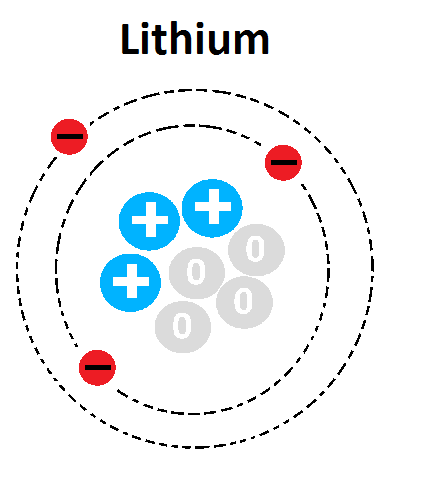
What element is represented in this Bohr Model?
Carbon
Hydrogen
Aluminum
Lithium
10
an ion is a charged particle Or an atom that has gained or lost electrons
positive ions = cations = LOST an electron
negative ions = anions = GAINED an electron
this loss or gain happens to stabilise an atom (give it a full outer shell)

11

12
Positive ions (cations) keep the name of the atom they are made from. E.g. copper becomes copper ion
Negative ions (anions) use part of the atom's name and add -ide onto the end. E.g. fluorine becomes fluoride ion
We write out their chemical symbols with a little superscript + or - and the number of electrons they lost or gained.

13
Multiple Choice
Where are valence electrons located in an atom?
On the outermost energy level
On the innermost energy level
In the nucleus
14
Multiple Choice
Atoms from group 2 on the Periodic Table are likely to form ions of what charge?
+1
+2
0
−1
−2
15
Multiple Choice
16
Multiple Choice
17
Multiple Choice
Fluorine, like all halogens, has 7 valence electrons but wants a full shell. What charge will fluorine make?
7+
7-
1-
1+
18
to lose or gain electrons, they need to go somewhere
they often go to other atoms who need to lose or gain an electron
this is called chemical bonding, the sharing or exchange of electrons
atoms will balance each other out to form stable valence electron shells

19
Multiple Choice
20
Multiple Choice
Show answer
Auto Play
Slide 1 / 20
SLIDE
Similar Resources on Wayground

12 questions
Isotopes and Ions
Presentation
•
8th - 11th Grade
19 questions
6.0 Intro to Reactions
Presentation
•
9th - 12th Grade
15 questions
Atomic structure
Presentation
•
9th - 12th Grade
17 questions
Elements, Atoms, and Molecules
Presentation
•
8th - 10th Grade
13 questions
Radioactivity and Radioactive decay Review
Presentation
•
9th - 12th Grade
14 questions
Oxidation and Reduction Test corrections
Presentation
•
9th - 12th Grade
16 questions
Elements, compounds and mixtures
Presentation
•
8th - 10th Grade
14 questions
Ch. 5.1 - Models of the Atom
Presentation
•
9th - 11th Grade
Popular Resources on Wayground
10 questions
Safety Day 2026 – Student Review

Quiz
•
9th Grade
21 questions
Continents and Oceans
Quiz
•
6th Grade
20 questions
Parts of Speech
Quiz
•
5th Grade
16 questions
Subject & Predicate
Quiz
•
5th Grade
25 questions
Multiplication Facts
Quiz
•
5th Grade
12 questions
Map Skills
Quiz
•
3rd Grade
22 questions
Continents and Oceans
Quiz
•
5th Grade
15 questions
Rounding Decimals
Quiz
•
5th Grade
Discover more resources for Chemistry
20 questions
electron configurations and orbital notation
Quiz
•
9th - 12th Grade
20 questions
Periodic Table Trends
Quiz
•
11th Grade
25 questions
Writing and Naming Binary Ionic compounds
Quiz
•
10th Grade
20 questions
COUNTING ATOMS
Quiz
•
10th Grade
50 questions
Unit 3: Atomic Assault Summative Review
Quiz
•
11th Grade
20 questions
Physical or Chemical Change/Phases
Quiz
•
8th Grade - University
15 questions
Periodicity Module Exam Practice Quiz
Quiz
•
9th - 12th Grade
20 questions
Naming Ionic Compounds
Quiz
•
10th Grade