
Environmental Changes
Presentation
•
Science
•
5th Grade
•
Hard

Joseph Anderson
FREE Resource
7 Slides • 27 Questions
1
Ch 3: Interactions in Ecosystems
Lesson 3: Relationships in Ecosystems
2
Students are expected to:
- Explain how organisms and populations compete for resources.
- Explain how organisms avoid competition for resources.
- Explain how living organisms depend on each other through symbiosis, mutualism, commensalism, and parasitism
3
Multiple Choice
4
Multiple Choice
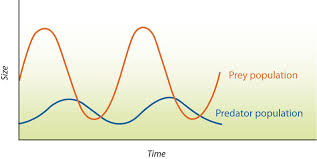
True or False: The population size of predators are equal to the population size of prey.
True
False
5
6
Multiple Choice
Grass is an example of a
secondary consumer
primary consumer
producer
7
Multiple Choice
A rabbit is an example of a
secondary consumer
primary consumer
producer
8
Multiple Choice
The specific environment in which all the biotic and abiotic factors in an area interact.
Ecosystem
Organism
Struggle
Competitive Interaction
9
Multiple Choice
Hawks and owls eat the same type of food and struggle with one another to get their food. What is this an example of?
Competition
Biotic factor
Symbiosis
Population
10
Multiple Choice
What is another word for something that is ALIVE or was ONCE LIVING
Biotic
Abiotic
11
12
13
Multiple Choice
14
Multiple Choice
The largest number of individuals that an environment can support long term is...
carrying capacity
emigration
immigration
population density
15
Multiple Choice
16
Multiple Choice
If a disease destroying barley plants swept through an ecosystem, what would happen to the bird population that eat barley plants?
The bird population would stay the same
The bird population would infinitely increase
The bird population would decrease
17
Multiple Choice
18
Multiple Choice
19
20
21
Multiple Choice
What is the habitat of a Scorpion?
arctic
aquatic
desert
forest
22
Multiple Choice
What is the main reason why Penguin belongs to arctic?
They like to play with snow
There's plenty of fish in the sea to eat
There's lots of snow
23
Multiple Choice
24
Multiple Choice
25
Multiple Choice
26
Multiple Choice
27
Multiple Choice
polar region
mountain
28
Multiple Choice
polar region
desert
29
Multiple Choice
forest
mountain
30
Multiple Choice
river
mountain
31
Multiple Choice
True or False. Many Plants and Animals share the same habitat.
True
False
32
Multiple Choice
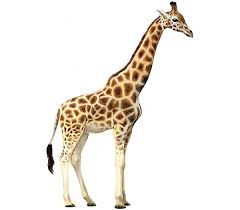
Where does this animal live?
33
Multiple Choice
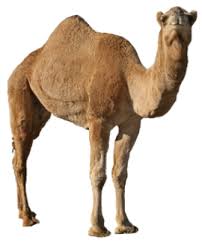
Where does this animal live?
34
Multiple Choice
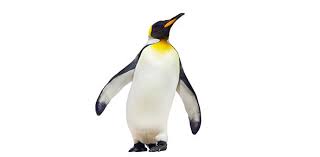
Where does this animal live?
Ch 3: Interactions in Ecosystems
Lesson 3: Relationships in Ecosystems

Show answer
Auto Play
Slide 1 / 34
SLIDE

Similar Resources on Wayground
27 questions
Galaxy and solar system
Lesson
•
5th Grade
29 questions
Wolf Island
Lesson
•
5th Grade
32 questions
Plant Parts and Processes
Lesson
•
5th Grade
23 questions
How does light bounce and bend?
Lesson
•
5th Grade
28 questions
Human Body Systems Interactions
Lesson
•
5th Grade
28 questions
Rocks and Minerals
Lesson
•
4th - 5th Grade
24 questions
Genetics Vocabulary
Lesson
•
5th Grade
24 questions
Motion Graphs
Lesson
•
5th Grade
Popular Resources on Wayground
10 questions
5.P.1.3 Distance/Time Graphs
Quiz
•
5th Grade
10 questions
Fire Drill
Quiz
•
2nd - 5th Grade
20 questions
Equivalent Fractions
Quiz
•
3rd Grade
15 questions
Hargrett House Quiz: Community & Service
Quiz
•
5th Grade
20 questions
Main Idea and Details
Quiz
•
5th Grade
20 questions
Context Clues
Quiz
•
6th Grade
20 questions
Inferences
Quiz
•
4th Grade
15 questions
Equivalent Fractions
Quiz
•
4th Grade
Discover more resources for Science
10 questions
5.P.1.3 Distance/Time Graphs
Quiz
•
5th Grade
15 questions
Force and Motion
Lesson
•
5th Grade
20 questions
Food Chains and Food Webs Review
Quiz
•
5th Grade
23 questions
Comparing and Ordering Decimals
Quiz
•
5th Grade
20 questions
Food Webs
Quiz
•
5th Grade
20 questions
The Water Cycle
Quiz
•
4th - 5th Grade
20 questions
The Water Cycle
Quiz
•
5th Grade
21 questions
Photosynthesis Review
Quiz
•
5th Grade